
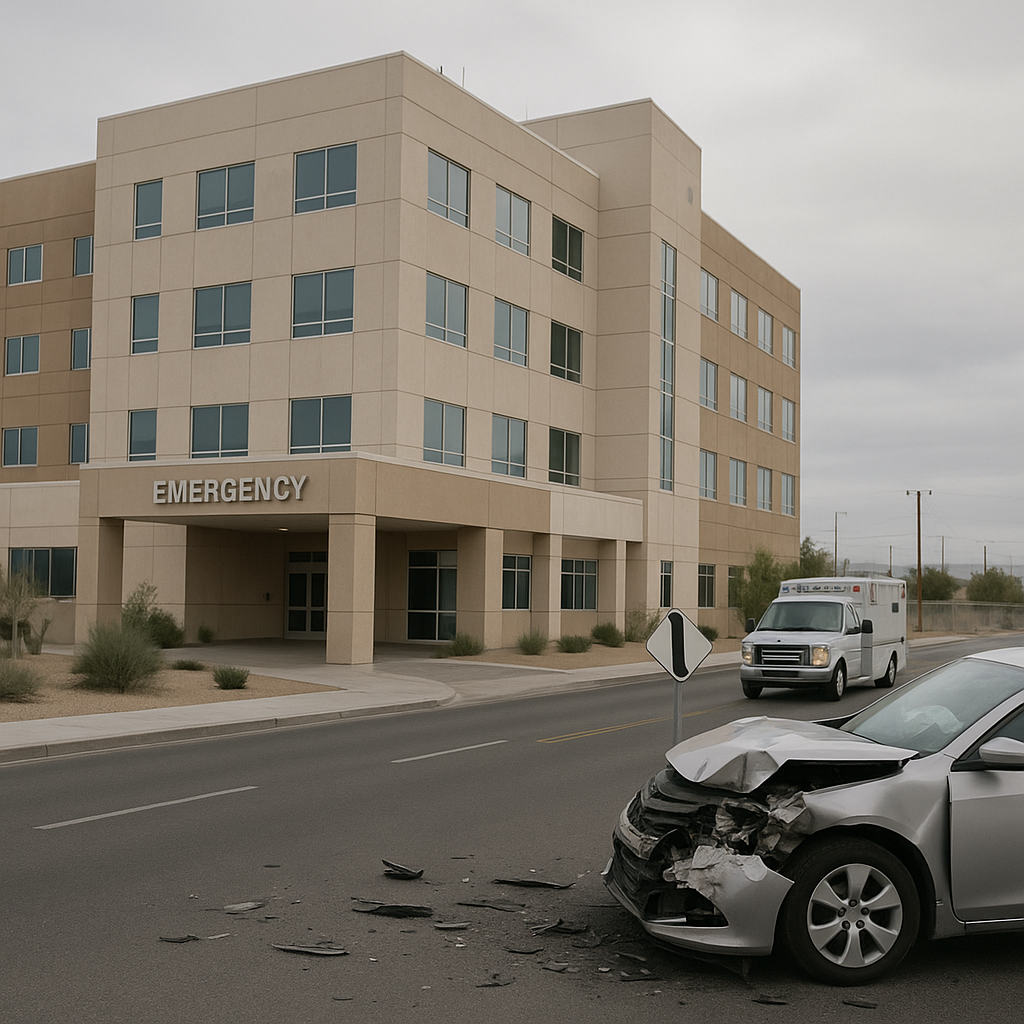
How Nevada Hospitals Coordinate with Crash Response Teams
Interstate highways, busy tourist corridors, and rural routes all crisscross the Silver State, bringing diverse emergency needs to Nevada’s hospitals and crash response teams. When a traffic accident occurs, quick action and coordinated communication can mean the difference between life and death. This seamless collaboration among medical facilities, emergency responders, dispatch centers, and law enforcement is vital—not only for saving lives but also for ensuring accurate records and public safety improvement. This article explores how Nevada hospitals coordinate with crash response teams, highlights the agencies involved, outlines typical documentation, and discusses common misunderstandings in the reporting process.
Overview of Crash Response and Reporting Systems in Nevada
In Nevada, crash response begins with 9-1-1 calls sent to regional Public Safety Answering Points (PSAPs), which dispatch law enforcement, emergency medical services (EMS), and fire departments to accident scenes. The response teams and hospitals share a common goal: to stabilize, treat, and document each victim’s condition with efficiency and precision. Communication is critical at several points—at the scene, during patient transport, and once the patient arrives at the hospital.
Hospitals in Nevada participate in the Nevada Trauma System, a coordinated network designed to route critically injured patients to the appropriate level of care. This system, overseen by state health officials, implements protocols for triage, field communication, and hospital notification. In particular, trauma centers employ trauma registrars and liaisons to ensure swift information flow between EMS and the hospital team. In addition, Nevada law and public health regulations require standardized crash reporting, enabling data sharing among agencies for trend analysis and safety improvements.
Timely coordination is also enhanced by technology—mobile data terminals in ambulances, electronic health records, and radio communications all support faster, more accurate handoffs. Ultimately, the crash-to-hospital workflow balances immediate patient needs with careful documentation and state-level reporting requirements.
Common Agencies and Reporting Steps
Collaboration in Nevada crash response involves several key agencies, each playing a unique role in the reporting and communication ecosystem:
– Nevada Highway Patrol (NHP): As the lead agency on many state highways and rural roads, NHP oversees crash scene management, traffic control, and initial reporting.
– Local law enforcement: City and county police often respond to crashes within municipal limits, working closely with medical teams and other responders on scene.
– Fire departments and EMS: Licensed paramedics, EMTs, and fire-rescue teams stabilize patients, gather scene information, and relay critical details ahead to hospitals.
– Nevada Office of Traffic Safety (OTS): The OTS collects statewide data to support injury prevention and funds traffic safety programs, drawing from hospital and law enforcement reports.
– Hospitals and trauma centers: Nevada’s hospital network includes designated trauma centers, regional hospitals, and critical access facilities, which all have protocols for receiving and documenting crash victims.
– Dispatch and communications centers: Regional dispatch centers coordinate the flow of information between agencies, facilitating clear and timely communication before and after hospital arrival.
A crash event typically involves real-time communication from the field to hospital receiving teams. Paramedics often use radio or secure electronic systems to share patient vitals, mechanisms of injury, and estimated arrival times. In the hospital, the emergency department or trauma team prepares resources—including specialty physicians and surgical suites—based on information relayed from the scene. Simultaneous data entry and alerting processes ensure that the patient’s arrival is logged for later state reporting and ongoing care management.
Coordination continues after the crash through follow-up calls, sharing of medical records with investigators (when authorized), and participation in quality improvement reviews led by the Nevada Division of Public and Behavioral Health.
Documentation Typically Involved
Accurate and thorough documentation is a cornerstone of crash response coordination in Nevada. Each stakeholder has specific record-keeping responsibilities that contribute to a comprehensive crash file:
– EMS and pre-hospital care reports: Paramedics complete Electronic Patient Care Reports (ePCRs), noting patient observations, interventions, care provided, and transfer times. These reports are often transmitted to the receiving hospital prior to arrival.
– Hospital records: Upon patient intake, hospitals generate medical records documenting triage decisions, diagnostic findings, and treatment provided for crash-related injuries. Trauma registrars may collect detailed clinical and outcome data to satisfy reporting requirements for state trauma registries.
– Law enforcement crash reports: Officers on scene complete standardized crash forms required by the Nevada Department of Public Safety. These include diagrams, contributing factors, and witness accounts.
– Quality and outcome data: Hospitals participate in periodic reviews, contributing anonymized information on outcomes, response times, and treatment effectiveness for state and national databases.
– Special reporting: In severe cases or those involving fatalities, supplemental documentation—such as autopsy reports or coroner’s findings—may be generated.
This robust documentation ensures that Nevada hospitals and crash response agencies can track injury patterns, evaluate emergency protocols, and fulfill obligations to public health agencies without compromising patient privacy.
Common Reporting Misunderstandings
Despite the detailed systems in place, misunderstandings around reporting requirements and responsibilities are not uncommon. Some of the most frequent areas of confusion in Nevada relate to:
– Who is responsible for crash reporting? Some assume that only law enforcement submits reports, while in reality, EMS, hospitals, and trauma registrars all contribute data to different parts of the reporting chain.
– What information is confidential? Patient information shared among medical providers is protected under privacy laws, but certain aggregate or de-identified data may be required by state registries for public health reporting.
– Timing and format of reports: There can be uncertainty about deadlines for submitting crash documentation and the preferred formats, especially when transitioning from paper to electronic reporting systems.
– Overlap in roles: Sometimes, hospital and EMS records may appear duplicative, leading to questions about which records are used for official statistics versus ongoing medical care.
– Inter-agency communication: Miscommunications may occur when protocols differ across regions or hospitals, highlighting the need for ongoing training and interagency drills.
Nevada agencies work to address these misunderstandings through continuous education, cross-industry conferences, and updates to standardized reporting procedures.
Conclusion
Nevada’s hospitals and crash response teams operate within a complex but carefully orchestrated framework, balancing immediate clinical care, precise documentation, and multi-agency collaboration. As traffic patterns shift and technology evolves, responders and hospitals continually refine their approaches to save lives and support accurate data collection. By understanding the systems and relationships involved, the public and professionals alike can appreciate the expertise and dedication that ensure Nevada’s crash response remains effective and responsive to the needs of its communities.