
How Nevada Police Secure Crash Scenes from Interference
Traffic accidents can happen in the blink of an eye, but the aftermath often demands a thoughtful, organized response. In Nevada, law enforcement plays a crucial role in managing crash scenes—not just to address immediate threats to safety, but also to ensure the integrity of their investigative work. The overarching mission for Nevada police is clear: secure crash scenes from all forms of interference. This responsibility ensures accurate reporting, protects everyone involved, and upholds public safety. Understanding how Nevada police secure crash scenes from interference offers a valuable look into local protocols and a deeper appreciation for the challenges faced at every roadway incident.
Overview of Crash Response and Reporting Systems in Nevada
Effective crash scene management in Nevada relies on a seamless integration between first responders, public safety agencies, and communication networks. The philosophy is straightforward: minimize risks to individuals while collecting essential evidence for both civil and criminal matters. At the state level, Nevada adheres to a standardized approach for reporting and responding to crashes, whether they occur on the busy Las Vegas Strip or on a remote desert highway.
From the moment a crash is reported—typically through a 911 call or directly to Nevada Highway Patrol (NHP), county sheriffs, or local police—officers are dispatched to the scene with one guiding principle: secure the area. The immediate goals are clear. First, officers must prevent further injury or property damage. Second, they must ensure that all involved parties receive proper medical assistance. Lastly, every effort is made to ensure that evidence is preserved and accounts are documented in an unbiased manner.
Technology plays a significant role in the reporting system as well. Police and dispatch services coordinate using state-of-the-art communication tools, allowing for the rapid relay of incident details and support requests. Officers are trained to adapt quickly to evolving crash conditions while prioritizing public safety and operational security.
Common Agencies and Reporting Steps (Educational)
Multiple agencies may become involved in securing and investigating a Nevada crash scene. The primary agency typically holds jurisdiction based on the crash location: Nevada Highway Patrol oversees state and interstate highways, while city police and county sheriffs manage local and rural roadways.
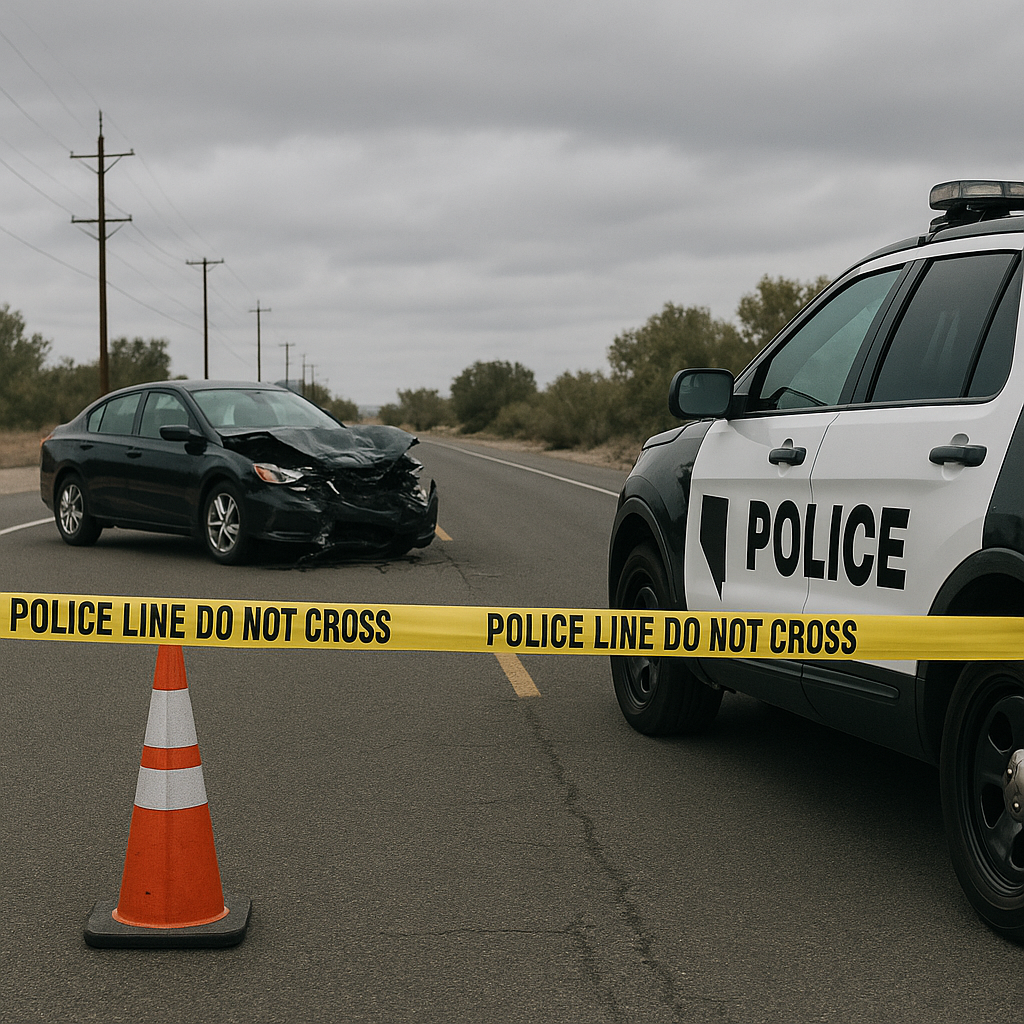
Once law enforcement arrives, several key steps are carried out to secure the crash site. These often include establishing a secure perimeter using patrol cars, traffic cones, flares, or police tape. Officers direct traffic away from the affected lanes and, if needed, close roads entirely. This prevents secondary collisions and limits the risks posed by passing vehicles or curious bystanders.
Emergency medical services (EMS) and fire departments are often called in if injuries or vehicle hazards are present. Their coordination with police ensures that scene management supports emergency treatment and fire suppression, without disturbing key investigative areas. Collaboration is also essential when specialized units—such as accident reconstruction teams—are summoned for serious or fatal incidents.
Documentation Typically Involved
Thorough documentation lies at the heart of crash scene security in Nevada. Officers complete detailed crash reports, including written narratives, diagrams, and witness statements. Photographs and occasionally video footage are collected to capture vehicle positions, road conditions, skid marks, vehicle damage, and any relevant signage or traffic signals.
Officers also collect and secure tangible evidence, such as vehicle parts, debris, or personal effects, to prevent tampering or loss. This evidence could prove crucial if investigations evolve into criminal proceedings or insurance disputes.
Witnesses are typically separated and interviewed individually to prevent cross-contamination of statements. Each interaction is accurately recorded, supporting the transparency and reliability of the overall incident report. Secure and well-documented crash scenes are vital for ensuring that insurance companies, courts, and investigators have access to reliable information long after the roads are reopened.
Common Reporting Misunderstandings
Navigating the aftermath of a crash scene in Nevada can be confusing for drivers, passengers, and bystanders. One common misunderstanding is the assumption that crash scenes are open to public access, or that personal involvement allows individuals to move freely about the scene. In reality, once police establish a perimeter, access is tightly controlled to prevent interference with emergency operations and evidence preservation.
Another frequent misconception involves the requirement for parties to stay with their vehicles until police arrive and grant permission to leave. While safety is always paramount, individuals may not realize that moving themselves or their vehicles without express directive from authorities can complicate the investigation or—even inadvertently—destroy evidence.
Witnesses and uninvolved onlookers sometimes believe that filming, photographing, or closely observing the scene is always permitted. While Nevada is generally supportive of transparency and public observation, officers must balance these rights with the need to secure the scene—sometimes restricting documentation to safeguard patient privacy, evidence integrity, or overall scene safety.
Additionally, misunderstandings may arise around the timeline for reporting and documentation. Some parties assume crash reports are completed on the spot and are immediately accessible. In practice, Nevada’s reporting and investigative processes often extend beyond the initial response, with follow-ups conducted for complex crashes or when additional evidence is uncovered.
The myth that securing a crash scene is merely about controlling traffic is another prevalent error. While rerouting vehicles is a major task, the responsibilities for Nevada police extend far deeper—to include evidence protection, unbiased documentation, and facilitation of emergency services under often difficult and chaotic conditions.
Neutral Closing Paragraph
Nevada’s police agencies are entrusted with the critical responsibility of securing crash scenes from interference, ensuring both public safety and the integrity of crash investigations. Through careful scene management, detailed documentation, and coordinated efforts with emergency services, law enforcement officers protect all involved while maintaining accurate records for future reference. Understanding these protocols helps foster a greater respect for the work performed by Nevada police and highlights the importance of following directions and remaining patient during the often-complex process of managing motor vehicle incidents throughout the Silver State.