
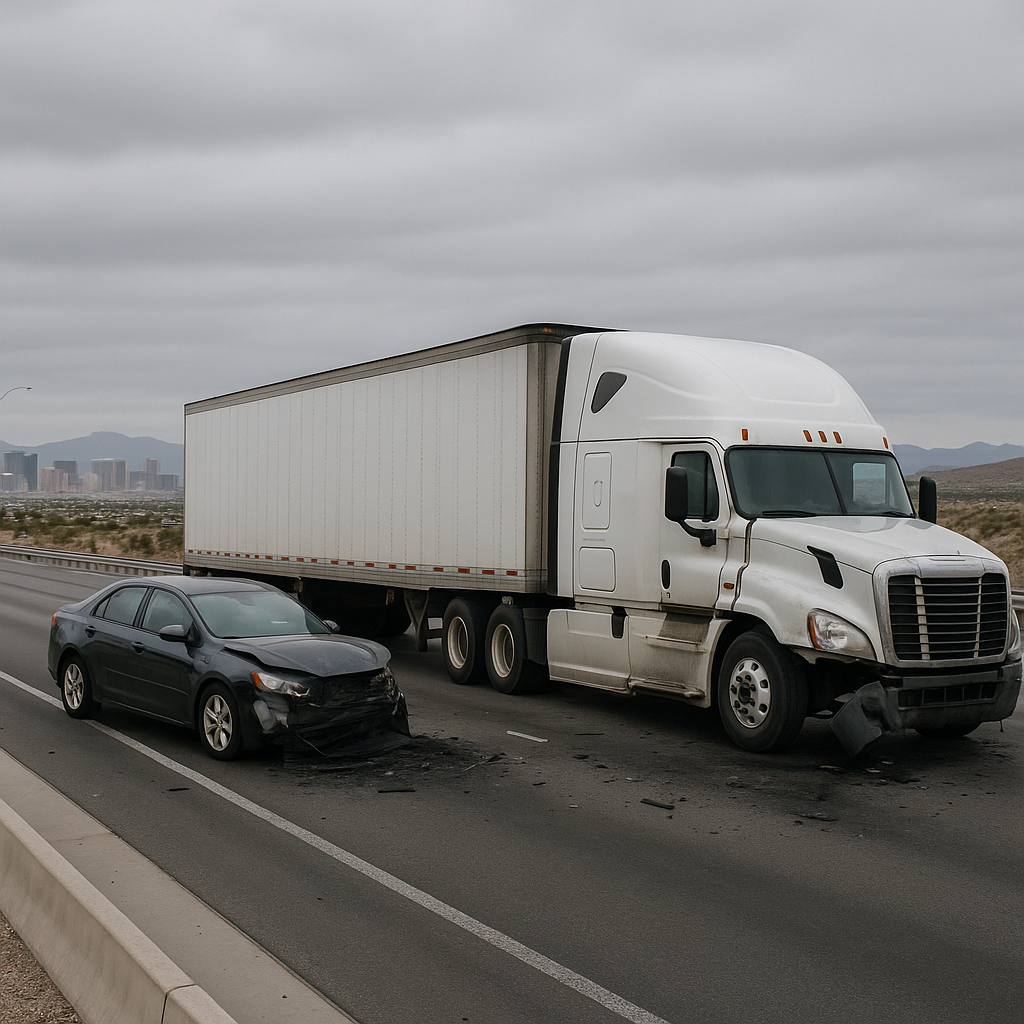
How Nevada Population Growth Affects Truck Accident Trends
Overview of the Trend or Pattern
Nevada has been experiencing significant population growth in recent decades, particularly in urban hubs like Las Vegas, Reno, and their surrounding areas. This rapid increase in residents brings with it a complex set of challenges for transportation and road safety, notably impacting truck accident trends across the state. As Nevada’s highways and city streets see higher usage, there is a marked shift not only in the frequency but also in the nature of truck-related collisions.
Truck accidents, due to the size and weight of commercial vehicles, often result in injuries and fatalities that are more severe than those involving passenger cars alone. Understanding how Nevada population growth affects truck accident trends aids policymakers, transportation planners, and safety advocates in addressing this critical public safety issue.
Common Factors Behind the Pattern
Increased Traffic Volume and Congestion
One of the most straightforward connections between population growth and truck accidents is the rise in traffic volume. More people means more goods are required to sustain daily life and economic activities. This surge in demand leads to an increase in the number of commercial trucks on Nevada roads. Highways such as Interstate 15 and U.S. Route 95, which are vital freight corridors, face more congestion, increasing the likelihood of accidents.
Urban Sprawl and Mixed Traffic Environments
Nevada’s population expansion has also spurred urban sprawl – the spread of residential areas far beyond city centers. This spread creates diverse road environments where large trucks must navigate through increasingly mixed traffic zones. Trucks navigate not only highways but also arterial roads, suburban streets, and areas with pedestrian activity, which raises the potential for collisions.
Construction and Infrastructure Strain
Rapid population increase puts pressure on existing transportation infrastructure, resulting in more frequent road construction and maintenance projects. Construction zones can be hotspots for accidents, especially involving trucks, which may encounter sudden lane shifts, narrowed roads, or unclear signage. Meanwhile, aging roads that have not been upgraded or expanded can become bottlenecks, compounding congestion and accident risk.
Increased Delivery and Freight Demand
With more people moving into Nevada, the demand for deliveries of consumer goods, construction materials, and industrial supplies rises. The growth of e-commerce has particularly escalated the number of smaller commercial trucks and vans operating in the state. Although smaller in size than traditional big rigs, these commercial vehicles still contribute significantly to accident statistics, especially in urban areas.
Why Severity May Be Higher in Nevada Conditions
High-Speed Desert Highways
Nevada is characterized by vast stretches of desert highways, where speed limits are often higher than in metropolitan areas. While these open roads allow for faster travel, they also increase the risk of severe accidents. At high speeds, truck crashes can result in more catastrophic outcomes due to the kinetic energy involved, making injuries and fatalities more likely.
Challenging Weather and Road Conditions
Despite Nevada’s reputation for dry and sunny weather, the state experiences occasional hazards such as intense heat waves and sudden dust storms. Heat can affect vehicle performance and driver alertness, while poor visibility from dust storms can cause multi-vehicle collisions involving trucks. These environmental factors enhance the severity and frequency of truck accidents, particularly during certain seasons.
Fatigue and Long-Distance Routes
Many trucks traveling through Nevada are involved in long-haul freight routes that cross state lines. Drivers may face fatigue from extended hours behind the wheel, contributing to slower reaction times and impaired judgment. The combination of driver fatigue and challenging driving conditions—such as nighttime driving through remote areas—can lead to severe accidents.
Limited Emergency Response in Rural Areas
Nevada’s population growth has concentrated mainly in urban areas, but significant portions of the state remain rural and sparsely populated. When truck accidents occur in these less accessible regions, emergency response times can be longer, and hospital distances greater. Delays in medical treatment can increase the severity of injuries sustained in truck collisions.
How Patterns Change Over Time
As Nevada’s population continues to grow, truck accident trends may evolve due to shifts in transportation technology, infrastructure development, and regulatory environments.
Infrastructure Improvements and Safety Enhancements
Ongoing efforts to expand and modernize Nevada’s highway system, including the addition of lanes, better signage, and advanced traffic management systems, can reduce accident frequency and severity over time. Investments in rest areas and truck parking facilities also support safer truck operations by helping to alleviate driver fatigue.
The Rise of Automation and Telematics
The trucking industry is gradually adopting technologies such as collision avoidance systems, electronic logging devices, and, in some cases, autonomous driving features. These advances have the potential to mitigate human error—the leading cause of truck accidents—thereby impacting future trends in Nevada.
Changes in Freight Patterns
Population growth may cause shifts in freight demand locations and timings. For example, more localized distribution networks could reduce the number of long-haul truck miles, changing the spatial distribution of truck accidents. Conversely, increases in last-mile delivery trucks in densely populated areas might lead to more frequent but less severe accidents.
Policy and Regulatory Adjustments
As data on truck accidents tied to population growth becomes clearer, Nevada’s transportation authorities may implement new regulations addressing truck routes, speed limits, rest requirements, and road design optimized for commercial vehicles. These policy responses will influence how truck accident trends unfold in coming years.
Neutral Closing Paragraph
Nevada’s dynamic population growth undeniably influences the patterns and characteristics of truck accidents statewide. The complexities of increased traffic volume, environmental conditions, and evolving infrastructure combine to shape the safety landscape for both commercial and passenger vehicles on Nevada roads. While challenges remain, continued attention to data-driven planning, technological adoption, and community engagement will be essential in adapting to the changing transportation needs of a growing Nevada population. Through collaborative efforts, stakeholders can work toward minimizing truck accident risks while supporting the state’s ongoing economic and demographic expansion.