
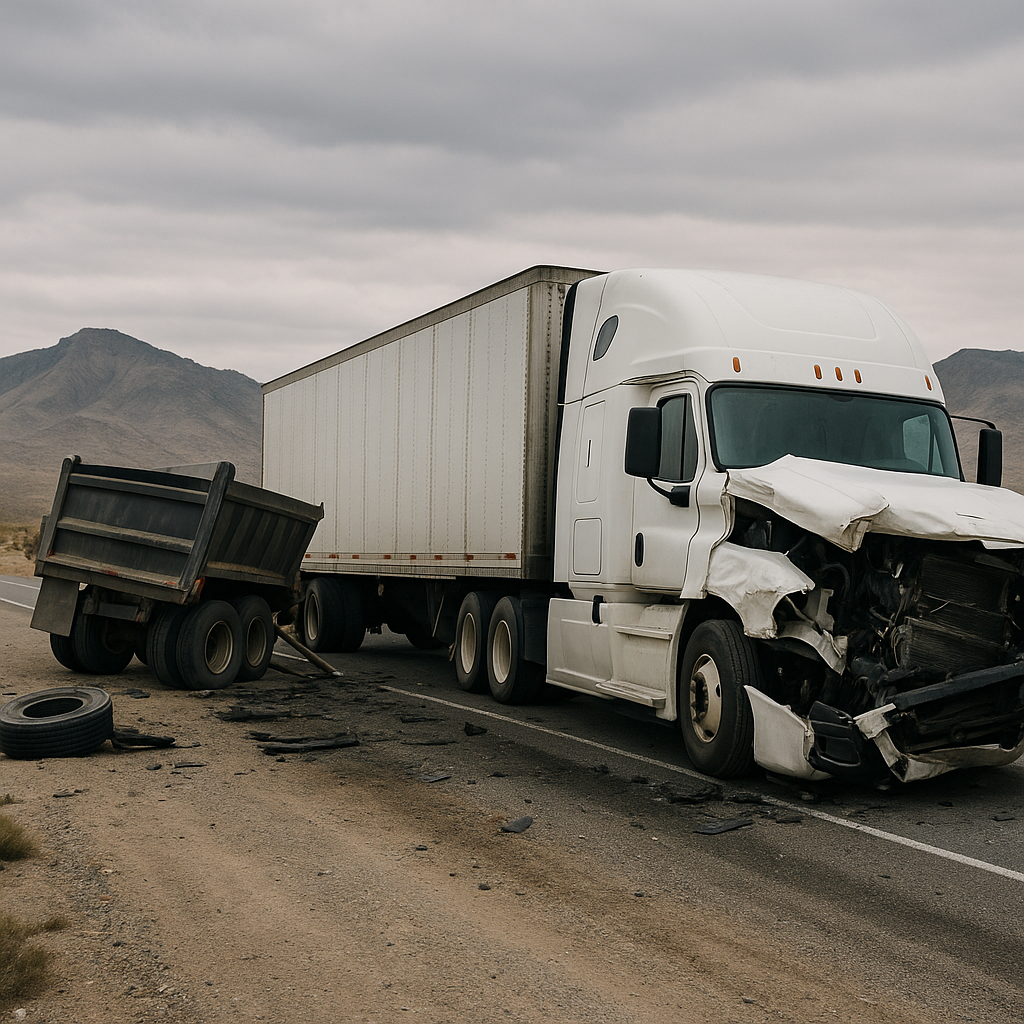
How Nevada Truck Crashes Differ from Other States
Overview of the Trend or Pattern
Truck crashes remain a significant concern across the United States, with varying trends observed depending on geographic, economic, and environmental factors. Nevada, a state known for its vast desert landscapes, sprawling highways, and bustling urban centers like Las Vegas and Reno, presents a unique set of circumstances that affect the nature and frequency of truck accidents. Understanding how Nevada truck crashes differ from other states requires looking closely at the broader patterns and conditions specific to the region.
While the nation grapples with truck crashes occurring on busy interstates and rural roads alike, Nevada’s truck incidents often reflect its distinctive traffic dynamics. Nevada’s reliance on trucking for freight movement across the western U.S. corridors, combined with its desert climate and tourism-driven traffic, contributes to trends that distinguish it from other states. Unlike states with dense urban clusters or heavy industrial congestion, Nevada’s truck incidents tend to occur more frequently on long stretches of highway, linking remote towns or crossing state lines, which influences both crash causation and severity.
Common Factors Behind the Pattern
Several interrelated factors explain why Nevada truck crashes differ from other states:
Geographical and Climatic Conditions
Nevada’s geography is largely characterized by expansive desert regions and mountain ranges, with highways stretching over vast, sparsely populated areas. This means trucks often travel long distances without stops and through challenging environments such as the dry desert air. The scarcity of rest areas along some routes may contribute to driver fatigue, a common cause of large vehicle accidents nationwide.
Moreover, extreme temperatures—soaring in summer and dropping substantially in winter—can affect both mechanical function and driver alertness. These weather-related stresses contrast with states that have milder or more variable climates, where weather conditions may disrupt traffic in different ways (e.g., ice and snow in northern states).
Traffic Composition and Freight Routes
Nevada is a critical link in freight corridors like Interstate 15 (I-15) and Interstate 80 (I-80), connecting West Coast ports to inland markets and other states. The high volume of cross-country freight traffic, combined with Nevada’s position as a transport hub, results in a significant presence of heavy trucks on highways that also serve regular passenger vehicles, tourists, and local commuters.
This mix introduces complex interactions on highways, where different vehicle types travel at dissimilar speeds under variable traffic densities. In contrast, states with more dispersed freight routes or a higher ratio of localized trucking may see different crash patterns.
Driver Behavior and Regulatory Environment
Nevada’s laws and enforcement priorities related to commercial driving influence crash patterns. Perceptions of enforcement intensity, availability of truck stops for mandated rest, and local driving culture can affect truck driver behavior. For instance, some studies suggest that truck driver fatigue and speeding are more prevalent in states with fewer regulated rest stops or less rigorous enforcement, which can partly explain Nevada’s truck crash profile.
Additionally, tourists unfamiliar with Nevada’s roads—especially near high-traffic casinos or recreational areas—may inadvertently contribute to hazardous situations involving large trucks.
Why Severity May Be Higher in Nevada Conditions
When looking at the severity of truck crashes in Nevada versus other states, several factors become evident:
High-Speed Collisions on Long Highway Stretches
Nevada’s highways have long, straight stretches where speed tends to increase and enforcement presence fluctuates. Higher vehicle speeds directly correlate with crash severity, especially when heavy trucks are involved. The kinetic energy of large commercial vehicles at high speeds results in more devastating impacts.
Unlike in densely urbanized states where speed limits are lower and traffic congestion moderates vehicle speeds, Nevada’s open roads encourage faster travel. This dynamic elevates the risks of rollover crashes, jackknifing incidents, and multi-vehicle pileups.
Environmental and Roadway Hazards
The state’s desert environment can introduce specific hazards not always present elsewhere. For instance, the glare from the sun in a predominantly flat, arid landscape can impair visibility for truck drivers. Windy conditions can also destabilize high-profile vehicles, increasing rollover risks.
Moreover, nighttime driving on poorly lit or remote highways increases risks of collisions with wildlife such as deer or livestock, which can suddenly appear on roads. Striking a large animal while operating a heavy truck may produce more severe crashes than typical passenger vehicle collisions.
Limited Immediate Emergency Response in Rural Areas
Many truck crashes in Nevada occur far from urban centers and hospitals. The delay in emergency medical response and transport can exacerbate injury outcomes, making survival rates lower compared to crashes occurring near advanced trauma facilities.
In contrast, more densely populated states often benefit from quicker emergency response times and a higher density of medical infrastructure nearby, potentially reducing fatality rates even when crashes occur.
How Patterns Change Over Time
Truck crash patterns in Nevada have evolved in recent decades, influenced by changing demographics, infrastructure developments, and regulatory updates.
Increased Freight Traffic and Infrastructure Expansion
As Nevada’s population grows and its transport role expands, especially around Las Vegas and Reno, freight volumes have increased, with trucks constituting a larger share of road traffic. Infrastructure improvements, such as widening highways and modernizing intersections, have helped reduce some risks but have also sometimes facilitated higher speeds, maintaining crash severity concerns.
Technology Adoption and Safety Measures
The introduction of technology—such as electronic logging devices (ELDs) to track truck drivers’ hours and advanced driver assistance systems (ADAS)—is gradually shaping how truck crashes occur. These technologies aim to improve compliance with regulatory limits and reduce human error, which remains a leading cause of accidents.
However, adoption rates can vary, and the integration of autonomous or semi-autonomous commercial vehicles remains in early stages, making it essential to continue monitoring how these innovations impact Nevada’s truck crash trends.
Changes in Vehicle Types and Cargo
Evolving freight demands have led to increasingly diverse types of trucks and trailers on Nevada roads, including larger double and triple trailers, refrigerated trucks, and hazardous materials transporters. Each type presents unique risks, which influence overall crash profiles and emergency responses.
Neutral Closing Paragraph
Understanding how Nevada truck crashes differ from other states offers valuable insights into the complex interplay of geography, traffic composition, driver behavior, and infrastructure that influence crash patterns and outcomes. While Nevada faces unique challenges due to its desert climate, highway systems, and freight corridors, ongoing technological advances and infrastructure improvements carry promise for enhancing roadway safety. Continued attention to these factors will be essential for policymakers, transportation officials, and communities as they work towards reducing the frequency and severity of truck crashes across the Silver State.