
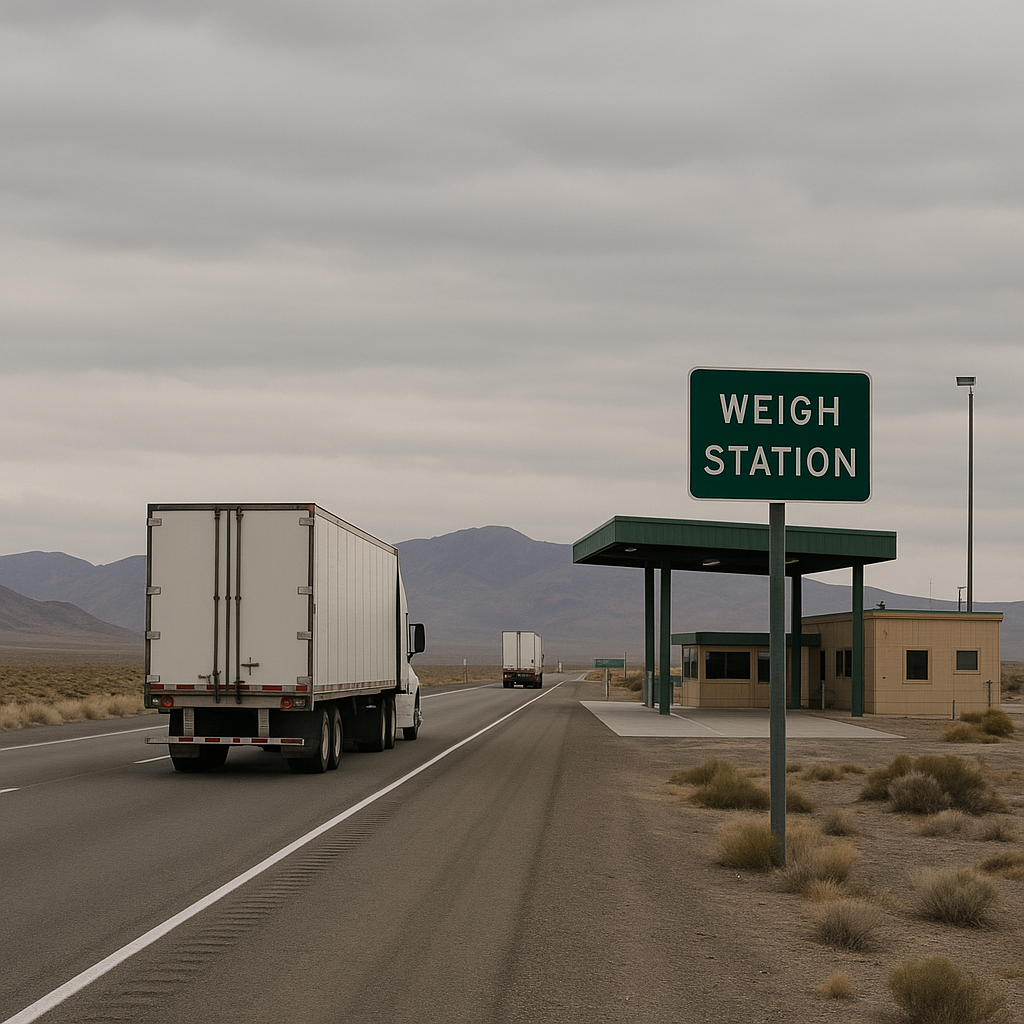
How Nevada Weigh Stations Influence Freight Corridors
Navigating Nevada’s highways is an essential task for the national freight network. As one of the primary crossroads in the western United States, the Silver State’s corridors are heavily shaped by the influence of Nevada weigh stations. Far from being just roadside compliance checks, these stations play a substantive role in shaping route choices, regulating traffic flows, affecting when and how truckers move across the state, and even safety outcomes. This article explores how Nevada weigh stations influence freight corridors, highlighting the unique regional dynamics, prevalent truck activity, traffic risks, and broader trends that impact goods movement through the heart of the West.
Overview of the Freight Corridor or Trucking Activity
Nevada’s unique geography and strategic location have long made it a hub for cross-country trucking. The two primary Interstate corridors, I-80 running east-west and I-15 running north-south, anchor the state’s freight activity. I-80 links the Bay Area and Northern California with Salt Lake City and Chicago, while I-15 forms the lifeline between southern California and the Intermountain West, heading north toward Salt Lake City and the Canadian border. In between, major state highways like US 95 and US 50 connect cities such as Reno, Las Vegas, Elko, and Carson City, carrying both regional and long-haul freight.
Within this web of routes, weigh stations—located at critical access points or along major highways—are tasked with monitoring and regulating truck weight, safety compliance, and registration. The presence and operational hours of stations on key corridors such as I-80 in Wendover, I-15 near Sloan, or US 93 north of Las Vegas can subtly but significantly redirect truck traffic, creating patterns that influence congestion, scheduling, and even infrastructure wear.
Weigh stations aren’t simply points of inspection—they’re pivotal to the health and safety of Nevada’s freight network. When open, they ensure overloaded trucks are identified and risks like road damage and safety breaches are minimized. However, their influence extends deeper, shaping logistics decisions and corridor use in real time.
Common Truck Types and Freight Activity in the Area
Nevada’s freight corridors are populated by a diverse mix of commercial vehicles, each with varying operational needs and cargo:
– Long-haul tractor-trailers (18-wheelers): These dominate I-80 and I-15, moving containerized goods, food products, manufactured items, and building materials between ports in California and distribution centers in the Midwest and beyond.
– Dry van and refrigerated trucks: Essential for Nevada’s position as a food and perishables conduit, these vehicles ensure grocery shelves across the West remain stocked.
– Bulk commodity haulers: Including tankers and flatbeds, these frequently transport mining resources (like gold, silver, and lithium), as well as petroleum, chemicals, and agricultural products.
– Specialized oversized or overweight loads: Nevada’s mining, construction, and energy sectors often generate traffic involving modular structures, heavy machinery, and wind energy equipment—all of which may require special permits and attention at weigh stations.
With heavy truck traffic often comprising 25% or more of total daily vehicle counts on I-80 and US 95, these freight flows form the backbone of Nevada’s logistics ecosystem. Surface transportation isn’t just a matter of moving goods—it’s a high-stakes operation with ripple effects for infrastructure, economy, and safety.
How Congestion or Merging Creates Risk
The proximity of weigh stations to highway access ramps, urban areas, or where multiple roadways merge can inadvertently create risk zones. Here’s how:
Queueing and Backup Hazards
At busy times, truck lines for weigh-in can spill onto the highway shoulder or even into active lanes, especially during peak freight hours. This can catch passenger vehicles off-guard, increasing the likelihood of rear-end collisions or sudden lane changes.
Merging Complexity
When trucks exit or re-enter the highway at weigh stations, their reduced acceleration and wider turning radius can compound merging difficulties. Mixing fast-moving cars with slow-to-accelerate semis near station ramps increases the chance of side-swipe accidents and traffic disruptions.
Congestion Amplification
On corridors with both significant passenger and commercial traffic (such as I-15 near Las Vegas or I-80 west of Reno), slowdowns near weigh stations can extend for miles, cascading into backup, aggressive driving, and even secondary crashes. The risk is heightened in bad weather, common during Nevada’s winter and summer monsoon seasons.
Driver Fatigue and Decision-making
Frequent stops or detours for weigh station compliance contribute to driver fatigue, particularly if stations are located where rest areas are sparse or services limited. Fatigue is a known risk factor for all types of road crashes.
As a result, trucking companies carefully plan routes and schedules to avoid peak weigh station hours, which can, in turn, shift congestion to different corridors or time slots—a dynamic feedback loop influenced directly by station operations.
Time-of-Day and Seasonal Traffic Trends
Weigh station influence on Nevada freight corridors is anything but static. Trucking activity, congestion, and compliance patterns change by the hour and across the seasons:
Peak Traffic Windows
– Early mornings and late afternoons: Correspond to start/end of standard shift schedules, when many drivers aim to clear weigh stations before breakfast or after off-loads. Queueing delays are most common at these times.
– Nighttime movement: Some fleets, particularly those with pre-clearance technologies (such as NORPASS or Drivewyze), schedule travel overnight to bypass weigh station bottlenecks and capitalize on reduced vehicle traffic.
Seasonal Variations
– Winter months: Storms along I-80 and elevations on US 93 can slow truck travel and cause traffic to bunch up near stations, especially after chain-control events or road closures.
– Summer/festival season: Increased traffic near Reno, Las Vegas, and recreational areas (such as Lake Tahoe) adds pressure to weigh stations, with heightened enforcement around high-traffic weekends and holidays.
– Agricultural harvests: Specific periods bring concentrated activity through corridors near Fallon, Yerington, and other ag centers, and may see tailored weigh station operations or hours.
Special Operations
Nevada’s DOT occasionally initiates “blitz” enforcement periods, targeting issues like hazardous materials compliance or over-dimension loads, selectively increasing station activity and compliance checks. These campaigns are typically timed to coincide with national safety weeks or in response to recent incident trends.
Neutral Closing Paragraph
Nevada’s weigh stations occupy a critical intersection between regulation, safety, and the smooth movement of freight. By monitoring and shaping truck traffic along the state’s essential corridors, they contribute to safer roads, longer-lasting infrastructure, and more efficient commercial transport. Freight operators, logistics planners, and all who travel Nevada’s highways benefit from an evolving system that strives to balance efficient movement with public safety—demonstrating how regulatory touchpoints can quietly but powerfully influence an entire regional transportation network.