
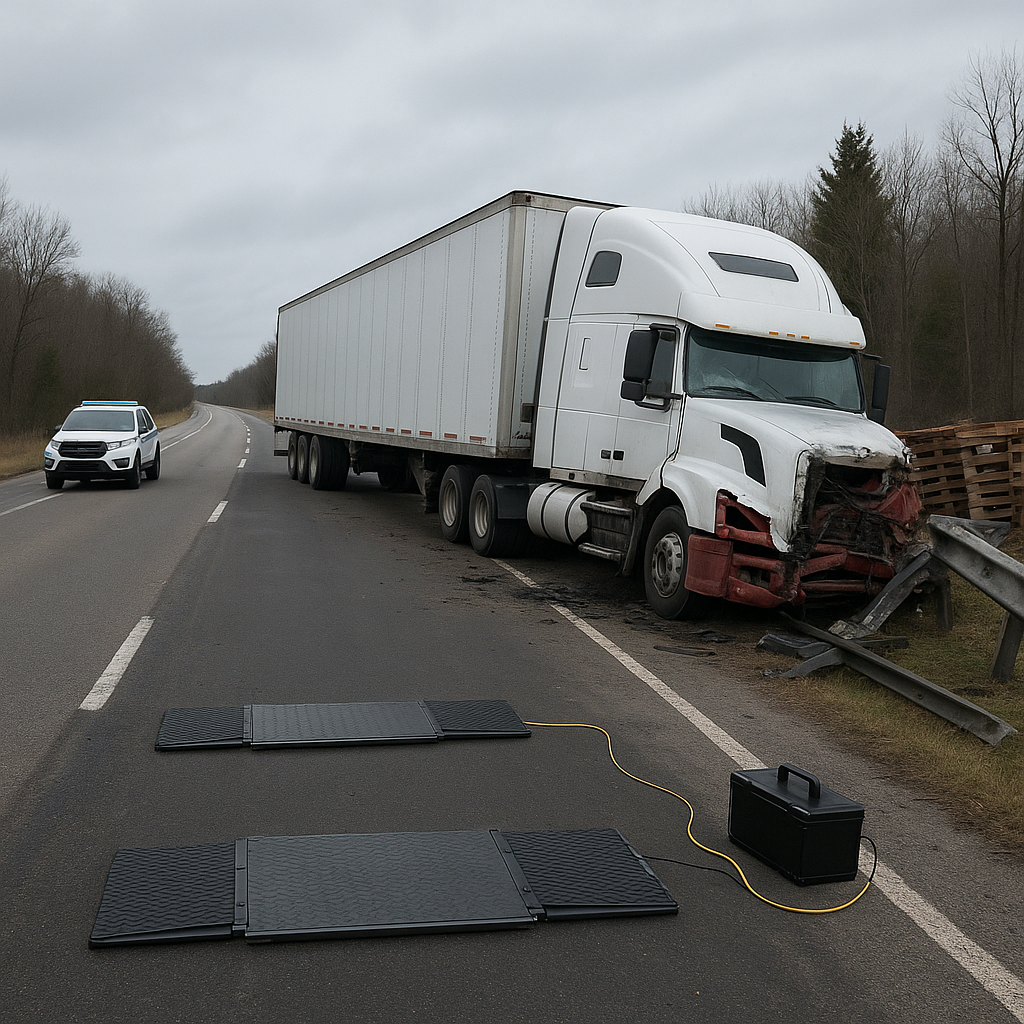
How Police Check Truck Weight and Cargo Load After Crashes in Nevada
Overview of Crash Response and Reporting Systems in Nevada
When a commercial truck is involved in a crash in Nevada, it prompts a meticulous response from various law enforcement and regulatory agencies. Given the critical role that truck weight and cargo load can play in accident causation and severity, officers are trained to investigate whether these factors contributed to the incident. Accurate documentation of truck weight and its cargo load after a crash is fundamental for the subsequent analysis, potential legal proceedings, and safety improvements.
Nevada, like other states, has built comprehensive frameworks for post-crash investigation. Local and state police, mainly the Nevada Highway Patrol (NHP), respond to and assess truck-involved crashes throughout the state. Their responsibilities include conducting scene safety assessments, collecting physical evidence, and ensuring accurate fulfillment of reporting obligations set forth by state and federal agencies. These efforts are coordinated through well-established interagency networks, ensuring that each crash, particularly those involving large commercial vehicles, receives detailed evaluation.
A key aspect of the crash inquiry involves the inspection of the truck’s weight and cargo. Overloaded or improperly loaded vehicles can increase stopping distances, cause mechanical failures, or result in cargo spills — all factors with potential implications for crash causation. Nevada authorities use a combination of visual inspections, records review, and, when necessary, portable or fixed scales to evaluate these aspects. This not only serves regulatory compliance but also supports broader transportation safety objectives in the state.
Common Agencies and Reporting Steps
Law enforcement responses in Nevada are multi-layered, with several agencies playing specific roles during and after a crash involving a commercial vehicle. The Nevada Highway Patrol, as the statewide traffic enforcement authority, is frequently the first responder to crashes on freeways and rural highways. Local police departments may take the lead in city or municipal areas, but they often coordinate with the NHP for incidents involving heavy trucks.
For particularly severe crashes, especially those resulting in significant injuries, fatalities, or hazardous spills, federal agencies such as the Federal Motor Carrier Safety Administration (FMCSA) may become involved. Additionally, the Nevada Department of Transportation (NDOT) and the Nevada Department of Public Safety often provide technical support or data gathering expertise.
During the reporting process, officers will secure the scene, attend to the injured, and begin evidence gathering. One revealing component of this process is the examination of the truck’s weight and cargo load:
– Initial Assessment: Officers may question the driver and review cargo manifests or bill of lading documents to check for declared weights.
– Physical Checks: Inspectors may visually assess the vehicle for signs of overloading, such as bulging tires, leaning axles, or obvious cargo displacement.
– Scale Verification: If there is suspicion or reason to believe that the truck is overweight, portable scales might be deployed at the scene (if available), or the vehicle may be escorted to a nearby permanent weighing station.
– Timeline of Involvement: Commercial vehicle inspectors, judicial authorities, and occasionally federal investigators work together to ensure accuracy and transparency through the reporting chain.
The outcome of these investigations is used for incident analysis, potential citations, and determination of liability or regulatory non-compliance.
Documentation Typically Involved
A crash involving a large truck demands thorough documentation, especially when cargo load and vehicle weight are believed to be contributing factors. Several standard types of paperwork come into play during a post-crash review:
– Crash Report Forms: Nevada’s crash reporting system includes detailed forms that capture information about vehicle weight, the nature and distribution of the cargo, and observed damage.
– Driver and Vehicle Records: Investigators often request the driver’s logbook, vehicle registration, commercial driver’s license (CDL), and recent scale tickets or reports from weigh stations. These documents establish the truck’s recent compliance history and may confirm declared cargo weights.
– Cargo Manifests and Bills of Lading: These shipping documents list the kind, amount, and declared weight of the cargo.
– Inspection Reports: If the truck was recently inspected at a scale house, those records are reviewed for inconsistencies.
– Photographic Evidence: Law enforcement officers commonly photograph the scene, vehicle interiors, and cargo bay to document visible issues such as improper cargo securing or spillage.
– Electronic Logging Devices (ELDs): Many commercial vehicles are equipped with ELDs that track drive times and sometimes cargo status, which can be reviewed as part of the crash assessment.
Collating this documentation—not only at the crash scene but also through subsequent investigation—ensures a holistic view of vehicle operation at the time of the incident.
Common Reporting Misunderstandings
Accurate reporting on commercial vehicle weight and cargo load can be challenging, and several misunderstandings frequently arise—some of which can persist long after the scene is cleared.
One frequent misconception involves the assumption that a truck’s listed weight on shipping documents matches its real-world load at the time of the crash. Haul fragmentation (partial unloading), transshipment, or changes made en route can render these documents outdated. Manual or visual checks thus become essential complements to paperwork reviews.
Another misunderstanding concerns how roadside scales are utilized. Some believe police can always weigh a vehicle immediately at the crash scene. In reality, the availability of portable scales is limited, and officers may need to escort the truck some distance to a fixed scale for a reliable reading. The logistics of this process—balancing crash scene preservation, highway safety, and accuracy—require careful coordination.
Furthermore, there is often confusion about the scope of police authority in examining cargo. Officers must follow established protocols, balancing legitimate investigation interests with broader legal considerations. This means that, unless there is clear evidence of overloading or impropriety, officers are generally methodical and circumspect in their cargo inspections.
Finally, stakeholders sometimes assume that cargo load infractions automatically imply crash liability. However, weight or loading violations discovered post-crash are only considered in context. They may factor into overall findings but do not determine sole responsibility. Instead, police reports focus on comprehensive crash causation analysis, incorporating driver behavior, road conditions, and mechanical factors as well.
Neutral Closing Paragraph
The procedures Nevada police follow to check truck weight and cargo load after a crash are designed to support thorough, unbiased investigations. By utilizing a range of techniques—from documentation review to direct measurement—authorities work to ensure commercial vehicles operate safely and within legal limits. Understanding these processes helps clarify the important role of crash reporting and investigation in Nevada’s broader transportation safety strategy, fostering accountability while continuing to evolve with new technologies and regulatory standards.