How Police Determine Fault After Nevada Semi Truck Accidents
Accidents involving semi trucks are among the most serious roadway incidents in Nevada, often resulting in significant damage, injuries, and complex legal situations. In the aftermath, one of the most critical tasks for law enforcement is determining who—or what—was at fault. This process influences everything from insurance claims to potential legal proceedings. Understanding how police determine fault after Nevada semi truck accidents can provide valuable insights to all road users and those affected by such collisions.
Overview of Crash Response and Reporting Systems in Nevada
In Nevada, when a semi truck accident occurs, a coordinated response is initiated to ensure safety, accurate incident documentation, and efficient management of traffic. Law enforcement agencies, such as the Nevada Highway Patrol (NHP) or city and county police departments, are typically dispatched to the scene once an accident is reported. Their immediate priorities include securing the area, tending to injuries, and preventing any secondary accidents.
Nevada operates within a fault-based insurance system, meaning that the party responsible for causing the accident is liable for resulting damages. Police play a pivotal role in the early stages of determining fault, as their reports often become key evidence in later investigations by insurance companies or, in some cases, the courts.
While law enforcement officers are not the final arbiters of liability, their observations, recollections, and findings are given significant weight.
Common Agencies and Reporting Steps
Multiple agencies may become involved in the investigation and reporting process, depending on the location and severity of the crash:
– Nevada Highway Patrol (NHP): Handles incidents that occur on highways and state roads.
– Local Police Departments: Oversee investigations within city limits.
– County Sheriff’s Offices: May get involved in rural or county road accidents.
Upon arrival, officers assess the situation, provide necessary aid, and initiate an investigation. This typically involves interviewing drivers, passengers, and witnesses; collecting evidence; and documenting the scene. Officers may also coordinate with emergency medical services and other response teams, especially if hazardous materials are involved, as is possible with commercial truck cargo.
In major crashes, specialized accident reconstruction teams, such as those within the NHP’s Major Accident Investigation Team (MAIT), might be called in. These teams use advanced tools and analysis techniques to piece together the sequence of events leading up to the collision.
Documentation Typically Involved
Proper documentation is vital for clarity and transparency in semi truck accident investigations. Officers typically gather and compile several types of information and records during and after their response:
– Crash Report/Accident Report: The official record completed by the responding agency, detailing facts about the incident, preliminary findings, and statements from involved parties.
– Driver Information Exchange Form: Contains information about both drivers, including license details, insurance, and company data in commercial vehicle cases.
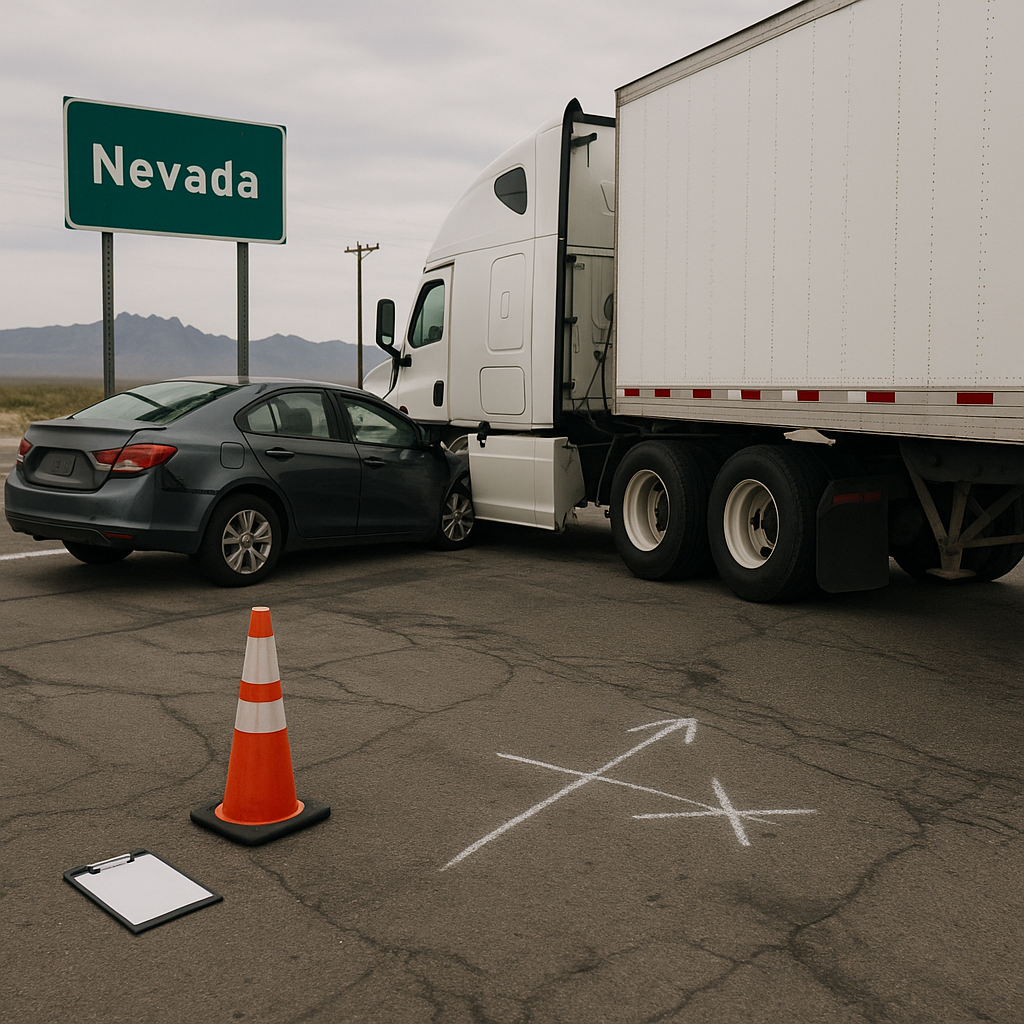
– Physical Evidence: Officers photograph the scene, vehicle positions, skid marks, debris, vehicle damage, and any road signage or traffic signals.
– Witness Statements: Reports from individuals who observed the incident, helping to clarify the sequence of events.
– Commercial Driver Logs and Records: These can include hours of service logs, electronic logging devices, and cargo manifests.
– Dashcam or Surveillance Footage: If available, video evidence can provide invaluable insight.
By compiling these elements, police create a factual foundation upon which fault can be evaluated.
Common Reporting Misunderstandings
Despite the thorough procedures outlined above, several misunderstandings often arise after semi truck accidents in Nevada:
– Assumption That the Police Decide Liability: Police reports are influential but do not ultimately determine civil liability or fault for insurance purposes. Their role is to document factual findings, list apparent contributing factors, and sometimes issue citations for clear traffic violations. The final assignment of fault is ultimately determined by insurance adjusters, courts, or through settlements.
– Belief That Fault Is Always Clear-Cut: Especially in semi truck accidents, fault may appear obvious at first glance but can often be shared or influenced by multiple factors. For instance, violations of federal trucking regulations, adverse weather, road conditions, or actions by other drivers may all play a role.
– Misinterpretation of Reporting Codes and Notes: The language, codes, or abbreviations used in police reports can be difficult to interpret for those unfamiliar with law enforcement documentation. For example, contributing factor codes or narrative sections may require context to fully understand.
– Overreliance on Citations: Receiving or not receiving a citation after a crash does not necessarily indicate fault; an officer might issue a citation for an infraction, but this does not always equate to liability in the broader context of a civil case or insurance claim.
– Underestimating the Role of Commercial Regulation: Because commercial vehicles are subject to different standards and regulations, evidence related to driver logs, cargo securement, and hours of service can significantly influence how fault is ultimately understood and assigned.
Neutral Closing Paragraph
Semi truck accidents in Nevada are complex events that require a detailed and methodical response by law enforcement. The way police determine fault amid these circumstances relies on a combination of on-scene investigation, documentation, and professional judgment—noting both the obvious and the subtle clues that paint the full picture of the incident. While the police report carries considerable weight, it serves as part of a larger process involving multiple parties and agencies. By understanding how these investigations unfold, Nevada motorists and commercial drivers alike can better appreciate the importance of accurate information and cooperation in the wake of a serious crash.