
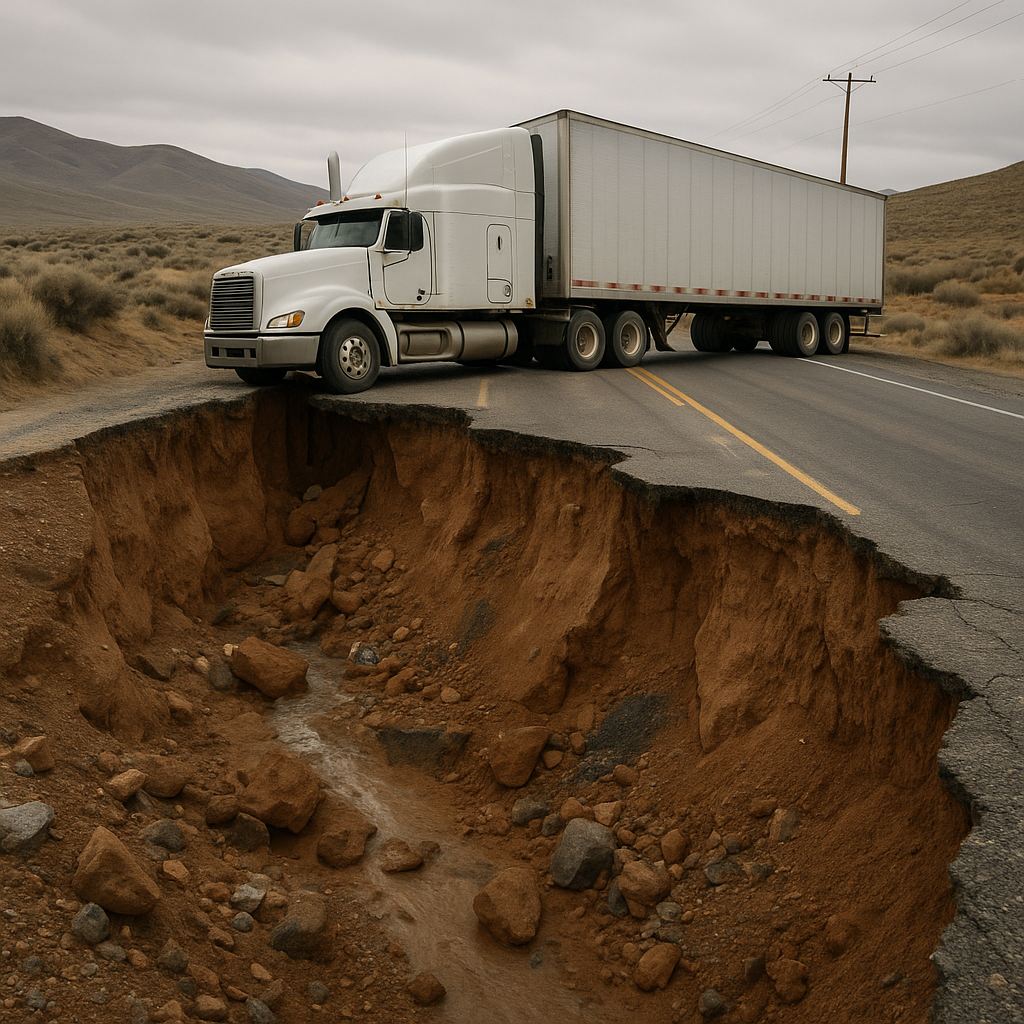
How Road Washouts Affect Nevada Semi Truck Accidents
Nevada’s extensive roadways cover an incredible variety of landscapes—from high desert valleys and rolling mountain highways to rural stretches lined with sagebrush and sand. While these scenic routes are vital to the state’s economy and transportation network, they also present unique challenges for motorists—particularly semi truck drivers. One of the most dangerous hazards on Nevada roads is the phenomenon of road washouts, sudden and severe erosion of the roadway due to water flow. This article explores how road washouts affect Nevada semi truck accidents, why commercial trucks face distinct dangers compared to smaller vehicles, and how Nevada’s seasonal patterns contribute to this risk.
Overview of the Nevada Weather or Road Condition Factor
Despite its reputation as one of America’s driest states, Nevada is not immune to sudden and severe weather events that can devastate its transportation infrastructure. Flash floods, torrential downpours, and rapid snowmelt can all result in road washouts—the rapid erosion or undercutting of road beds and pavement. Washouts can range from minor shoulder crumbling to complete loss of sections of roadway, leaving deep gouges or impassable gaps.
Several factors make Nevada particularly susceptible to road washouts:
– Arid Soil Composition: Much of Nevada’s soil is sandy or clay-like with poor water absorption, so even brief storms can lead to rapid runoff and erosion.
– Limited Vegetative Cover: Sparse vegetation in the desert leaves soil unanchored and more vulnerable to being washed away.
– Mountainous Terrain: Rainfall runs quickly down slopes, turning minor streams into rushing torrents that undermine roadbeds.
– Aging Infrastructure: Many of Nevada’s rural roads were not built with modern stormwater management, increasing risk during extreme weather.
The Nevada Department of Transportation (NDOT) continually monitors flash-flood-prone areas, but the unpredictable and rapid onset of storms means some washouts are only discovered after vehicles encounter them or are reported by drivers.
How This Condition Affects Trucks Differently Than Cars
While road washouts are hazardous for all vehicles, semi trucks face unique, amplified risks due to their size, weight, and handling requirements.
1. Increased Stopping Distance and Weight
Semi trucks can weigh as much as 80,000 pounds fully loaded, compared to about 4,000 pounds for a typical passenger car. That immense mass limits a truck’s agility and drastically increases the distance required to come to a full stop—especially on compromised road surfaces. If a truck encounters a washout suddenly, stopping before reaching the hazard can be nearly impossible.
2. Vulnerability to Undermined Roadbeds
A washout often leaves a pavement “overhang”—sections that appear normal on the surface but lack foundational support beneath. A passenger car may pass by without the road collapsing, but the concentrated weight of a semi can cause the weakened pavement to give way. This can lead to the truck becoming stranded, partially falling through the surface, or even tipping over.
3. Reduced Maneuverability
Semi trucks require more space to maneuver or change course. On rural Nevada highways where shoulders are narrow and escape routes few, an unexpected washout offers little time or space for a truck driver to seek a safer path or execute a controlled avoidance maneuver.
4. Greater Consequences for Cargo and Hazardous Materials
Commercial trucks often carry valuable goods or hazardous materials. An accident resulting from a road washout can lead to cargo spills, chemical leaks, or fires—heightening the consequences compared to regular vehicle incidents.
Why Crashes Can Become Severe Under These Conditions
Road washouts create a “perfect storm” of conditions that increase the likelihood and intensity of semi truck accidents:
1. High Approach Speeds
Nevada’s rural highways are typically posted at 65–75 mph. If a washout occurs in an unseen dip, curve, or just beyond a rain-blurred horizon, semi trucks approach at high speeds with little advance warning.
2. Limited Visibility
During storms, visibility may drop rapidly, obscuring the location or severity of a washout. Blowing dust, heavy rainfall, or lingering water on the windshield can delay a driver’s reaction until it’s too late.
3. Chain Reaction Collisions
A semi truck that stops abruptly due to a washout may create a hazardous obstruction for following vehicles, leading to multi-vehicle pileups. Alternately, swerving to avoid a washout can cause jackknifing or rollovers, particularly on wet or washed-out surfaces.
4. Recovery and Disaster Response Challenges
When a semi truck is involved in a washout-related crash, its size and the danger presented by spilled cargo or a blocked highway can delay rescue and cleanup. In remote stretches of Nevada, emergency response times can be long, compounding the seriousness of the situation.
Common Seasonal Patterns in Nevada
Understanding when and where road washouts are most likely to occur in Nevada helps drivers—especially those operating large commercial vehicles—stay vigilant of potential hazards.
1. Summer Monsoons and Thunderstorms
From July through September, Nevada commonly experiences intense thunderstorms known as the Southwestern Monsoon. While these storms are sometimes brief, they can unleash inches of rain in minutes, overwhelming arroyos and drainage systems. Flash floods during this season are the leading cause of summer washouts, especially around Las Vegas, central Nevada valleys, and low-lying rural highways.
2. Winter Snow and Spring Thaw
In northern and elevated areas (such as near Reno or the Ruby Mountains), winter brings heavy snow. When temperatures rise rapidly in spring, snowmelt can cause significant flooding, overwhelming older roadways and washing away roadbeds.
3. Sudden Isolated Downpours
Nevada’s unpredictable, isolated cloudbursts can strike at any time of year, especially in the desert’s “rain shadow” regions. Localized storms may affect a small area but have devastating effects on highways without warning.
4. Long-Term Drought and Soil Instability
Prolonged drought, while reducing surface water, can create brittle, cracked soils that erode rapidly when rain eventually arrives. Dry creeks and washes, dormant for months, may fill unexpectedly and undercut adjacent roads in a single event.
NDOT frequently issues flash flood advisories and closes highways as a precaution, but rapid weather changes and remote monitoring limitations mean drivers—especially those piloting semi trucks—should never assume a road is risk-free after heavy precipitation.
Conclusion
How road washouts affect Nevada semi truck accidents is a product of unique environmental and roadway factors that combine to create significant hazards. The combination of Nevada’s unpredictable weather, vulnerable infrastructure, and the immense size and weight of semi trucks means that every storm, from brief downpours to dramatic monsoon events, holds the potential for dangerous conditions on the road. Staying aware of seasonal weather patterns and understanding how these challenges uniquely threaten large vehicles goes a long way—helping ensure safer journeys for truckers and motorists alike across Nevada’s beautiful but sometimes unpredictable highways.