
How Weather Impacts Road Friction in Nevada
Overview of the Nevada Weather or Road Condition Factor
Nevada’s unique geography and desert climate create road conditions unlike anywhere else in the United States. The state’s expansive terrain encompasses arid deserts, elevated mountain ranges, and several microclimates that contribute to a variety of weather challenges. From bone-dry heatwaves in Las Vegas to icy mornings in Reno and the Sierra foothills, Nevada drivers encounter a vast range of conditions—and these directly affect how vehicles grip the road. Understanding how weather impacts road friction in Nevada is essential to safe driving and transportation planning in the Silver State.
In technical terms, road friction refers to the resistance between vehicle tires and the pavement surface. This friction is crucial; it enables vehicles to start, stop, and steer effectively. However, Nevada’s fluctuating weather conditions—from blistering heat to sudden rainstorms or rare but severe winter snow—significantly impact road friction levels. These weather-induced changes may lead to increased risks for all drivers, especially in areas prone to abrupt weather shifts.
How This Condition Affects Trucks Differently Than Cars
While every vehicle relies on road friction to maneuver safely, trucks and passenger cars do not experience weather-related friction changes equally. Nevada’s extensive network of highways, including busy freight corridors like Interstate 15 and Interstate 80, sees a large volume of commercial truck traffic that’s uniquely impacted by weather and road surface conditions.
Larger Mass, Slower Reactions
Trucks, by virtue of size and weight, depend more heavily on friction to maintain control. A fully loaded semi-truck can weigh up to 80,000 pounds—far heavier than the average car. Such mass requires much more friction to stop or turn safely. During periods of low friction—caused by rain, dust, sand, or even unexpected ice patches—truck tires may not achieve enough grip, resulting in longer stopping distances and an increased risk of jackknifing or skidding.
High Center of Gravity
Nevada’s frequent crosswinds, especially in open desert stretches, can combine with low-friction road surfaces to create stability hazards for trucks. Unlike cars, the tall and heavy structure of trucks makes them susceptible to tipping if they lose traction abruptly, especially when maneuvering around unexpected debris or sudden weather changes.
Engine Braking and Downhill Grades
In mountainous Northern Nevada, trucks often rely on engine braking to control their speed down steep grades. Low friction caused by rain, ice, or snow dramatically reduces the effectiveness of this technique, putting trucks at risk of runaway situations that cars, due to their lighter weight, experience less acutely.
Why Crashes Can Become Severe Under These Conditions
Certain road and weather combinations amplify the risk and severity of crashes on Nevada’s roads. Here’s why:
Reduced Reaction Time
Whether it’s rain pooling on Las Vegas highways or black ice sneaking onto northern passes, hazardous conditions decrease the time and distance motorists have to react safely. Even a thin film of water or sand can prevent tires from gripping, causing vehicles to hydroplane or lose contact with the pavement.
High Speeds on Long Straightaways
Nevada’s highways are famously straight and open, encouraging higher average speeds. Reduced friction—due to dust, rain, or snow—means that vehicles traveling fast require even more distance to stop. When trucks or tailgating cars can’t slow down in time, multi-vehicle pileups can occur.
Chain Reaction Crashes
Low-friction conditions, particularly on mountain passes in winter, can rapidly trigger chain reaction wrecks. One vehicle losing control may set off a series of collisions, particularly on busy trucking routes or during tourist-heavy times when out-of-state drivers may not anticipate Nevada’s sudden weather shifts.
Emergency Response Challenges
Inclement weather not only causes accidents but can delay emergency responders. Heavy snow, blinding dust storms, or flash flooding in southern Nevada may slow rescue operations, increasing the risk of serious injury.
Common Seasonal Patterns in Nevada
Each season introduces its own distinctive set of “friction challenges” for Nevada’s roadways:
Summer: Extreme Heat and Pavement Changes
Nevada’s infamous summer heat often exceeds 100°F, especially in southern cities like Las Vegas, Henderson, and Laughlin. The intense solar radiation can soften asphalt, creating a slick, oily surface that reduces tire grip. In rural areas, heat may also cause pavement cracking or “bleeding,” which further lessens friction. Dust storms, known locally as “haboobs,” may suddenly blanket highways, depositing fine particles that act like ball bearings beneath tires.
Fall: Sudden Showers and Early Frosts
Autumn in Nevada often brings the first rainfall after long dry spells. When rain mixes with built-up oil and dust, roads become particularly slippery—a phenomenon known among transportation experts as “first rain effect.” In higher elevations, early morning frosts may develop on bridges and shaded sections, creating nearly invisible hazards for motorists who aren’t expecting ice.
Winter: Snow, Ice, and Black Ice
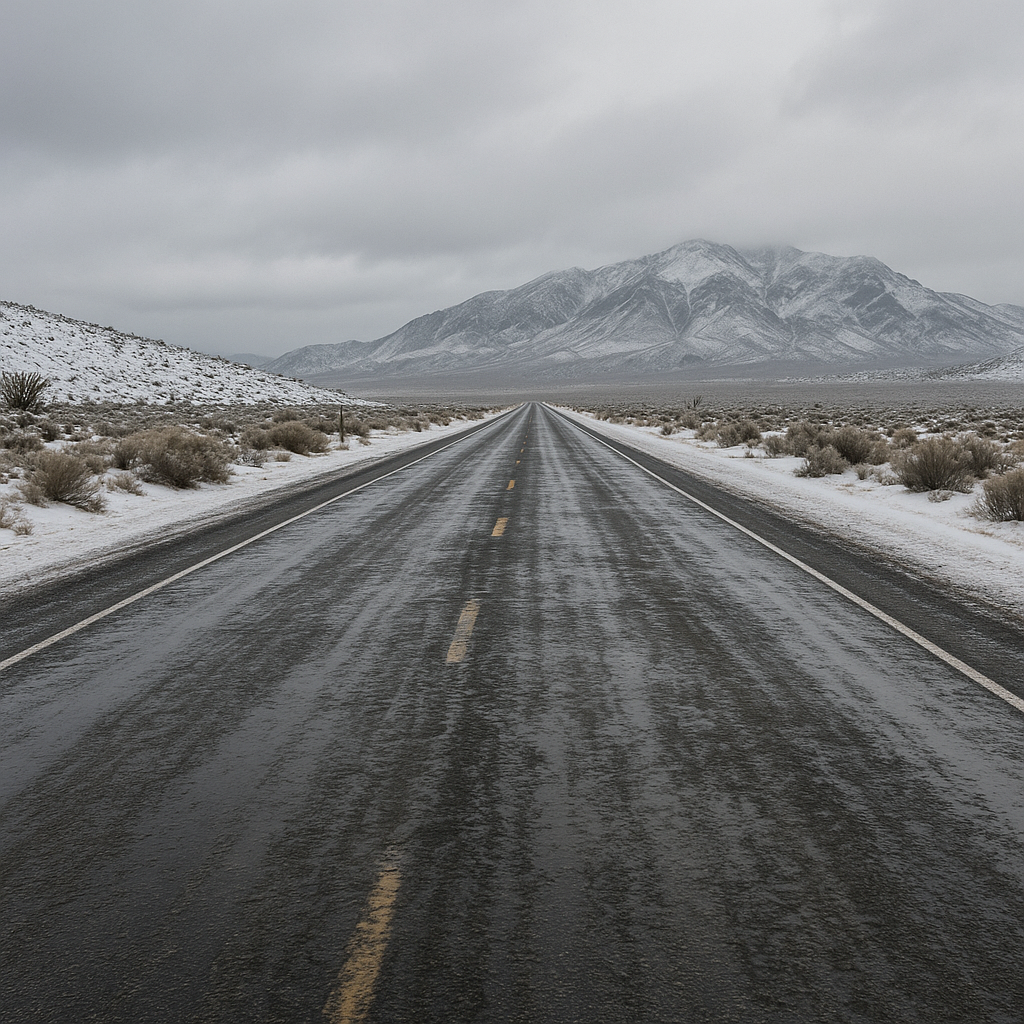
Northern and central Nevada, including Reno, Ely, and the Nevada high desert, regularly face snow and ice from December through March. Black ice on interstates or remote rural roads can be almost undetectable, presenting severe hazards even to experienced drivers. Mountain routes may experience rapid weather shifts, catching travelers—and friction levels—off guard.
Spring: Torrential Rains and Flash Flooding
Spring storms in Nevada can deliver heavy rain in short bursts, overwhelming drainage systems and temporarily flooding highways. Water on the road greatly reduces friction, especially if pools or puddles accumulate in often-traveled lanes. Hydroplaning risk spikes during these episodes, especially for lightweight cars and high-speed trucks.
Neutral Closing Paragraph
Nevada’s diverse and often severe weather plays a substantial role in altering road friction throughout the year. High heat, sudden rain, winter storms, and dust events each interact with road surfaces in unique ways, creating evolving challenges for both personal vehicles and commercial trucks. Understanding how these weather patterns impact traction can help drivers anticipate potential hazards and adapt their driving style accordingly. By staying aware of local conditions and the ways weather impacts road friction in Nevada, everyone can contribute to safer roads across the state—no matter the season.