
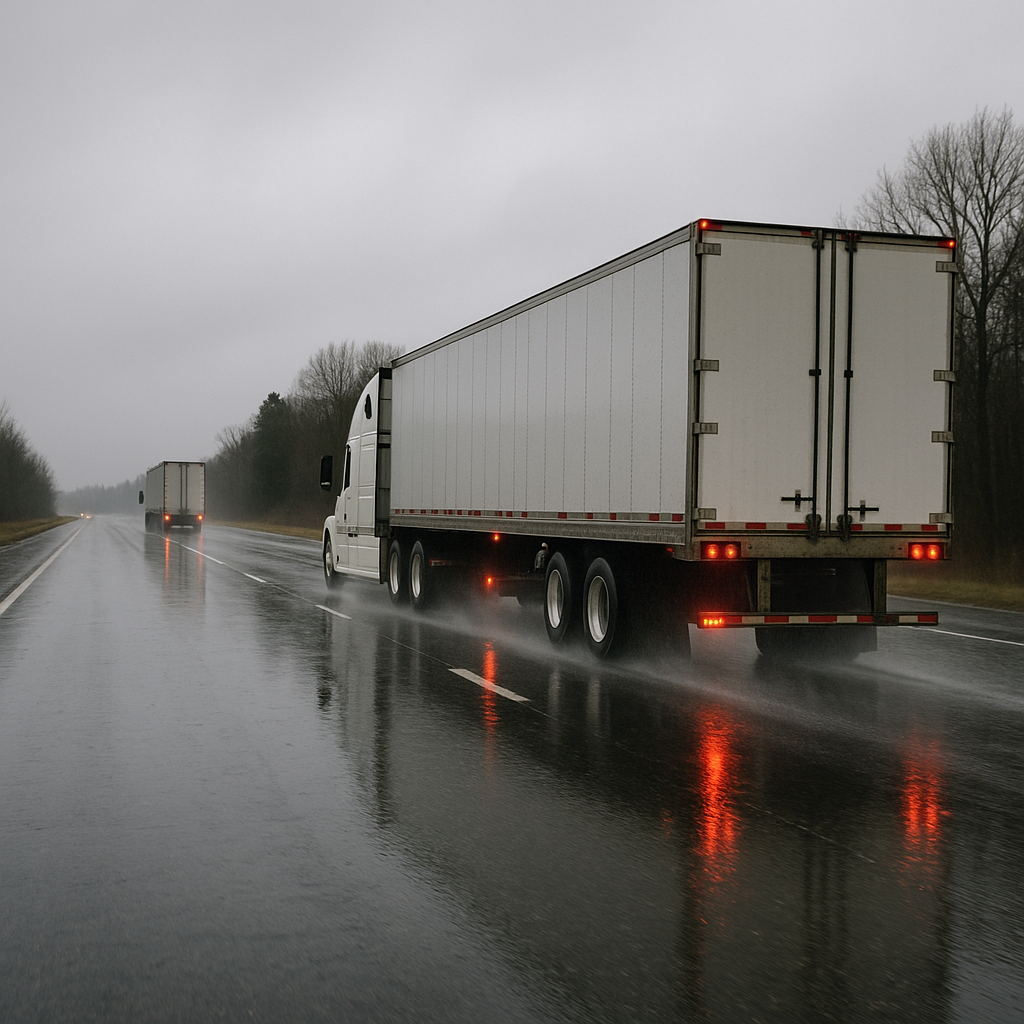
How Wet Roads Affect Stopping Distance for Semis in Nevada
Wet roadways in Nevada can dramatically increase the stopping distance for semi-trucks—a risk that’s particularly important given the unique weather patterns and diverse traffic conditions found across the state. This article explores why wet roads pose such a significant challenge, how these factors uniquely impact large commercial vehicles compared to standard passenger cars, and why crashes involving semis under these conditions often become more severe. We’ll also look at the most common seasonal patterns that lead to wet roads in Nevada, and what it all means for everyone sharing the highways.
—
Nevada’s Unique Weather and Road Conditions
Nevada is well-known for its arid, desert climate, featuring long stretches of dry weather, especially in regions like Las Vegas and the southern state. However, the state isn’t immune to precipitation, and when it comes, it can cause significant hazards—particularly on the highways that link Nevada’s major cities and rural communities.
During the late fall, winter, and early spring, Nevada may experience rainfall or even snow, especially in the northern areas such as Reno and around the Sierra Nevada. Even short but intense bursts of rainfall, which are common in the state’s monsoon season (typically from July to September), can quickly transform a bone-dry road into a slippery hazard. The combination of rare rain and long-dry road surfaces means that when precipitation does happen, roads may be especially slick due to accumulated oils and debris that haven’t been washed away.
Interstate corridors such as I-15, I-80, and I-580 see both heavy car and truck traffic—from local shipments to transcontinental freight. Wet conditions can turn these busy Nevada highways into potential accident zones, especially for large commercial vehicles like semis.
—
How Wet Roads Affect Trucks Differently Than Cars
A “semi” or 18-wheeler can weigh up to 80,000 pounds when fully loaded—about 20 times heavier than the average passenger vehicle. The sheer mass and mechanics of these trucks mean physics is working against them when it comes to stopping, especially on wet surfaces.
Extended Stopping Distance
On dry pavement, a loaded semi-truck traveling at highway speed (about 65 mph) typically needs roughly 525 feet to come to a complete stop—that’s nearly the length of two football fields. Add even a thin layer of water, and that stopping distance can increase by an additional 20% or more. This happens because wet asphalt reduces tire traction, making it much easier for the “frictional grip” to be broken.
Decreased Control
Unlike cars, which have advanced braking technology and lower centers of gravity, semi-trucks rely on air brake systems that have a small built-in delay. Combine this with the increased risk of hydroplaning (where a truck’s tires lose contact with the road entirely on a layer of water), and there’s a much narrower margin for error.
Jackknifing and Other Truck-Specific Risks
Wet roads don’t just make it harder for semis to stop—they also increase the risk of jackknifing, where the trailer swings out at an angle from the cab. This is far less common with passenger cars but a well-known hazard for trucks due to the separation between the tractor (front) and trailer (rear) units. In Nevada’s sweeping curves or on off-ramps, this risk can rise sharply.
—
Why Crashes Can Become Severe Under These Conditions
When a crash occurs on a wet Nevada highway, the potential for severe consequences skyrockets—particularly because of the factors unique to semis:
– High Kinetic Energy: The enormous mass of a semi-truck means any collision releases a huge amount of force, making even a “minor” accident disastrous.
– Long Rear-End Zones: Wet roads increase stopping distances so significantly that a semi may rear-end smaller vehicles if traffic suddenly slows or stops.
– Multi-Vehicle Incidents: On Nevada’s busy interstate corridors, an incident involving a semi can quickly involve multiple vehicles due to the size of the truck blocking multiple lanes and the possibility of slide-offs or rollovers.
– Hazardous Cargo: Trucks often carry freight that, if spilled, could complicate cleanup and rescue operations—especially on rural stretches of highway where help may take longer to arrive.
The geography of Nevada further intensifies these risks. Mountain passes near Reno or stretches of road near lakebeds and canyons may experience both weather and visibility challenges, compounding the danger.
—
Common Seasonal Patterns in Nevada
Understanding the state’s patterns can help everyone—from freight drivers to daily commuters—expect when wet roads might create added dangers regarding stopping distances for trucks:
Winter and Early Spring
Northern Nevada, including the Reno-Tahoe area, can encounter snow and ice, which cause the most severe reduction in traction and stopping ability. Melting snow mixes with oily surfaces during warmer daytime temperatures, then refreezes overnight, providing hazardous and unpredictable roadways for trucks.
Monsoon Season (July–September)
Though most of Nevada is dry much of the year, the southwest monsoon can bring sudden, sometimes intense thunderstorms, particularly to southern Nevada. The first rains after long dry spells are especially notorious for making roads slick. Heavy traffic around urban hubs like Las Vegas during these storms can exacerbate the risk of pileups involving trucks.
Sudden Showers and Desert Rains
Showers can strike almost without warning. The rapid pace at which storms can form, particularly in the high desert, leads to slippery stretches on highways which may not have seen rain for months. This sudden transition from dry to wet conditions often catches experienced long-haul truckers off guard as well.
—
Navigating Nevada’s Wet Roads: A Neutral Perspective
In a state as expansive and varied as Nevada, from the high mountain passes near Lake Tahoe to the desert corridors approaching Las Vegas, wet roads will always present a challenge, especially for semi-trucks. The state’s unique weather patterns—characterized by dry spells punctuated by intense but infrequent precipitation—create hazards that can dramatically lengthen the stopping distance for all vehicles, but none more so than semis.
Awareness of how and when wet conditions are likely, combined with an understanding of how these roads affect large trucks, is a key part of navigating Nevada’s highways safely. Whether you’re behind the wheel of a commercial vehicle or traveling alongside one, being alert to weather changes and understanding how stopping distances are affected by wet roads can help reduce risks for everyone. By approaching our state’s dynamic weather and heavy truck traffic with respect and caution, drivers can better anticipate and respond to Nevada’s unique roadway challenges.