
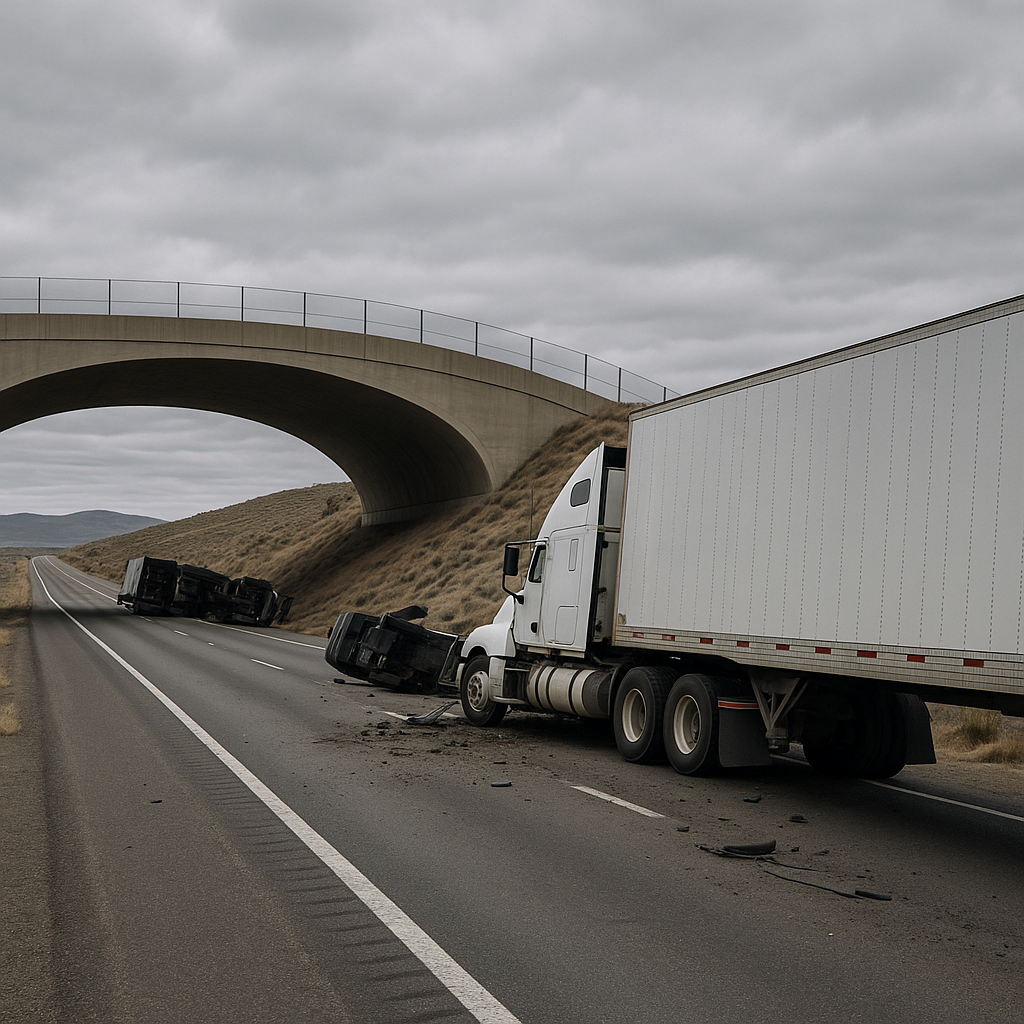
How Wildlife Crossings Contribute to Nevada Truck Crashes
Nevada’s open landscapes and diverse ecosystems mean roads often intersect with the natural habitats of wildlife. While these intersections can pose risks for all drivers, commercial trucks face unique challenges. Exploring how wildlife crossings contribute to Nevada truck crashes offers important insights into the blend of environmental, seasonal, and vehicle-specific factors that play a role on Silver State highways.
Overview of the Nevada Weather or Road Condition Factor
Nevada is renowned for its dramatic landscapes: from the snow-capped Sierra Nevada in the west to the arid stretches of the Great Basin. Hundreds of miles of highways—such as Interstate 80 and U.S. Route 50 (“The Loneliest Road in America”)—cross wild terrain. Wildlife crossings, marked by signs and sometimes designated underpasses or overpasses, are common features along these stretches. However, the combination of these crossings with Nevada’s unique weather and road conditions cannot be overlooked.
The state’s weather is marked by sharp seasonal changes. Winter brings icy roads and limited visibility in mountainous areas, while summer can mean heat-induced mirages and sudden thunderstorms. These fluctuations affect the movement patterns of wildlife, often increasing animal activity near roadways at certain times of year. Rain, fog, dust storms, and snow all decrease visibility, making it harder for drivers to spot animals in time.
The topography further complicates matters. Highways may twist along canyons, ascend steep grades, or cut through open desert with nothing but sagebrush and the occasional antelope or mule deer. Wildlife crossings installed in these locations are intended to alert drivers to animal activity, but when combined with variable weather and road surfaces, these areas can transform from safety measures into potential hazard zones—particularly for large commercial trucks.
How This Condition Affects Trucks Differently Than Cars
While all vehicles are vulnerable to wildlife encounters, commercial trucks are especially at risk. There are several truck-specific factors that make wildlife crossings problematic during adverse Nevada weather and road conditions:
Increased Stopping Distance and Reduced Maneuverability
Trucks, especially those weighing up to 80,000 pounds, require far more distance to stop or swerve than passenger vehicles. On a dry highway, a fully loaded semi-truck traveling at highway speeds can need over 500 feet to come to a complete stop—considerably more on wet, icy, or gravelly Nevada roads. When a deer or elk suddenly emerges near a wildlife crossing, a car might swerve or brake in time, but a truck may not avoid a collision or might lose control while trying.
High Centers of Gravity
Big rigs, especially those with taller trailers or shifting cargo, have higher centers of gravity. Attempting to avoid wildlife by suddenly turning the wheel at speed—something a car might recover from—risks jackknife, rollover, or cargo spills for trucks, especially on slick or uneven roads.
Driver Visibility Challenges
Commercial trucks have more blind spots and higher cabs than cars. In Nevada’s frequent low-light dawn and dusk periods—when wildlife is most active—drivers may not spot an animal darting onto the road until it’s too late. Dust storms or blowing snow, both common in parts of Nevada, further reduce visibility.
Freight and Scheduling Pressure
Long-haul truck drivers are often on tight schedules. The need to maintain routes and delivery times may make drivers less willing to slow down for extended stretches of marked wildlife crossing zones, especially if conditions make it seem “clear”—even though animals may suddenly appear without warning.
Consequences of Sudden Braking or Swerving
For trucks, a sharp maneuver to avoid wildlife often leads to much worse outcomes than hitting the animal itself. Skidding, jackknifing, or rolling over can result in multi-vehicle accidents, blocked highways, and significant cargo loss. Thus, wildlife crossings contribute Nevada truck crashes not just through animal strikes, but through the risky avoidance strategies they inadvertently trigger.
Why Crashes Can Become Severe Under These Conditions
When trucks are involved, wildlife-related crashes in Nevada can escalate in severity due to several factors:
High Kinetic Energy and Impact Force
Trucks strike with significantly more force than passenger vehicles. A collision with a large animal such as a mule deer, elk, or even wild horse (all found roaming in areas like rural Nevada) can compromise vehicle control, puncture radiators, or send large animals crashing through windshields, posing grave risks to drivers and any nearby vehicles.
Secondary Collisions
If a truck swerves or loses control near a wildlife crossing, it may collide with other vehicles, highway infrastructure, or even overturn. The scale and speed of a truck transform a potential single-vehicle incident into a multi-vehicle disaster—especially on Nevada’s rural highways with limited passing lanes and emergency access.
Hazardous Conditions After the Crash
Cargo spills, diesel leaks, blocked lanes, and debris are common consequences of truck crashes. On remote Nevada highways, it may take first responders longer to arrive, increasing risk to other motorists who may encounter the aftermath without warning—complicated further in fog, darkness, or during storms.
Chain Reaction Incidents
Especially in poor visibility, one truck crash may lead to additional vehicles running off the road, colliding with stopped traffic, or encountering panicked or injured wildlife lingering near the scene.
Common Seasonal Patterns in Nevada
Recognizing when wildlife crossings contribute Nevada truck crashes most often means understanding the connection between seasonal patterns and animal movement.
Spring and Early Summer
As snow melts in the higher elevations, mule deer, elk, and other species begin seasonal migrations in search of food and water. This migratory activity peaks near dawn and dusk, coinciding with low-light driving conditions on many Nevada highways. Rain and rapid temperature shifts may also create slippery surfaces on shaded curves or overpasses—places where wildlife is likely to cross.
Fall
Autumn brings mating and further migratory activity. Deer and other large ungulates are especially active near roadways, making wildlife crossings even more important—and hazardous—along their migration routes. Shorter days and increased fog or mist can make them even harder to spot.
Winter
In higher elevations like the Sierra, wild animals descend closer to human settlements and lower-elevation highways to escape snow and find food. Black ice and snowpack reduce even further the already-limited stopping and swerving ability of large trucks, and wildlife may remain motionless or stunned by headlights, increasing the risk of impact.
Summer
Though less active, some species move closer to highways to access water sources such as culverts and drainage ditches—often located at underpasses or bridges where wildlife crossings are marked.
Conclusion
Wildlife crossings are meant to help drivers avoid animal collisions, but in Nevada’s varied landscapes and unpredictable weather, these zones can inadvertently contribute to truck crashes. Large trucks face unique risks when dealing with wildlife—due to longer stopping distances, reduced maneuverability, and greater impact severity. Seasonal migrations, weather extremes, and Nevada’s challenging roads combine to make wildlife crossing zones especially problematic for commercial drivers. Heightened awareness, ongoing investment in safer crossing infrastructure, and attention to seasonal trends are all crucial in mitigating these hazards for trucks, cars, and the state’s abundant wildlife alike.