
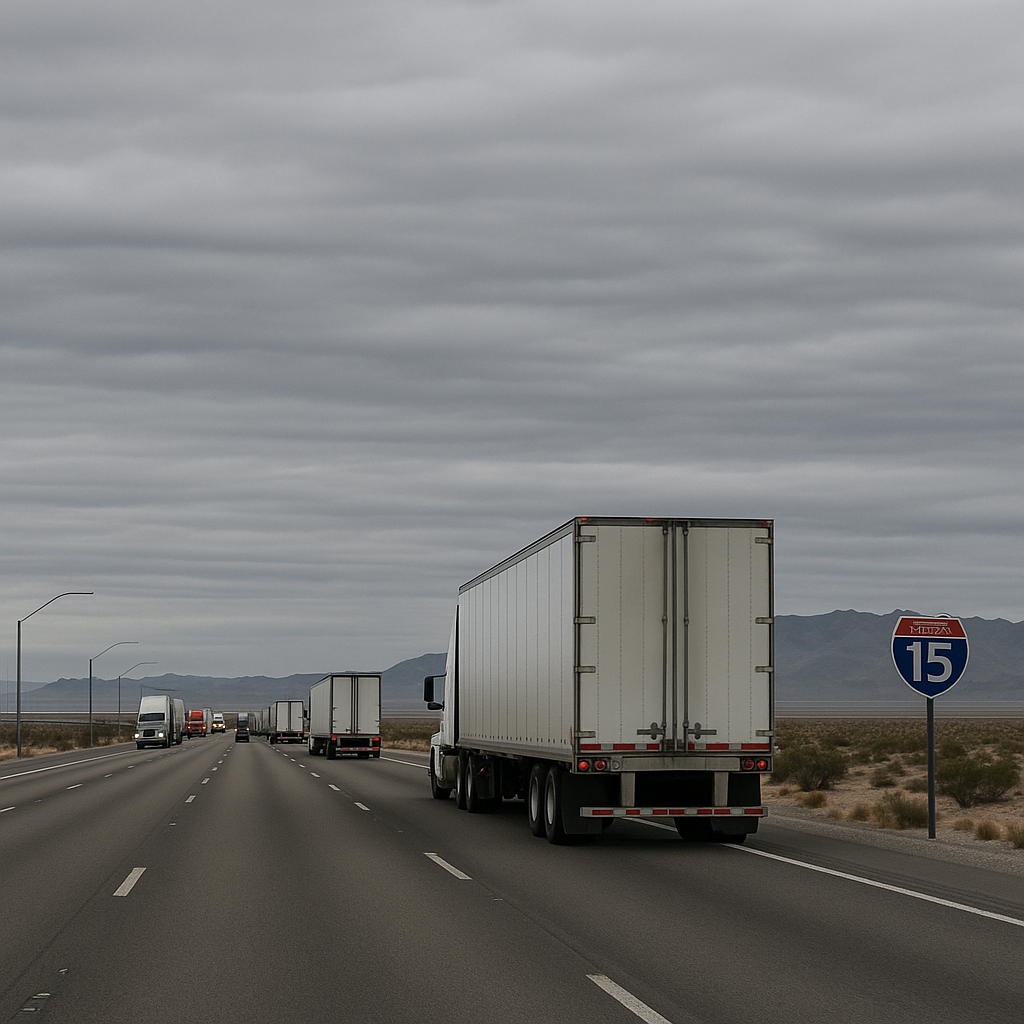
I-15 Freight Corridor and Truck Traffic in Nevada
Overview of the Freight Corridor or Trucking Activity
The Interstate 15 (I-15) freight corridor stands as one of Nevada’s most important transportation arteries. Stretching approximately 124 miles within the state, I-15 enters Nevada near the California border at Primm and continues through Las Vegas before exiting into Arizona. This corridor is not just a lifeline for travelers and tourists; it serves as a heavy-duty freight highway, supporting vital commerce between Southern California, Nevada, and much of the Intermountain West.
Nevada’s segment of I-15 is unique due to its strategic geographic location. It links major urban markets—most notably the Los Angeles basin and Las Vegas—and provides access to regional hubs like Salt Lake City. Every day, thousands of trucks traverse this corridor, moving raw materials, consumer goods, construction equipment, and much more. The Las Vegas metro area, now one of America’s fastest-growing cities, depends on reliable and efficient truck routes for its economic development and daily functioning.
The corridor’s role is especially significant because Nevada’s economy depends heavily on industries like tourism, hospitality, manufacturing, and logistics. Much of the fuel, food, and supplies entering Southern Nevada are delivered by truck via I-15. In this sense, the corridor not only powers regional supply chains but also supports critical local infrastructure, from supermarkets to major resort properties.
Common Truck Types and Freight Activity in the Area
Truck traffic on the I-15 freight corridor in Nevada features a diverse array of vehicle types and cargoes. The majority of truck traffic consists of heavy-duty tractor-trailers, which are preferred for long-haul freight due to their cargo capacity and efficiency across interstate distances.
Common truck types using the corridor include:
– 53-foot Dry Van Trailers: These are the most familiar big rigs seen on I-15, carrying everything from consumer electronics to packaged food.
– Refrigerated “Reefer” Trailers: Essential for transporting perishables such as produce, dairy, and frozen items between California’s agricultural regions and Nevada markets.
– Flatbed Trucks: Used for carrying construction materials, machinery, and oversized loads vital to Nevada’s booming real estate and development sectors.
– Tanker Trucks: Delivering fuel and chemicals to service regional fuel stations and industrial facilities.
– Double and Triple Trailers: Common in the western states for moving high-volume cargo efficiently, especially between large distribution centers.
Freight activity is driven by several economic sectors:
– Retail and Consumer Goods: Southern Nevada relies on frequent inbound shipments, especially ahead of major holidays and events.
– Construction Supplies: Las Vegas’ constant expansion means steady movement of steel, cement, and building materials.
– Manufacturing and Exports: Outbound shipments from Nevada-based manufacturers utilize I-15 for broader market access.
– Viva Las Vegas: The hospitality and casino sectors depend on timely, large-scale deliveries for everything from food to furnishings.
Truck stops, rest areas, and freight terminals dot the corridor, supporting the workforce that keeps this freight corridor moving. With the proximity to key border crossings (like the bustling port at Long Beach, California), much of the truck traffic on I-15 in Nevada represents a critical link in international supply chains.
How Congestion or Merging Creates Risk
I-15 through Nevada’s urban and rural stretches can present unique challenges caused by traffic congestion and merging behaviors, heightening risks for truckers and motorists alike.
Las Vegas Metro Area: One of the most notorious sections is through Las Vegas, where the interstate expands to multiple lanes but still experiences significant congestion, especially during rush hours and special events. Several major interchanges—including the I-215 beltway and US-95—create merging points where trucks must navigate a constant flow of vehicles entering and exiting, increasing the likelihood of lane changes and complex traffic dynamics.
High Freight Volume and Urban Access: High volumes of freight traffic, combined with local automobiles, can make merging lanes especially risky. Passenger vehicles may attempt to overtake or “squeeze” in front of large trucks, underestimating stopping distances. For truck drivers, heavy inbound and outbound volumes, particularly near distribution centers and industrial parks on city outskirts, create challenging merging scenarios.
Bottlenecks and Construction Zones: Temporary lane closures due to Nevada’s ongoing infrastructure improvements often result in sudden bottlenecks. Reduced lanes and unexpected shifts in traffic patterns require heightened awareness and slower speeds, conditions that can be especially hazardous for vehicles with long stopping distances, like tractor-trailers.
Weather and Geography: Southern Nevada typically enjoys clear weather, but windstorms and the occasional rain can further complicate merging and lane changes — especially in rural areas like the Moapa Valley, where visibility and road surface conditions can worsen rapidly.
What this means for drivers: When congestion slows traffic or merging becomes unpredictable, opportunities for collision increase. Sudden stops, abrupt lane changes, and limited visibility around large trucks add to the risk—underscoring the importance of cautious and courteous driving behaviors by all users of the I-15 freight corridor in Nevada.
Time-of-Day and Seasonal Traffic Trends
The nature and volume of truck traffic along the I-15 freight corridor in Nevada are strongly influenced by both time of day and season.
Peak Hours:
Truck traffic persists throughout the day, but volumes tend to pick up after midnight and into the early morning when roads are less congested and HOS (hours-of-service) regulations permit extended driving periods. By early afternoon, there is often a lull before volumes increase again in late afternoon as overnight hauls depart. Congestion typically peaks in Las Vegas during standard commute times (7–9 a.m. and 4–6 p.m.), when truck and passenger vehicle traffic compete for lane space.
Weekend vs. Weekday:
Freight activity is highest during the workweek (Monday through Friday), aligning with warehouse and distribution schedules. Weekends, particularly Sunday evenings, can see lighter truck traffic but increased personal vehicle use—especially from visitors leaving Las Vegas or returning from southern California, sometimes resulting in heavy congestion near the state line.
Seasonal Surges:
Several seasonal trends further impact the I-15 corridor:
– Summer: High temperatures prompt more overnight movements to avoid daytime heat, which can be challenging for engines and drivers. Additionally, summer sees significant increases in recreational traffic, particularly RVs and vacationers, leading to more diverse vehicle mixes on the highway.
– Winter holidays: November and December experience a freight surge as retailers stock up for the holidays, resulting in more trucks, tighter schedules, and fuller rest stops.
– Conventions and Major Events: Special events like CES or the return of major sporting events at Allegiant Stadium in Las Vegas can lead to temporary but significant upticks in truck and passenger vehicle traffic both before the event (deliveries and staging) and after (breakdown and removal).
Weather Patterns:
While snow is rare on Nevada’s stretch of I-15, desert windstorms or even flash floods near Ivanpah Valley and the Virgin River Gorge can temporarily sideline truck traffic or cause significant slowdowns.
Neutral Closing Paragraph
The I-15 freight corridor in Nevada remains an essential component of both regional and national transportation networks. With its unique blend of urban centers, vast rural expanses, and economic diversity, the corridor supports a complex flow of truck traffic moving goods critical to Nevada’s prosperity. Continued developments in infrastructure and freight management aim to ensure that the I-15 corridor remains safe and efficient for all who rely on it, balancing commercial needs with the everyday safety of motorists and professional drivers alike.