
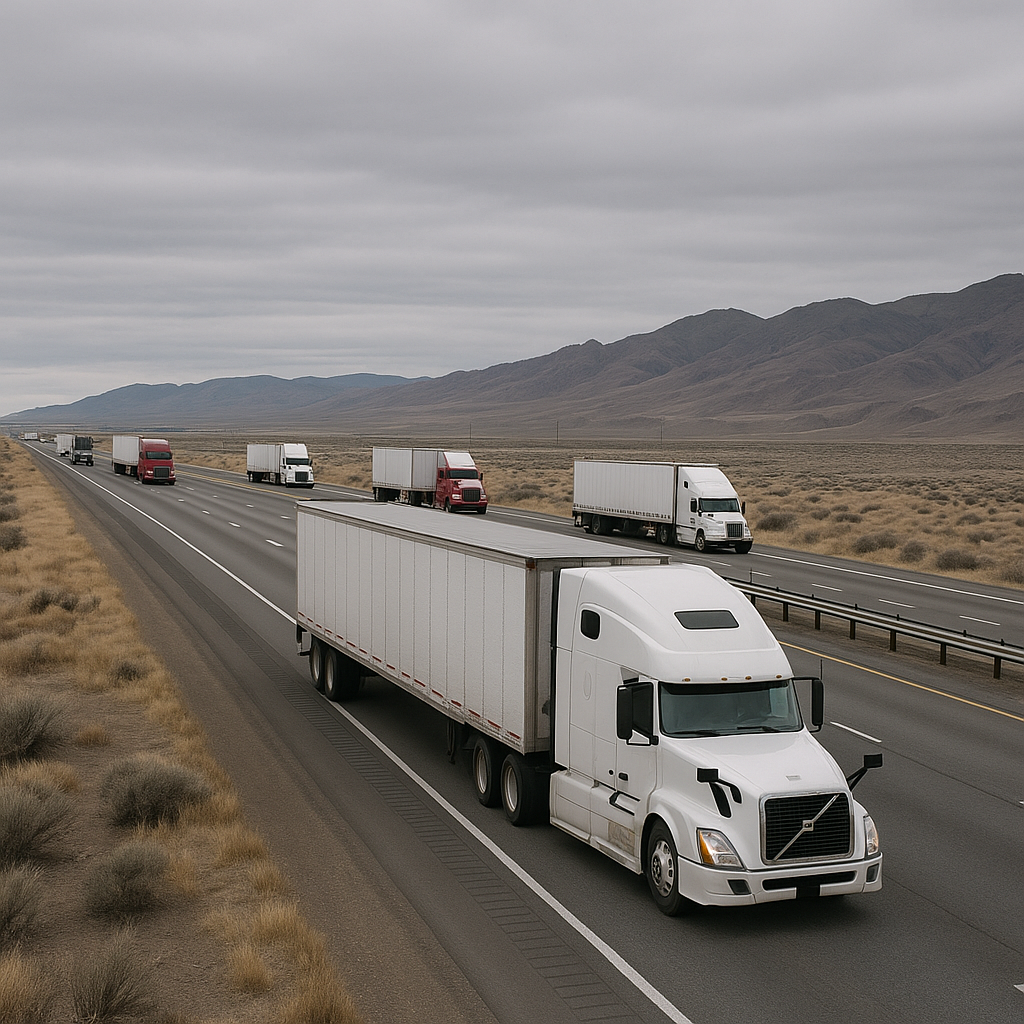
I-80 Freight Corridor and Trucking Volume in Nevada
Overview of the Freight Corridor or Trucking Activity
Stretching coast-to-coast, Interstate 80 (I-80) stands as one of America’s great transcontinental highways. Within Nevada, the I-80 freight corridor offers a critical east-west trucking link, stretching from the western border with California near Reno to the eastern limits at West Wendover. Besides supporting regional communities, this corridor serves as a major artery for cross-country freight, linking Pacific ports and inland distribution centers.
With its vast, largely rural landscapes, Nevada leverages I-80 as a central nervous system for freight movement. The highway intersects key industrial regions such as the Reno-Sparks metropolitan area and Elko, and is strategically connected to rail lines, intermodal yards, and warehouses. According to the Nevada Department of Transportation (NDOT), the I-80 corridor routinely supports one of the highest trucking volumes in the state, with thousands of commercial vehicles traversing its length daily.
The economic impact is substantial: industries ranging from mining and manufacturing to food distribution and e-commerce depend on this roadway. Major companies and distribution hubs have been drawn to northern Nevada, not only for its logistical advantages but also for its less-congested, weather-resilient interstate compared to southern alternatives. Thus, the I-80 freight corridor in Nevada is vital to both state and national supply chains.
Common Truck Types and Freight Activity in the Area
With high demand for freight transportation, I-80 in Nevada is frequented by a wide assortment of trucks and commercial vehicles. The most prevalent are Class 8 tractor-trailers, easily recognizable for their multiple axles and large, enclosed cargo areas. These semi-trucks dominate the corridor, carrying containerized goods, bulk materials, and temperature-sensitive freight in reefers (refrigerated trailers).
Tanker trucks are also a regular sight, hauling vital liquids such as fuel, water, and chemicals essential for agricultural and industrial operations—particularly important given Nevada’s mining and mineral processing industries. Flatbeds and specialized haulers transport machinery, oversized loads, construction materials, and heavy mining equipment. The diversity in truck types mirrors the varied industries served by the corridor, from agriculture in western valleys to mining operations in Elko and Carlin.
Supported by robust trucking volume, industry activity includes:
– Distribution and warehousing: With Reno-Sparks acting as a major logistics hub, goods are strategically staged and distributed across the West.
– Mining transport: Ore, minerals, and related materials from Nevada mines fill hundreds of truckloads daily.
– Agricultural shipping: Produce, livestock, and farm supplies move between rural communities and interstate markets.
– Consumer goods: E-commerce shipments and retail supplies flow through the corridor, connecting warehouses to urban and rural Nevada.
By linking to California on the west and Utah on the east, I-80 ensures a constant stream of goods headed for national markets, further sustaining Nevada’s reputation as a logistics stronghold.
How Congestion or Merging Creates Risk
The efficiency of the I-80 freight corridor in Nevada can at times be hampered by congestion and the operational complexities of merging traffic. Nevada’s sections of I-80, while generally less congested than urban interstates elsewhere, still face hotspots—especially near interchanges in Reno-Sparks, Fernley, and Elko, or in construction zones.
Heavy commercial vehicle volume means merging areas—such as on-ramps from local roads or intersections with other highways—present unique risks. Trucks require longer stopping distances and have larger blind spots compared to passenger vehicles. When truck traffic is high, merging becomes more challenging, with limited opportunities for acceleration and frequent lane changes by both trucks and smaller vehicles.
Key congestion and merging risks include:
– Reduced visibility: Larger trucks can limit sight lines for merging drivers, increasing collision risk.
– Speed differentials: Variable truck speeds, especially on uphill or mountainous grades, can induce abrupt lane changes or braking.
– Construction and maintenance: Roadwork, a regular occurrence on this aging corridor, funnels traffic into narrower lanes, complicating merges.
– Weather-related hazards: High desert weather—wind, rain, snow—can magnify risks during periods of heavy truck traffic, particularly near high-elevation passes like Pequop Summit.
The presence of both high-volume freight trucks and local commuter vehicles demands heightened attention, both from drivers and infrastructure planners. Even with Nevada’s wide-open stretches, the concentration of merging points and the sheer volume of commercial vehicles necessitate vigilant operation and proactive safety management.
Time-of-Day and Seasonal Traffic Trends
Trucking activity along the I-80 freight corridor in Nevada varies widely depending on time of day, day of week, and season. Peak truck volumes typically occur during weekdays, aligned with business hours for loading docks, distribution centers, and mining operations.
Time-of-day Patterns
– Morning (6 am-10 am): High outbound freight movement as trucks leave warehouses in Reno-Sparks or reach rural destinations.
– Midday: Steady flows as long-haul trucks traverse the state, with fewer local deliveries but high through traffic.
– Evening (3 pm-7 pm): Increased congestion near urban exits as local delivery trucks and passenger vehicles mix, often creating merging points of concern.
– Overnight (10 pm-5 am): Reduced traffic, but a significant number of long-distance haulers travel at these hours to avoid congestion and meet tight delivery schedules.
Seasonal Shifts
Seasonality exerts a significant influence on I-80 traffic, given northern Nevada’s variable climate:
– Winter (December–March): Snow and icy conditions, especially at higher elevations, can restrict truck movement, force chain requirements, and temporarily close the roadway. These periods often see spikes in freight movement before storms and slowdowns during inclement weather.
– Spring/Summer: Road construction ramps up, affecting traffic with lane reductions and detours. Agricultural freight peaks, alongside increased recreational and tourist driving.
– Fall: Mining shipments tend to increase as annual operations accelerate before winter, and retailers see a surge in incoming holiday goods.
Truck traffic on the Nevada stretch of I-80, therefore, is not only a constant presence but also exhibits distinct surges and lulls, shaped by both regional industry and national shipping cycles.
Conclusion
The I-80 freight corridor is a backbone of Nevada’s commerce and a crucial segment of the national interstate system. With trucking volume shaped by regional industry, time of day, and seasonal conditions, the corridor continuously adapts to the demands of a dynamic economy. As freight activity remains robust, the ongoing challenge lies in balancing efficient movement with the safety of all highway users.
Understanding the factors influencing truck traffic and the risks associated with congestion and merging allows for more informed navigation and planning—essential for Nevada’s growth as a logistics powerhouse. By prioritizing infrastructure maintenance, technological improvements, and community awareness, Nevada can help ensure that its I-80 freight corridor remains a reliable, efficient passage for years to come.