
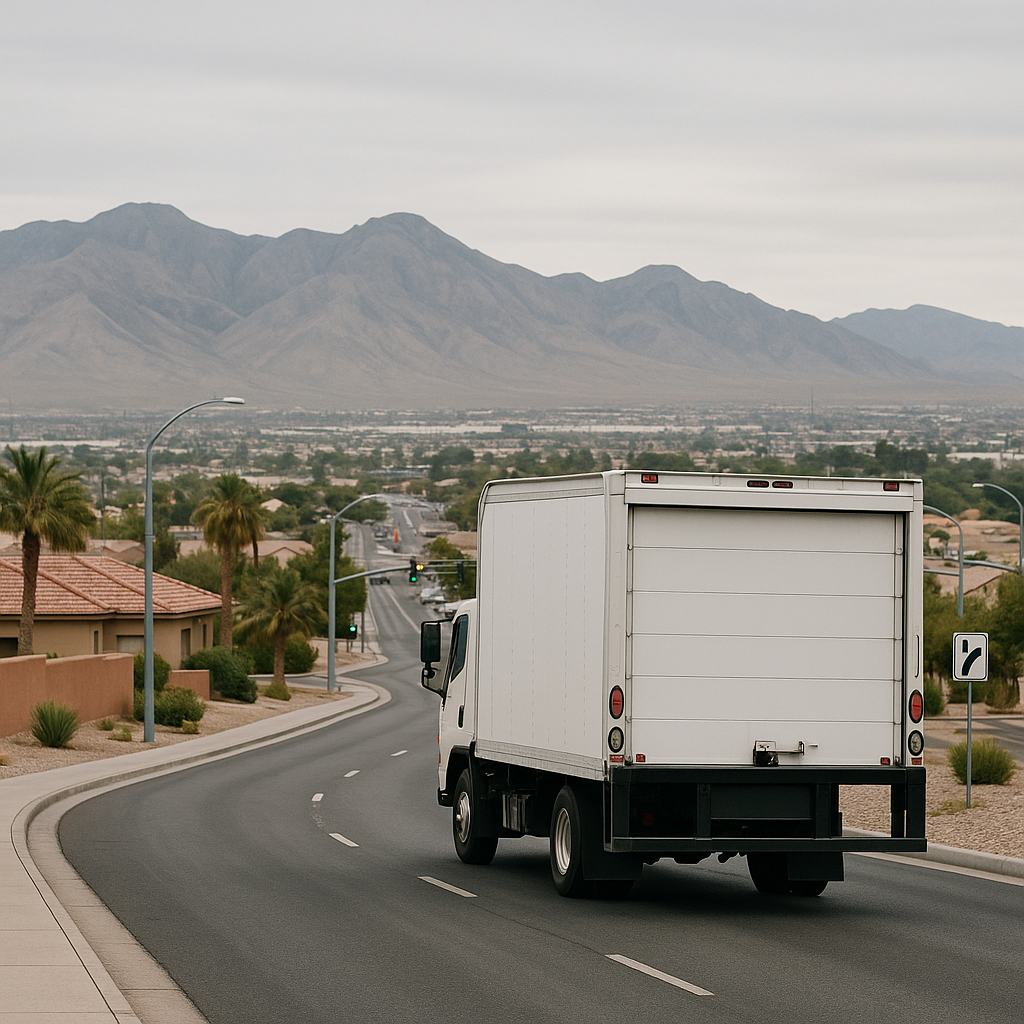
Last-Mile Delivery Trucking Patterns in Nevada Cities
Overview of the Freight Corridor or Trucking Activity
Nevada’s strategic location and rapidly growing urban centers have made it an essential node in the regional logistics network of the Western United States. From the bustling streets of Las Vegas to the economically vital city of Reno and the expanding suburban communities of Henderson and North Las Vegas, last-mile delivery trucking patterns in Nevada reflect the state’s unique blend of urban sprawl, tourism demand, and evolving e-commerce trends.
The backbone of Nevada’s freight movement is the network of major highways and interstate corridors—most notably Interstate 15, which serves as a major north–south artery linking Southern California with Las Vegas and points north, and Interstate 80, the main corridor for east–west movement connecting Reno to Salt Lake City and beyond. These highways feed the inner-city arterial roads and suburban infrastructure upon which last-mile delivery depends.
Nevada’s cities experience a constant flow of goods ranging from consumer electronics and fashion to groceries, medical supplies, and hospitality-related products. The explosion of e-commerce and the state’s robust hospitality sector—particularly in Las Vegas—fuel a dynamic last-mile delivery market that must rapidly respond to both population and visitor demand.
Common Truck Types and Freight Activity in the Area
Last-mile delivery trucking in Nevada’s urban areas is characterized by a diverse mix of vehicle types and logistic strategies tailored to the unique demands of each city.
1. Cargo Vans and Step Vans:
The most common sight on city streets, especially in residential neighborhoods, are the nimble cargo vans (such as those used by Amazon, UPS, and FedEx) and traditional step vans. These are ideal for handling quick stops, low-clearance parking structures, and tight turnarounds, making them the workhorses of urban and suburban last-mile routes.
2. Box Trucks (Straight Trucks):
Mid-sized box trucks are used primarily for larger quantities or bulkier items destined for commercial accounts, apartment complexes, or retail stores. Their relative maneuverability compared to tractor-trailers is crucial for accessing main streets and retail centers in areas like downtown Reno or near the Las Vegas Strip.
3. 18-wheelers and Tractor-Trailers:
While less common in the final-mile phase, larger tractor-trailers are seen delivering large shipments to distribution centers on the periphery of urban centers. In some cases, they bring freight directly to large hotels, casinos, and major retail hubs, particularly in Las Vegas.
4. Electric and Alternative Fuel Vehicles:
With Nevada’s commitment to sustainability and air quality, electric delivery vans are beginning to appear, especially in densely populated areas such as downtown Las Vegas or Reno’s Midtown District.
Major Freight Activity Segments:
– E-commerce parcels (Amazon, Walmart, etc.)
– B2B deliveries to hotels, casinos, and convention centers
– Grocery and meal delivery (Instacart, restaurant supply)
– Medical supply logistics to hospitals and clinics
– Event and trade show supplies (especially Las Vegas Convention Center)
Urban truck activity often clusters near major distribution centers found in suburbs and the southwestern valleys of Las Vegas, the warehouse districts of Reno-Sparks, and the industrial parks of Henderson. Each area possesses unique logistics hubs that serve as springboards for final-mile routes weaving throughout the city.
How Congestion or Merging Creates Risk
Nevada’s cities have seen an uptick in population and visitor numbers, creating unique challenges on roads not originally designed for high-density delivery activity. Congestion, especially during peak hours, can disrupt last-mile delivery trucking patterns in Nevada in several ways and introduce significant risks for drivers, other motorists, and pedestrians.
1. Merging Pressure on Highways:
High-volume delivery windows coincide with commuter surges on major routes such as I-15, I-215, US-95, and SR-160. Merging from highway off-ramps into rapidly moving urban arterials can be hazardous for delivery drivers unfamiliar with local cut-outs or lane changes, a common feature in the sprawling Las Vegas Valley.
2. Urban Congestion and “Curb Wars”:
With limited commercial loading spaces on streets like Reno’s Virginia Street or the Las Vegas Strip, delivery vehicles often double-park or “stop and drop,” increasing risks of collisions as they re-enter traffic. Congestion is amplified by the mix of rideshare vehicles, cyclists, and tourist shuttles vying for curb access.
3. Pedestrian and Tourist Activity:
Deliveries in high foot-traffic areas (such as Fremont Street or The LINQ Promenade in Las Vegas) amplify risks, particularly when drivers must cross sidewalks or unload near pedestrian crosswalks. The constant flow of tourists, often unfamiliar with local street patterns, adds an unpredictable variable.
4. Weather and Geographic Factors:
Sudden weather changes—such as rare snow in Reno or flash floods around Las Vegas—can exacerbate road congestion and reduce visibility, expanding stopping distances and complicating last-mile delivery routes.
Trucking companies and drivers address these risks through route optimization software, hands-free communication devices, and increasing use of real-time delivery tracking—though even the best technology cannot entirely eliminate the unpredictability of urban and suburban Nevada.
Time-of-Day and Seasonal Traffic Trends
The timing and demand cycle for last-mile delivery in Nevada’s cities reflect both the typical workday and the rhythms of tourism and seasonal events.
Time-of-Day Trends:
– Early Morning (5 a.m. to 8 a.m.):
Many trucks schedule bulk deliveries to businesses, hotels, and casinos during pre-dawn hours to avoid peak commuter traffic. This strategy is especially common in the hotel-casino corridor of Las Vegas.
– Midday (10 a.m. to 2 p.m.):
Residential parcel delivery surges as van and step-van fleets distribute packages to homes and apartment complexes. Retail resupply occurs before lunchtime shopping crowds emerge.
– Late Afternoon to Early Evening (3 p.m. to 7 p.m.):
A rush of food and grocery deliveries coincides with after-work congestion, particularly in populous areas like Summerlin, Paradise, or South Reno. Traffic bottlenecks are typical near mall complexes, school zones, and major intersections.
– Late Night (after 9 p.m.):
In 24-hour cities like Las Vegas, some last-mile deliveries are scheduled during overnight hours, especially for casino resupply and event load-ins, taking advantage of reduced traffic.
Seasonal and Event-Based Trends:
– Tourist Peaks:
Las Vegas experiences massive increases in delivery volume during conventions, major concerts, and sporting events. More trucks and vans are routed to the Strip and downtown corridors during these surges.
– Holiday Shopping Seasons:
From late November through December, e-commerce deliveries spike, causing extended hours for parcel delivery vans and increased congestion around distribution centers.
– Weather-Related Surges:
Storms or extreme temperatures can slow delivery times or cause scheduling pushes. For example, snow in the Reno-Tahoe area or high winds in Clark County may limit access to certain roads, affecting both urban and outlying deliveries.
These temporal and seasonal delivery fluxes require advanced fleet planning and the flexibility to reroute, reschedule, or stagger deliveries.
Neutral Closing Paragraph
Nevada’s last-mile delivery trucking patterns continue to adapt as the state’s cities evolve in population and commercial density. The interplay of geography, infrastructure, tourism, and e-commerce ensures that delivery companies and drivers face a complex but dynamic operating environment. Understanding truck types, managing congestion-related risks, and adjusting for time-sensitive trends all play vital roles in optimizing efficient, safe, and reliable freight movement for Nevada’s diverse communities and thriving economy.