
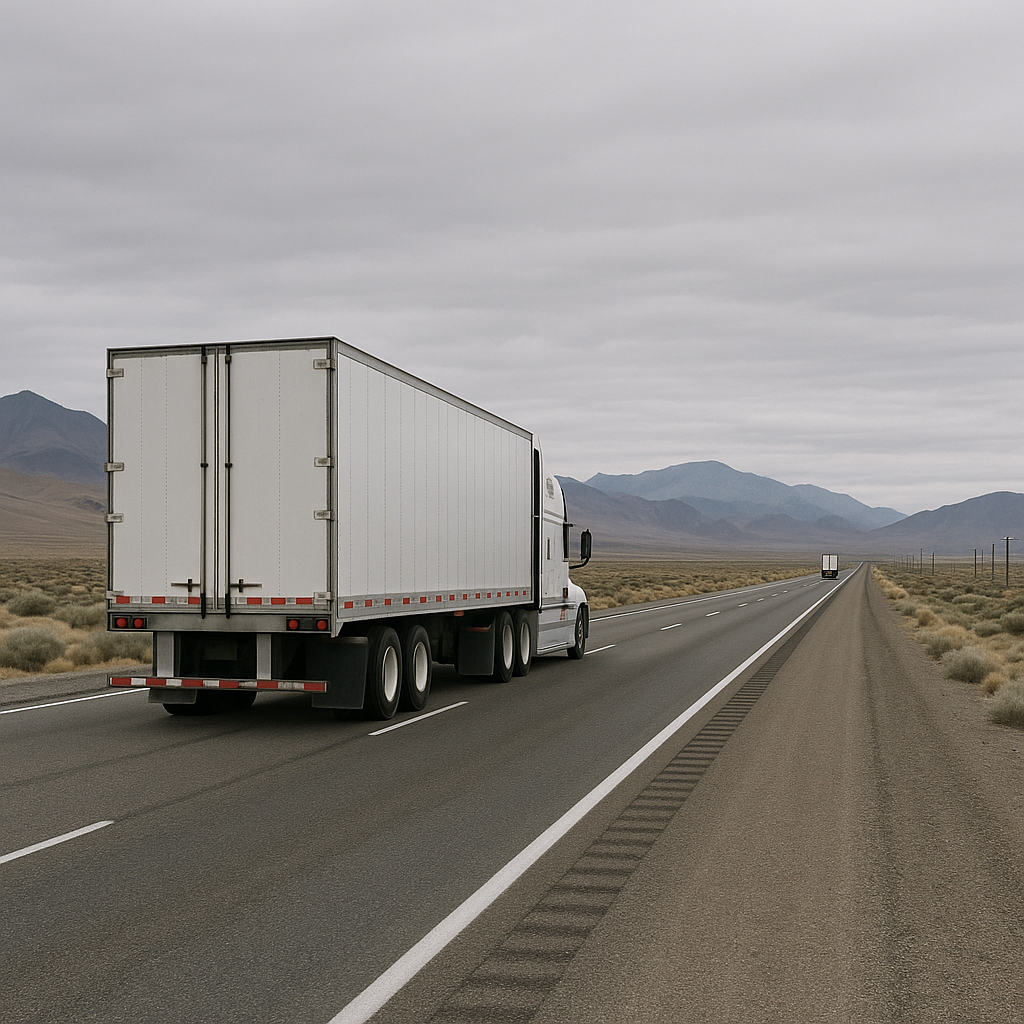
Nevada Commercial Trucking Corridors Explained
Nevada’s vast stretches of desert, thriving metropolitan areas, and strategic geographical position have firmly established the state as a major crossroads for the nation’s commercial trucks. The state’s highways are veritable arteries for commerce, connecting California’s bustling ports to the rest of the American West, and facilitating everything from retail deliveries to mining operations. Understanding Nevada commercial trucking corridors is essential for appreciating how goods flow across the region, the challenges truck drivers face, and the impact these corridors have on daily life in the Silver State.
Overview of the Freight Corridor or Trucking Activity
Nevada is uniquely situated as both a gateway and a thoroughfare for freight movements throughout the western United States. The backbone of Nevada commercial trucking corridors includes Interstate 80 (I-80) stretching across northern Nevada, and Interstate 15 (I-15) traversing the southern tip through Las Vegas. U.S. Route 95 (US-95) is another critical north-south artery, running from the California border in the south through Las Vegas, Tonopah, and continuing toward the state’s northern boundary.
Key Corridors
– Interstate 80 (I-80): This corridor is essential for east-west freight, linking the San Francisco Bay Area to Salt Lake City and beyond. Trucks carry everything from agricultural goods to manufactured items, making towns like Reno, Winnemucca, and Elko pivotal stops for logistics operations.
– Interstate 15 (I-15): Serving as a critical connection between Southern California, Las Vegas, and Salt Lake City, I-15 is one of the West’s busiest trucking corridors. Retail goods, food products, and construction materials all move swiftly along this route.
– US-95: As Nevada’s primary north-south route, US-95 is invaluable for connecting Las Vegas to Reno while supporting smaller rural economies and mining operations in central Nevada.
Nevada’s corridor system is complemented by feeder highways and state routes that link to industrial hubs, distribution centers, and remote mining or manufacturing enterprises. As e-commerce continues to grow, these corridors only increase in importance — ensuring next-day delivery promises are met and supply chains remain uninterrupted.
Common Truck Types and Freight Activity in the Area
The bustle along Nevada commercial trucking corridors is underscored by the diversity of vehicles and freight types in motion. Each corridor sees a mix of truck classes, tailored to the specific needs of the industries they service.
Truck Types:
– Dry Van Trailers: These enclosed trailers are the most common, hauling everything from consumer goods to electronics. They are frequently spotted along I-80 and I-15 as they transport retail products between major distribution hubs.
– Refrigerated (Reefer) Trucks: Nevada’s proximity to agricultural regions and food distribution centers means refrigerated trucks carrying perishable goods are a familiar sight.
– Flatbeds: With Nevada’s robust mining, construction, and renewable energy sectors, flatbed trucks carry heavy equipment, raw materials, and oversized loads.
– Tanker Trucks: These vehicles convey fuel, chemicals, and other liquids, especially vital for mining operations and fueling rural communities.
– Heavy Haul/Over-dimensional Loads: Specialized trailers transport industrial equipment, wind turbine components, and other outsized cargo, especially given the state’s infrastructure and energy projects.
Typical Freight Activity
– Mining: As one of the world’s top gold producers, Nevada’s mining industry generates a steady flow of inbound machinery and outbound minerals — much of it moved by flatbed and tanker trucks.
– Logistics and Retail: Major retailers operate distribution centers near Reno and Las Vegas, generating a high frequency of dry van truck movements.
– Agriculture: Though less extensive than California’s, Nevada’s farming operations count on refrigerated trucks for timely food shipments.
The result is a dynamic landscape where freight activity aligns with economic drivers and the unique regional needs of Nevada’s communities.
How Congestion or Merging Creates Risk
While Nevada boasts relatively uncongested highways compared to more urbanized states, traffic pinch points do exist — and they often present significant risks for both truckers and other motorists.
Merging Risks on Major Corridors
Merging risks are especially pronounced in metro areas such as Las Vegas, Reno, and near highway interchanges. As trucks enter or exit the corridor to access distribution centers or urban delivery points, the difference in acceleration between heavy trucks and passenger vehicles can create hazardous situations. Long stretches approaching Las Vegas on I-15, or the Reno-Sparks area on I-80, are known spots where merging activity intensifies.
Congestion Hotspots
Urban growth and increased freight movement swell traffic volumes around key interchanges:
– Las Vegas: I-15 near the Spaghetti Bowl (US-95/I-15 interchange), and approaches to the California border, frequently see backups exacerbated by commercial traffic.
– Reno-Sparks: Intersections of I-80 and I-580/Mount Rose Highway can become particularly congested during rush hours and special events.
Key Risk Factors
– Blind Spots and Limited Maneuverability: Large trucks have expansive blind spots, and during congested merging activity, they may not see smaller vehicles, increasing crash risk.
– Speed Differentials: Trucks require more time to accelerate and brake, which can lead to sudden lane changes or abrupt stops in congested areas.
– Fatigue: Long hours on the road and the monotony of desert stretches may contribute to driver inattention, particularly where merging is frequent and surprises are less expected.
Traffic management solutions, such as dedicated truck lanes in critical segments or improved signage, are continually evaluated to help offset these risks.
Time-of-Day and Seasonal Traffic Trends
Commercial trucking in Nevada, while steady throughout the year, displays distinct ebb and flow depending on the clock and the calendar.
Time-of-Day Patterns
– Early Morning: The bulk of long-haul trucking activity often occurs in the very early morning hours (midnight to 6 a.m.), leveraging lighter traffic and cooler conditions, especially during summer.
– Daytime Congestion: From 7 a.m. to 6 p.m., both freight and local traffic are at their peak, especially in metropolitan areas and along main delivery routes.
– Late Night Deliveries: Many large retailers schedule deliveries to avoid busy hours, leading to increased truck presence on the roads between 10 p.m. and dawn.
Seasonal Variations
– Winter: Inclement weather can create hazardous road conditions, especially along I-80’s mountainous stretches and at higher elevations such as Donner Pass or near Ely on US-50/US-93 junctions. Chains or snow tires may be required, slowing freight movement.
– Summer: Desert temperatures can lead to vehicle overheating or increased tire blowouts, resulting in more breakdowns and delays. The summer tourist season in Las Vegas and Reno can also create temporary spikes in congestion.
– Holidays: The Thanksgiving-to-New Year period sees a sharp rise in cargo volume due to increased consumer demand, both for physical store restocking and e-commerce shipments.
Commercial carriers operating in Nevada must remain agile, planning routes and schedules to address these variable conditions.
Nevada’s Trucking Corridors: An Ever-Evolving Landscape
Nevada commercial trucking corridors are more than just stretches of asphalt and concrete; they are lifelines for the state’s economy and crucial nodes in the nation’s supply chain. They connect mining sites, agricultural producers, retail distribution hubs, and distant markets with remarkable efficiency, all while negotiating the unique geography and climate the state offers.
Understanding where, when, and how freight moves through Nevada helps residents, businesses, and travelers appreciate the vital role commercial trucking plays, as well as the ongoing efforts to balance growth, traffic safety, and economic prosperity. As Nevada’s economy and infrastructure continue to evolve, so too will its commercial trucking corridors — remaining an indispensable part of the state’s future.