
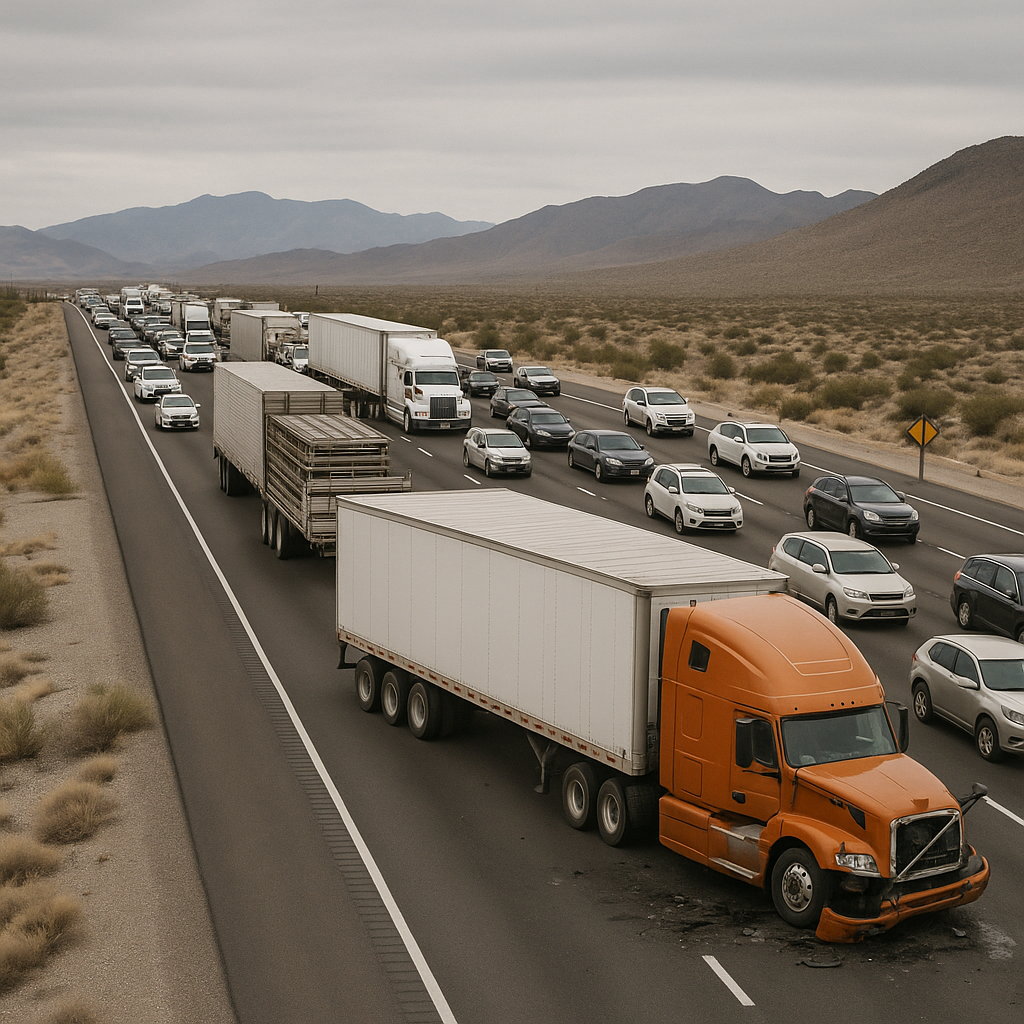
Nevada Highway Congestion Areas with Truck Crash Risks
Nevada’s extensive highway system is both a crucial transportation corridor for cross-country freight and a vital network for tourism and the local economy. This blend of heavy commercial truck traffic and consumer vehicle travel can result in notable congestion, especially in and around rapidly growing urban hubs and popular travel routes. As congestion increases, so does the risk of vehicle collisions, particularly those involving large trucks that require more room to maneuver and have longer stopping distances. Understanding the Nevada congestion truck crash risks can be valuable for anyone traversing the state’s highways.
Overview of the Nevada Location or Highway Segment
Nevada’s major highways cover both serene stretches of desert and busy metropolitan expressways. Some of the most heavily congested and high-risk corridors for truck crashes include:
– Interstate 15 (I-15): Running north-south through Las Vegas, I-15 is Nevada’s busiest interstate. It serves as a lifeline for freight traveling between Southern California, Nevada, and Utah. The segment surrounding Las Vegas—particularly from the California border through downtown—experiences significant truck volumes and frequent traffic bottlenecks.
– Interstate 80 (I-80): Cutting east-west through Reno, Sparks, and across northern Nevada, I-80 is a major transcontinental freight route. Congestion hotspots often appear around Reno’s Spaghetti Bowl interchange and adjacent commercial districts.
– Interstate 515 (I-515), U.S. Route 95, and Interstate 215 (I-215) in the Las Vegas Valley: These corridors connect different parts of the greater Las Vegas metropolitan area and frequently see heavy mixing of local traffic, tourists, and trucks.
– Highway 93 (U.S. 93) and Highway 95 (U.S. 95): These major north-south and northwest-southeast routes are vital for freight and frequently see congestion near urban interfaces such as Henderson, North Las Vegas, and through mining and industrial regions.
Congestion issues and truck crash risks are concentrated where commercial routes collide with busy city centers, known detour corridors, and key crossroads in Nevada.
Why Truck Accidents Are More Common in This Area
Nevada’s congestion truck crash risks are amplified in certain highway segments for several interconnected reasons. High traffic volumes naturally increase the likelihood of collisions, but additional factors unique to Nevada play a significant role:
– Urban Growth: Rapid expansion in regions such as Las Vegas and Reno has led to more vehicles (both commercial and private) on the roads.
– Tourism: Nevada’s tourism draws millions of additional drivers annually, particularly to Las Vegas and Lake Tahoe, increasing unpredictability in traffic patterns and raising crash potential.
– Strategic Freight Corridors: Nevada is surrounded by large economic centers, and its highways serve as connectors for freight from Los Angeles, Phoenix, Salt Lake City, and beyond. Heavier truck volumes translate to higher relative risks, particularly in areas where commuter and truck traffic overlap.
– Desert and Mountain Geography: Nevada’s mix of long, monotone desert highways and mountain passes can contribute to driver fatigue and erratic weather, creating challenging conditions for truck operators.
Road Design Factors That Influence Crashes
Certain design elements and highway characteristics contribute substantially to the risk profile along Nevada’s busiest and most congested routes:
Interchanges and Merging Zones:
– The complex interchanges in urban areas—especially the Spaghetti Bowl in Reno and “The Strip” interchange zone on I-15—require lane changes and merges that can be problematic for both trucks and smaller vehicles. Short and busy on-ramps can force merging conflicts, while lane drops may create sudden slowdowns.
Lane Width and Shoulder Availability:
– Urban highway segments sometimes have narrower lanes and minimal shoulders due to limited space, increasing the danger for wide vehicles like tractor-trailers. Recovery options in the event of sudden stops or swerves are reduced.
Curves, Grades, and Elevation Changes:
– Areas such as the downhill grades near Mountain Springs Summit on State Route 160 or winding sections near the Sierra foothills on I-80 present challenges for heavy trucks: longer stopping distances, increased rollover risk, and more difficult navigation of curves at higher speeds.
Exit and Entry Ramp Density:
– In Las Vegas and Reno, high-density off-ramps and on-ramps lead to frequent lane changes and potential conflict points, particularly during rush hours or special events.
Traffic Patterns and Truck Volume Considerations
Several traffic tendencies contribute to the challenge of managing Nevada congestion truck crash risks:
Peak Commuting Times:
– Morning and evening rush hours coincide with significant local passenger traffic. During these windows, truck drivers may find themselves navigating unpredictable stop-and-go conditions, especially near entry points to metropolitan areas.
Event Traffic Surges:
– Major events—such as large conventions, concerts, or sports competitions, predominantly in Las Vegas—can swell traffic volumes on major interstates and adjacent roads beyond normal capacity, straining infrastructure and increasing crash likelihood.
Seasonal and Weather-Related Congestion:
– Winter weather in northern Nevada and summer heatwaves statewide can stress infrastructure, impact vehicle performance (e.g., tire blowouts), and affect visibility for all drivers, including commercial vehicle operators.
High Percentage of Out-of-State Drivers:
– Both freight trucks and tourist cars often have drivers less familiar with local conditions, signage, or unique urban challenges, which can lead to sudden stops, missed exits, and erratic lane changes.
Safety Awareness Considerations (Non-Advice Tone)
Awareness of the specific challenges and heightened truck crash risks in Nevada’s congested highway segments can contribute to improved roadway interactions. Understanding that:
– Heavily traveled areas such as the I-15 corridor around Las Vegas, the Spaghetti Bowl interchange in Reno, and major arterial interstates regularly see a mix of heavy trucks and passenger vehicles requiring extra attention to safe interactions.
– Urban bottlenecks, event surges, and infrastructure limitations can create erratic slowdowns and increased proximity between large trucks and smaller vehicles.
– Weather shifts—weather can turn rapidly, especially in the Sierra Nevada mountain areas—alter traction and stopping distances.
– Highway infrastructure is often being updated or repaired, which can cause changing patterns, temporary lane closures, and altered merge lanes.
Staying consistently attentive to these conditions allows all drivers—regardless of their familiarity with the state or type of vehicle—to better anticipate and adapt to the shared hazards present in Nevada’s high-risk, high-congestion corridors.
Neutral Closing Paragraph
Congestion and truck-related crash risks remain significant concerns for Nevada’s highways, especially in areas where commercial and passenger vehicles converge within rapidly developing cities or on long-haul freight routes. The state’s position as both a crossroads and a destination means that a mix of factors—from road design to seasonal traffic surges—combine to shape the risk environment across its roadways. A clear grasp of these elements, and the unique dynamics of Nevada’s busiest highway segments, can contribute to greater understanding of the ongoing challenges facing all road users in the Silver State.