
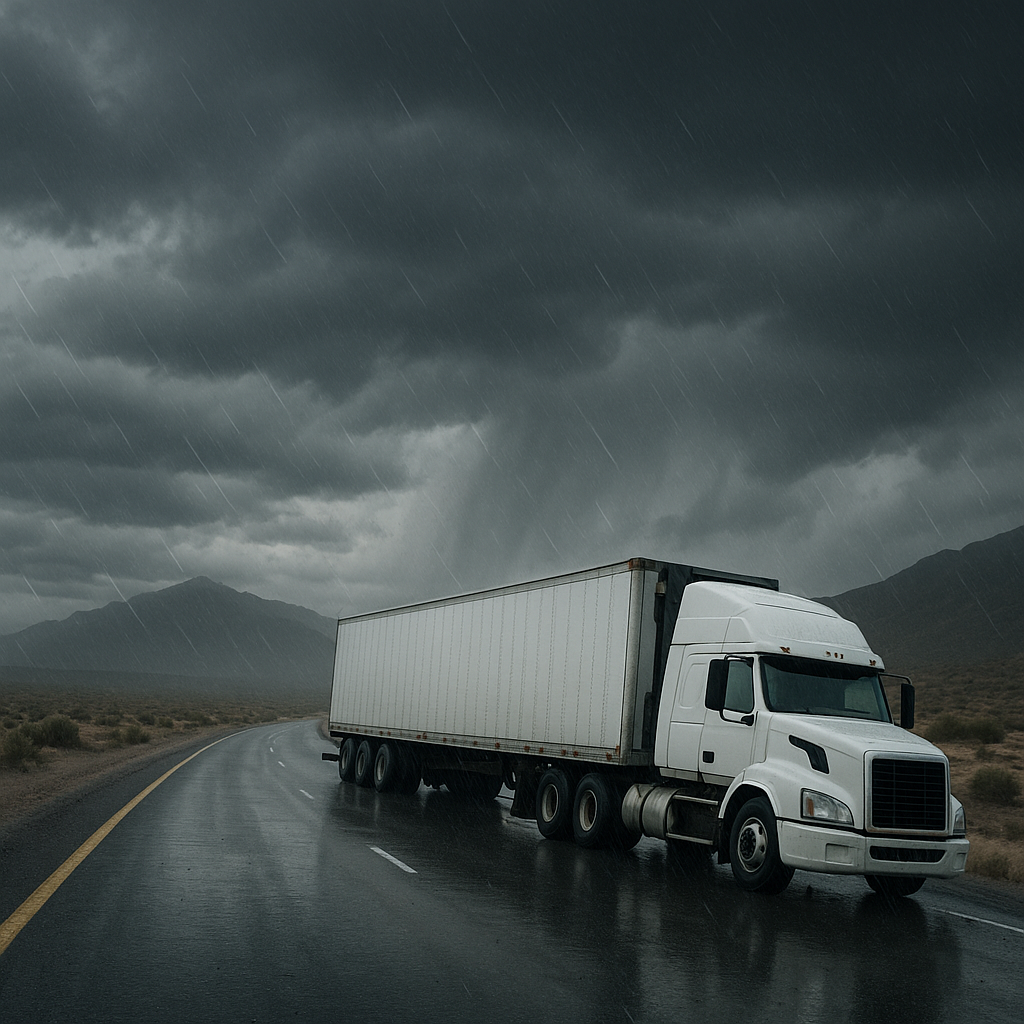
Nevada Monsoon Storms and Truck Accident Risks
Nevada’s sweeping deserts are known for their stark beauty and arid climate, but summer delivers a dramatic shift as monsoon storms roll in, transforming dry landscapes into scenes of lightning, downpours, and sudden flashes of water. While these storms are an integral part of Nevada’s natural climate cycle, they introduce new hazards to the state’s highway system—particularly for the trucking industry. Understanding the relationship between Nevada monsoon storms and truck accident risks is crucial for anyone who drives or depends on the flow of goods across Nevada’s highways.
Overview of Nevada Monsoon Storms and Road Conditions
Every year, from roughly June through September, Nevada experiences its “monsoon season.” This period is characterized by an increase in moisture from the Gulf of California and the Pacific, leading to volatile weather patterns. Warm afternoon air mixes with this moisture, often resulting in towering thunderclouds, torrential rain, and intense lightning. These weather events can appear with little warning, turning clear skies into hazardous driving environments in a matter of minutes.
For Nevada’s roadways, the most immediate impacts of monsoon storms are:
– Reduced visibility: Heavy rainfall, blowing dust, and occasional hail can obscure the road and make it difficult to see other vehicles, lane markers, and road hazards.
– Slippery surfaces: Rain, especially after long dry spells, brings oils and debris to the road surface. This causes a slick layer that impairs traction.
– Flash flooding: Dry washes and underpasses may fill rapidly, sometimes becoming impassable. Even a few inches of moving water can inhibit vehicle control.
– Debris: Strong winds can scatter rocks, branches, or tumbleweeds onto the road surface.
While all drivers must contend with these hazards, the size and operating characteristics of trucks bring additional challenges.
How Monsoon Storms Affect Trucks Differently Than Cars
Large commercial trucks are designed for hauling heavy loads over long distances, not agility and nimble stopping power. When monsoon storms hit Nevada’s highways, several factors make trucks uniquely vulnerable:
– Longer stopping distances: Trucks require much more distance to stop, especially on wet or slick surfaces. Monsoon showers can double or even triple stopping distances, making rear-end collisions more likely.
– High centers of gravity: Gusty monsoon winds are notorious for toppling high-profile vehicles like tractor-trailers. Side winds can push a trailer out of its lane or even tip it over, especially if it’s lightly loaded.
– Weight distribution and hydroplaning: Unlike cars, the tires on a loaded truck experience variable ground pressure, increasing the risk of hydroplaning on patches of standing water.
– Maneuverability: Trucks take longer to react and change direction. Quick lane changes to avoid flooding or debris are much harder for trucks, and unexpected obstacles can be especially dangerous.
– Visibility limitations: Truck cabs sit higher, but they also have large blind spots. Spray from rain and passing vehicles can further reduce a truck driver’s ability to see smaller cars or motorcycles.
These factors put truck drivers—and the motorists around them—at increased risk whenever monsoon weather strikes.
Why Crashes Can Become Severe Under Monsoon Conditions
When a truck is involved in a crash during a monsoon storm, the consequences are often much graver than those seen in fair-weather accidents. Several factors contribute to the increased severity:
– Mass and momentum: The sheer size and weight of a fully loaded truck mean that collisions transfer more energy, increasing the likelihood of significant property damage and physical injury.
– Chain-reaction collisions: On busy interstates like I-15, I-80, I-215, and US-95, poor visibility or sudden braking can trigger multi-vehicle pileups, especially if a truck jackknifes or blocks several lanes.
– Limited escape routes: In rural stretches, monsoon floods can fill bar ditches and block turnouts, leaving little room for vehicles to swerve or escape danger.
– Hazardous cargo: Some trucks transport flammable materials or hazardous chemicals. Collisions involving these loads can create spill risks or even explosions, compounding the danger.
– Delayed emergency response: Flash flooding can slow or block first responders trying to reach an accident scene, compounding injuries or stranding motorists for longer.
All of these factors make crash prevention during monsoon storms a top priority for Nevada drivers and the trucking industry.
Common Seasonal Patterns in Nevada
Monsoon season in Nevada typically kicks off in late June, intensifying through July and August before tapering off in September. Each year varies, but there are patterns and hot spots to watch for:
– Southern Nevada (Las Vegas area): The region is especially prone to intense downpours, flash floods, and quickly-flooding urban roadways. Despite efficient drainage systems, the volume and speed of rainfall can overwhelm infrastructure.
– Rural highways and mountain passes: Storms over the Spring Mountains or the Ruby Mountains can send torrents of water down into valleys and across desert highways, sometimes stranding vehicles between flooded low spots and impassable ridges.
– Northern and central regions: While less intense than southern Nevada, these areas can still experience strong thunderstorms and localized flooding, especially on highways like I-80 or US-50.
Meteorologists warn that monsoon storms often develop rapidly in the afternoon and evening hours. Forecasters may issue warnings, but the patchy and unpredictable nature of these storms means drivers—especially truck drivers—must be vigilant whenever traveling during summer months.
A Nevada-Smart Approach to Summer Storms
Nevada’s climate is both spectacular and unpredictable. Monsoon storms are a vital part of the ecosystem but bring significant risks for everyone who shares the road, especially large commercial trucks hauling essential goods across the Silver State. Awareness of these risks, combined with careful monitoring of weather conditions and prudent driving behavior, can significantly reduce the dangers associated with Nevada monsoon storms and truck accident risks. Staying informed, slowing down in poor conditions, and respecting the immense energy of these storms are all key ways residents and visitors alike can keep Nevada’s roadways safer during monsoon season.