
Navigating Nevada Self Reporting Requirements After Accidents
Accidents happen unexpectedly, and knowing how to responsibly manage the aftermath is crucial—especially on Nevada’s busy roadways. Nevada self reporting requirements after an accident are designed to ensure that all parties, authorities, and insurance providers have accurate, timely information. Understanding these requirements helps Nevadans navigate post-accident responsibilities and avoid common pitfalls while promoting drivers’ safety and accountability.
Overview of Crash Response and Reporting Systems in Nevada
When an automobile accident occurs in Nevada, several key systems and protocols come into play. Because Nevada is a unique blend of bustling cities and open rural highways, the state maintains a structured approach to incident reporting. Nevada self reporting requirements after an accident are intended to facilitate the collection of accurate crash data, support fair insurance processing, and assist in law enforcement’s efforts to maintain public safety.
At a high level, Nevada distinguishes between minor and major accidents based on severity, injuries, and property damage. Not all accidents require police response or formal reporting, but in many circumstances, the law directs drivers to submit specific details to the Department of Motor Vehicles (DMV). These requirements aim to create accountability and establish official records, which can be critical for resolving insurance claims or legal questions down the line.
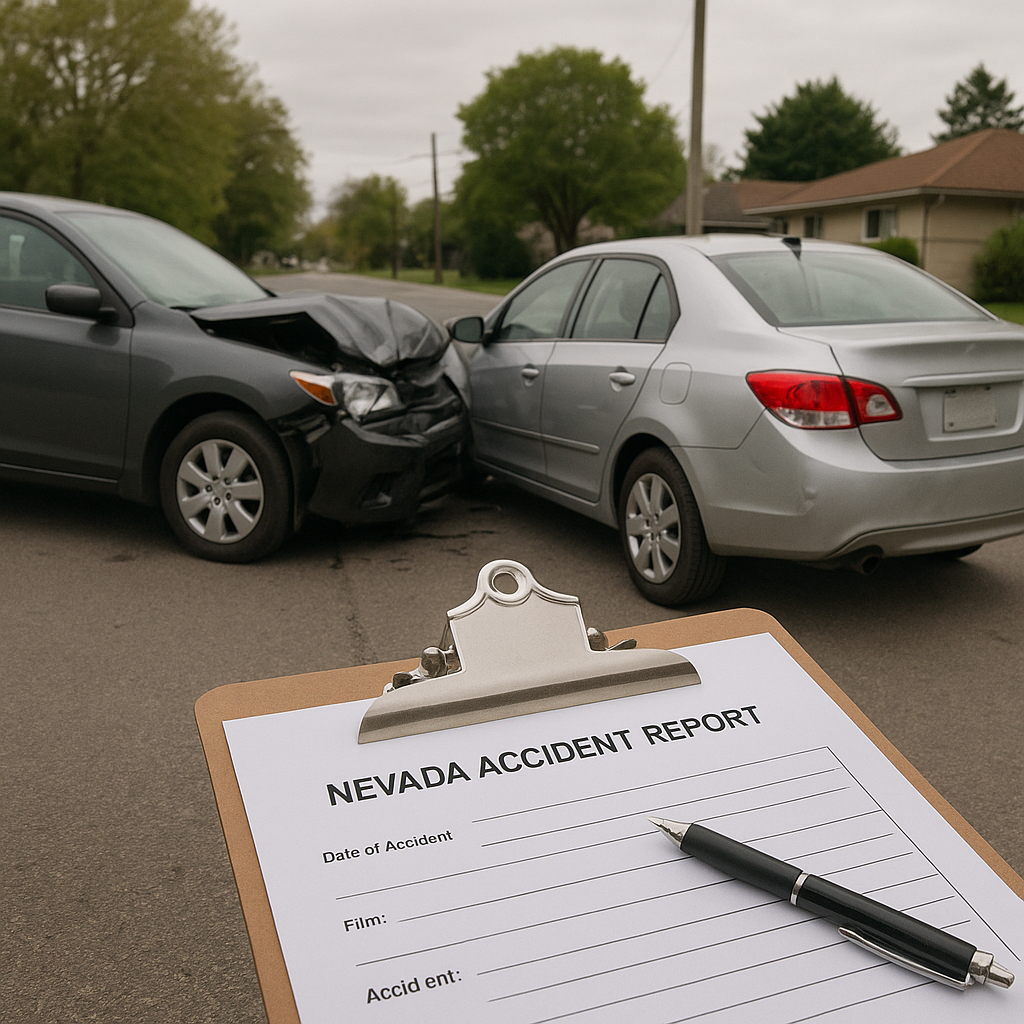
Law enforcement officers, when present, usually take charge of documenting the scene. However, when accidents go uninvestigated—such as fender benders on quiet streets—responsibility often shifts to the involved drivers. Nevada’s self reporting system fills the gap, guiding drivers to independently submit essential accident information to appropriate state agencies.
Common Agencies and Reporting Steps (Educational)
A variety of agencies may become involved in the accident reporting process, depending on the circumstances. Key players typically include local police departments, the Nevada Highway Patrol, and the Nevada DMV. Whether responding to a downtown Las Vegas collision or a rural incident, the goal remains the same: to transparently record the details of the event.
Police and Law Enforcement
In the event of injury, death, or significant property damage, local police or highway patrol officers are usually dispatched. When officers respond, they take on the responsibility for official documentation, producing a police report that becomes the primary record. This report serves as valuable evidence and is stored in the department’s archives.
Nevada DMV
If no police officer files a report—often the case in less severe incidents—the burden of self reporting falls to the drivers involved. In these instances, Nevada requires motorists to provide key information about the accident directly to the DMV. The DMV’s role includes tracking these reports to identify patterns and ensure all statutory requirements are met.
Insurance Companies
While not a government agency, insurance providers are also an essential part of the reporting ecosystem. Insurance companies operate by gathering details from all available sources, harmonizing information from self-reported documents, police records, and driver accounts.
Typical Process
Generally, accident reporting in Nevada involves collecting accurate personal, vehicle, and incident details, followed by submission to the relevant agency. While there are no step-by-step instructions here, it is important for drivers to know that delays or omissions in self reporting may result in complications with licensing or insurance. Each agency may utilize different forms or online portals to streamline submission processes.
Documentation Typically Involved
The process of self reporting an accident in Nevada is document-driven. Whether filling out an online form or submitting paperwork, accuracy and completeness are crucial.
Common elements of accident documentation include:
– Basic identification of all parties involved (names, addresses, and driver’s license numbers)
– Description of vehicles, including make, model, year, and license plate numbers
– Insurance details for each vehicle
– Date, time, and location specifics
– Detailed summary of accident circumstances, including direction of travel, road conditions, and contributing factors
– Diagrams or sketches of the accident scene, if requested
– Any witness information or third-party accounts
Additionally, documentation may require affirmation that statements are true and accurate to the best of the reporting party’s knowledge. Falsification or significant inaccuracies may lead to penalties.
Photo documentation is also encouraged, and many insurance companies recommend providing images of vehicle damage or the surrounding scene to clarify circumstances. However, not all agencies accept photographs as a part of initial self reporting; they may instead request them later during investigations or claim processing.
Common Reporting Misunderstandings
Navigating Nevada self reporting requirements after an accident can be confusing, and several frequent misconceptions persist among drivers.
“If There’s No Injury, I Don’t Need to Report”
Some motorists believe that if no one was hurt, no report is needed. In reality, Nevada may require self reporting based on thresholds of property damage, not just physical harm.
“Insurance Will Handle Everything”
Relying solely on insurance companies can leave gaps, as insurers often require official documentation and may not file DMV reports on your behalf. Drivers are typically responsible for submitting direct reports when law enforcement has not documented the incident.
“Only Major Accidents Matter”
While catastrophic accidents command attention, even minor collisions may prompt mandatory reporting. Understanding the distinctions between personal reporting obligations and insurers’ requirements can prevent challenges later on.
“Reports Can Be Filed at Any Time”
Timing is critical. Reporting windows exist in Nevada, and delayed filings may result in administrative penalties or obstacles with insurance claims. Awareness of deadlines is essential for compliance.
“Police Always File a Report”
If authorities do not respond to the accident scene, it’s generally up to the involved parties to ensure the DMV receives the necessary accident details. Waiting for officials to automatically handle every incident often leads to missed requirements.
Neutral Closing Paragraph
Understanding Nevada self reporting requirements after accidents contributes to safer roadways and smoother resolution of post-accident logistics. The state’s structured framework aims to balance public safety, insurance needs, and individual accountability. While the statutory landscape can be complex, familiarizing oneself with the types of agencies involved, the documentation typically required, and the common misunderstandings that arise empowers Nevada drivers to act responsibly and avoid unnecessary complications after a collision.