
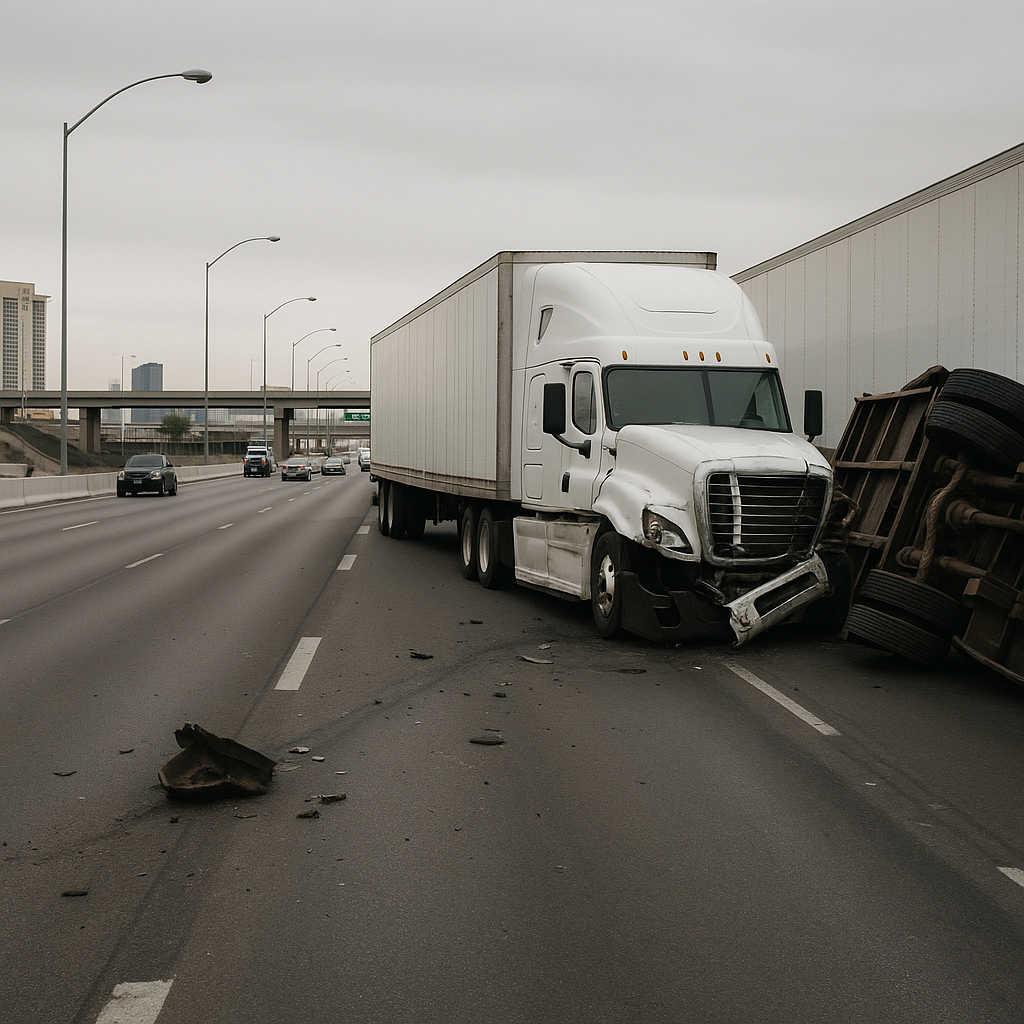
Nevada Truck Crash Patterns Urban Highways: Key Insights and Trends
Overview of the Trend or Pattern
Nevada’s rapid urban growth, especially in cities like Las Vegas and Reno, has brought an increase in both passenger vehicles and commercial truck traffic on urban highways. As a result, understanding Nevada truck crash patterns on urban highways has become a priority for transportation planners, safety advocates, and policy makers. These highways—arterial corridors serving as vital links for commuting and freight movement—experience a range of safety challenges involving commercial trucks.
Truck crashes in urban areas differ notably from those on rural highways due to the density of traffic, the complexity of road networks, and diverse road users, including pedestrians and cyclists. In Nevada, the concentration of truck crashes on urban highways reflects unique factors such as rapid urbanization, seasonal tourism influxes, and varying weather conditions. Studies and crash reports from the Nevada Department of Transportation (NDOT) indicate that truck-involved collisions are more frequent on key urban corridors, often during peak traffic hours or under conditions of congestion and limited visibility.
The trend points to a need for focused safety improvements on urban highways, tailored to the characteristics of truck traffic and the urban environment in Nevada. Addressing these patterns requires detailed analysis of crash data, identification of common contributing factors, and an understanding of why crash severity may be elevated compared to other regions.
Common Factors Behind the Pattern
Several interrelated factors contribute to Nevada truck crash patterns on urban highways:
1. High Traffic Volumes and Congestion
Urban highways in Nevada, particularly around Las Vegas, are often congested during peak hours. The mixture of heavy trucks and passenger vehicles creates complex traffic dynamics. Trucks have larger blind spots and longer stopping distances, which can exacerbate risks in stop-and-go traffic conditions.
2. Driver Behavior and Fatigue
Long haul truck drivers servicing Nevada’s urban markets frequently operate under strict schedules, which can lead to fatigue or rushed driving. Driver distraction and failure to maintain safe distances also contribute to collisions involving trucks.
3. Urban Infrastructure and Road Design
Many urban highways in Nevada were originally designed to accommodate lower traffic volumes and fewer large commercial vehicles. Features such as short on-ramps, tight curves, and inadequate lane widths on certain stretches can create hazards for truck maneuvering. Furthermore, the presence of multiple interchanges and complex exit patterns increases the likelihood of lane changes and sudden braking.
4. Environmental and Seasonal Factors
Nevada’s desert climate, with intense sunlight, sudden sandstorms, and occasional rain events, affects visibility and road surface conditions. Sand and dust can reduce traction and visibility, especially hazardous for large trucks that require longer distances to stop.
5. Intermodal Freight Movement
Nevada’s role as a distribution hub in the western United States means that many trucks are involved in intermodal freight transport. The heavy volume of freight traffic from warehouses, distribution centers, and ports increases truck presence on urban highways, contributing to higher interaction rates with passenger vehicles.
Why Severity May Be Higher in Nevada Conditions
Truck crashes in Nevada’s urban highways tend to have higher severity for several reasons linked to the state’s unique conditions:
1. Vehicle Size and Impact Dynamics
By nature, crashes involving large trucks often result in more severe damage and injuries due to the vehicle size, weight, and momentum. In urban environments, where speed limits are higher on highways than on surface streets, the forces involved in collisions remain substantial.
2. Limited Escape and Evasive Options
Urban highways in Nevada often provide limited shoulder space and fewer evacuation routes. When a truck driver must suddenly evade another vehicle or obstacle, the constrained roadway geometry can lead to rollovers or collisions with roadside barriers.
3. High-Speed Collisions in Mixed Traffic
Despite congestion, many Nevada urban highways still operate with sections allowing speeds of 65 mph or more. Sudden braking or lane changes in the presence of heavy trucks traveling at these speeds can result in multi-vehicle pileups or severe chain collisions, especially during high traffic volumes.
4. Environmental Hazards Amplify Risk
Dust storms (“haboobs”) can reduce visibility drastically in urban corridors, causing abrupt slowdowns or loss of vehicle control. Trucks, due to size and load, may struggle more in these conditions, increasing the crash severity. Heat also impacts tire performance and vehicle mechanical reliability, potentially leading to blowouts or failures contributing to crashes.
How Patterns Change Over Time
Assessing the evolution of Nevada truck crash patterns on urban highways reveals shifts driven by demographic, technological, and regulatory changes.
1. Increasing Urbanization
Nevada has experienced rapid population growth over past decades, with metropolitan areas expanding in geographic size and density. This trend has led to increased freight and commuter traffic on urban highways, influencing crash frequency. The rise in mixed-use development near highway corridors has also introduced more complex traffic flows.
2. Advancements in Vehicle Technology
The incorporation of advanced driver-assistance systems (ADAS) in many new trucks, such as automatic emergency braking and lane departure warning, is gradually influencing crash patterns. Early evidence suggests these technologies reduce certain types of collisions but have variable adoption rates depending on fleet modernization.
3. Infrastructure Improvements
NDOT and local agencies have invested in upgrading highways with added lanes, improved lighting, and better signage. Over time, these investments aim to reduce crash rates and severity, but construction periods can temporarily increase risks due to changing driving conditions and reduced lane availability.
4. Traffic Regulation and Enforcement
Changes in enforcement of speed limits, hours-of-service regulations for truck drivers, and aggressive driving laws affect the behavioral factors contributing to crashes. Over time, increased enforcement efforts correlated with localized reductions in crash frequency.
5. Economic and Industry Shifts
Changes in freight patterns, such as shifts in supply chain routes or growth of e-commerce, alter the volume and timing of truck traffic on urban highways. This dynamic affects when and where truck crashes are more likely to occur.
Neutral Closing Paragraph
Understanding Nevada truck crash patterns on urban highways is an essential step toward improving traffic safety in the state’s growing metropolitan regions. The complexity of urban truck crashes arises from multiple, interconnected factors including traffic density, driver behavior, environmental conditions, and roadway design. As Nevada continues to evolve, monitoring these patterns and adapting infrastructure and policies will be crucial to reducing crash risks and enhancing safety for all highway users. Ongoing collaboration between transportation agencies, commercial operators, and the public can foster informed solutions tailored to the nuances of Nevada’s urban highway environment.