
Nevada Trucking Corridors Every Driver Should Know
Nevada’s strategic position in the American West makes it a significant hub for freight and logistics, connecting California shipping ports to inland destinations and serving as a vital artery for goods moving across the nation. For truck drivers, understanding the primary trucking corridors in Nevada is not only crucial for efficiency but also for safety and effective trip planning. In this article, we’ll explore the essential Nevada trucking corridors every driver should know, analyze freight activities, discuss how congestion and traffic patterns create unique risks, and review important seasonal and daily trends.
Overview of Nevada’s Major Trucking Corridors
Nevada’s vast deserts, sprawling cities, and rugged mountains shape the state’s most important freight corridors. Due to its central location between major metropolitan areas—most notably Los Angeles, Salt Lake City, and the Bay Area—Nevada facilitates enormous volumes of freight moving east-west and north-south. The most vital trucking routes include:
– Interstate 80 (I-80): Spanning the entire width of northern Nevada, I-80 connects the Port of Oakland and San Francisco with Salt Lake City and points east. The corridor passes through key cities like Reno, Fernley, Elko, and Wells.
– Interstate 15 (I-15): This major north-south artery connects Los Angeles with Las Vegas before continuing north into Utah. I-15 is busy with both long-haul and regional trucking activity.
– US Highway 95 (US-95): Running diagonally across the state, US-95 links Las Vegas to Reno while serving many smaller communities and mining sites.
– US Highway 93 (US-93): Another important north-south route, US-93 connects Las Vegas to Ely and Idaho, traversing rural Nevada and supporting agricultural and mining freight.
These corridors carry diverse freight, see heavy truck traffic, and pose unique operational challenges due to weather, urban congestion, and the isolated distances between services.
Common Truck Types and Freight Activity in Nevada
The freight composition in Nevada’s corridors is shaped by its geographic diversity and economic activity. Here’s what drivers can expect on the popular routes:
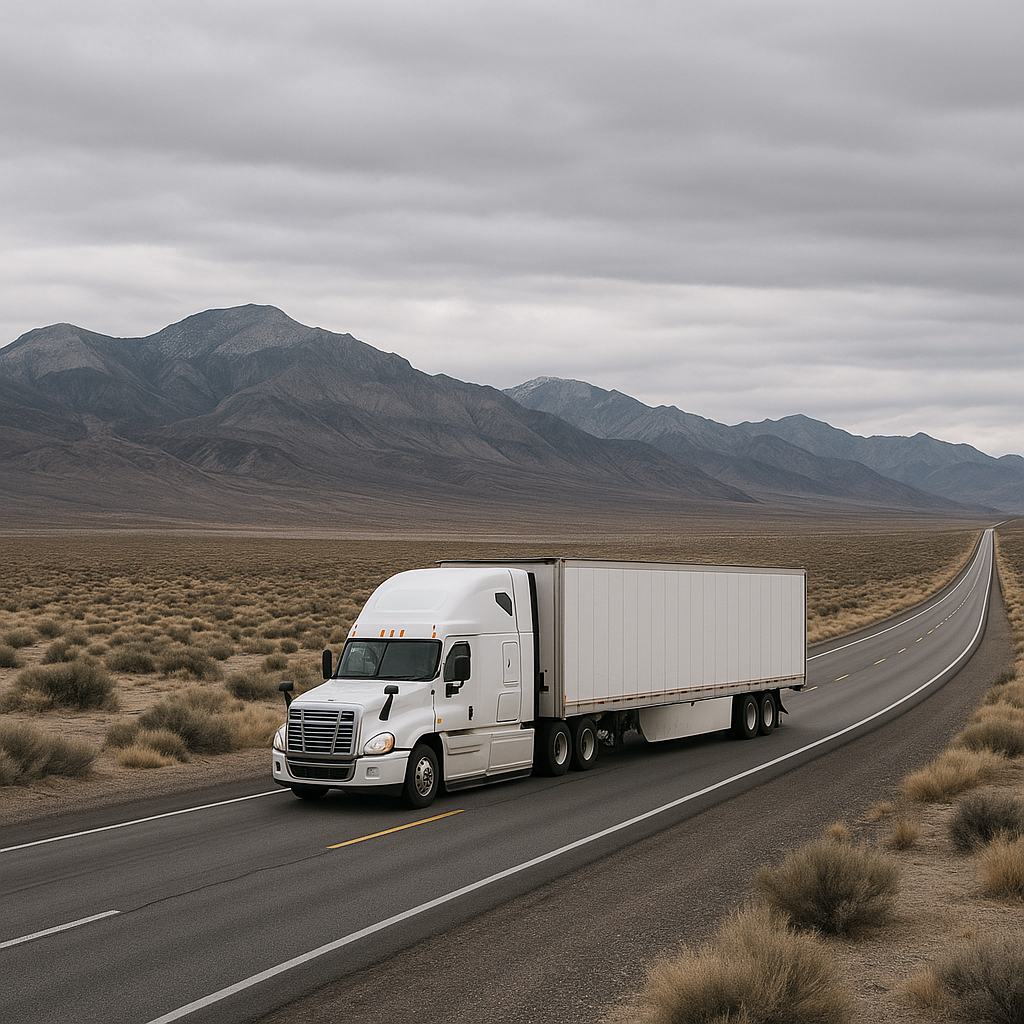
1. Dry Van and Refrigerated Trailers: The backbone of Nevada’s trucking, dry vans and reefers dominate I-80 and I-15. These trucks haul consumer goods, food products, and imports/exports between California, regional distribution centers, and major retailers.
2. Flatbeds and Specialized Equipment: Mining plays a crucial role in Nevada’s economy, especially along US-95, US-93, and parts of I-80. Flatbed trucks and specialty carriers haul heavy machinery, mining equipment, and raw materials. Oversize loads are frequent, especially near mining operations.
3. Tankers: Nevada’s arid stretches demand frequent fuel deliveries. Tankers transporting petroleum products are a familiar sight, particularly on rural corridors like US-95, and supply both remote towns and rest stops.
4. Livestock and Agriculture: On corridors like US-93 and areas near Elko and Winnemucca, drivers will encounter livestock trailers and agricultural supply trucks, especially during harvest and calving seasons.
Trucking activity peaks around major distribution hubs such as Reno-Sparks (with access to I-80 and US-395) and Las Vegas (where I-15 and US-95 intersect). Both cities serve as gateways to Nevada’s vast and often isolated reaches.
How Congestion or Merging Creates Risk
Despite Nevada’s expansive open roads, congestion and problematic merging zones are key safety concerns—especially near urban areas and critical junctions.
Urban Bottlenecks:
– Las Vegas Spaghetti Bowl (I-15/I-515/US-95 interchange): This multi-level interchange in central Las Vegas is notorious for high truck volumes, rapid lane changes, and aggressive merging, especially during rush hours.
– Reno and Sparks on I-80: Here, heavy truck traffic mixes with commuter vehicles and tourists, particularly during sporting events or weekends, leading to sudden slowdowns and rear-end collision risks.
Tourist Corridors:
Both Las Vegas and Reno attract substantial tourist traffic, leading to unpredictable congestion—especially during conventions, sports events, and holidays. On I-15 near the California border (Primm, NV), traffic can gridlock for miles as visitors head toward or return from Las Vegas.
Rural Merging and Service Gaps:
Long stretches of US-95 and US-93 entail limited passing lanes and distant exits. Entering or leaving the highway at remote interchanges can be hazardous due to limited visibility, abrupt deceleration lanes, and sleepy drivers less attentive after hours on empty roads.
Weather-Related Risks:
In winter, snow and ice create hazardous merging and stop-and-go traffic, especially along I-80’s Donner Pass approach or at higher elevations on US-50 (the “Loneliest Road in America”).
Proper trip planning, maintaining safe following distances, and heightened awareness near urban interchanges or during peak merging times are essential for minimizing risks.
Time-of-Day and Seasonal Traffic Trends
Understanding traffic trends specific to Nevada’s trucking corridors is critical for maximizing productivity and safety. Several noteworthy patterns emerge:
Daily Patterns:
– Morning and Evening Rush:
On I-15 in Las Vegas and I-80 through Reno-Sparks, traffic congestion peaks between 6–9 am and 3–6 pm. During these times, lane changes are more frequent, on-ramps become crowded, and stop-and-go conditions can frustrate even seasoned drivers.
– Late Night/Overnight:
Many truckers prefer traveling through Nevada’s vast emptiness at night to avoid heat and urban traffic. This can mean less congestion, but also an increased risk from wildlife activity (such as deer near Ely or Fallon), fatigued drivers, and fewer open amenities or truck stops.
Weekly Patterns:
– Friday and Sunday Surges:
Expect surges in traffic on I-15 and I-80 as weekend travelers depart or return, especially near Las Vegas and the California state lines. Congestion on these days can cause significant delays, especially near major events or holidays.
Seasonal Risks:
– Winter:
I-80 faces notorious snowstorms, especially near the California border. Chain controls, sudden closures, and poor visibility are common. Mountain passes and US routes in northeastern Nevada can experience black ice and wind gusts.
– Summer:
Extreme heat increases breakdown risks—particularly on US-95 and US-93 where distances between service areas are long. Tire blowouts and engine overheating become more common. Tourist traffic swells in both Las Vegas and Reno, compounding daytime congestion.
– Event-Driven Traffic:
Burning Man brings a spike in traffic to northern Nevada near Gerlach and up US-447. Large conventions, sporting events, or music festivals can double the typical congestion along major city approaches.
Knowing these trends helps drivers better schedule their routes for optimal efficiency and safety, particularly when traversing long distances or planning rest and refueling stops.
A Final Word on Nevada Trucking Corridors
Nevada trucking corridors are the lifelines of freight moving across the western United States, offering truck drivers a challenging but essential passage between ports, production sites, and rural outposts. Whether navigating the urban hustle of Las Vegas, the high-desert stretches of I-80, or the lonely reaches of US-95, drivers benefit from understanding local freight activities, traffic patterns, and seasonal hazards. With informed trip planning and an awareness of merging and congestion risks, Nevada’s roads remain a backbone for the trucking industry and a vital part of the region’s supply chain.