
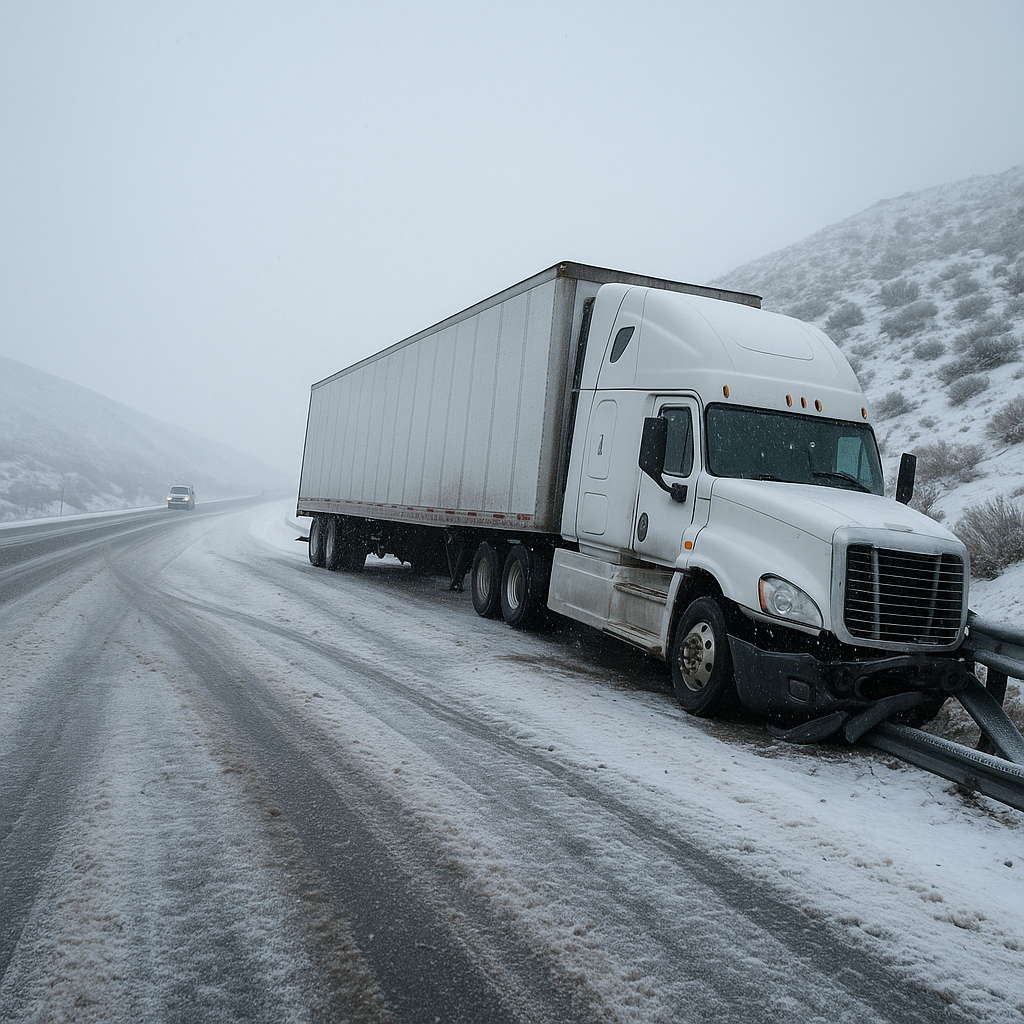
Nevada Winter Weather and Semi Truck Crash Risks
Overview of the Nevada Weather or Road Condition Factor
Nevada’s winter season may not immediately conjure images of blizzards and heavy snowfall like some Northern states, but the Silver State faces its own set of cold-weather challenges, especially on its well-traveled highways and mountain passes. From the snow-blanketed Sierra Nevada region near Lake Tahoe to the icy stretches of Interstate 80 (I-80) and US Highway 50—dubbed the “Loneliest Road in America”—winter driving in Nevada can turn treacherous quickly. For semi truck drivers tasked with traveling through this diverse state, changing Nevada winter weather and semi truck crash risks are closely intertwined.
Nevada’s climate brings unpredictable conditions: while southern deserts may stay mild, the north and central parts of the state regularly deal with freezing rain, black ice, strong winds, and sudden snow squalls. Unlike urban areas with regular plowing and salting, Nevada’s rural and mountainous routes aren’t always maintained to the same standard, magnifying hazards for heavy trucks that literally keep the state moving.
How This Condition Affects Trucks Differently Than Cars
Winter hazards that pose a risk for every driver can become especially dangerous for semi trucks and their drivers. The reasons go beyond sheer vehicle size. A fully loaded tractor-trailer can weigh 80,000 pounds or more, magnifying the effects of physics when roads turn slick or visibility declines.
Reduced Traction and Control:
Semis have far more weight distributed over multiple axles compared to passenger vehicles. When encountering black ice or compacted snow, this weight can make it harder for all tires to maintain traction. While modern trucks often feature anti-lock braking systems (ABS), these are less effective when tires simply can’t grip the road. A semi truck that loses traction isn’t just at risk of minor sliding—it may jackknife, meaning the trailer swings independently of the cab, often blocking multiple lanes or causing chain-reaction accidents.
Longer Stopping Distances:
On dry pavement, a loaded semi takes 20-40% longer to stop than a car. Add even a thin layer of snow or ice, and those distances grow dramatically. If a hazard appears suddenly—like a collision ahead, wildlife in the road, or a burst of wind causing a whiteout—a semi truck may need hundreds of extra feet to come to a stop, if it can stop at all.
Handling and Visibility:
Semi trucks have a higher center of gravity than passenger vehicles, making them more vulnerable to tipping, especially when facing wind gusts common in the Nevada desert and through the mountain passes. Their size also leads to larger blind spots and more difficulty seeing smaller vehicles or obstacles buried by drifting snow.
Difficulty in Mountain Terrain:
Much of northern Nevada’s critical transportation network runs through the rugged Sierra and Ruby mountains. Climbing and descending steep grades in bad weather stresses both engines and brakes. Chain requirements are often imposed on trucks, but even with chains, icy inclines and downgrades challenge even experienced operators, raising the risk of loss-of-control crashes.
Why Crashes Can Become Severe Under These Conditions
The combination of heavy vehicles, slippery roads, and often poor visibility results in uniquely hazardous crash scenarios. Crashes involving semi trucks during Nevada winter weather often become more severe for several reasons:
Greater Momentum:
The massive weight of semi trucks means more energy is involved in any collision. If a semi slides on ice or snow, it can collide with much greater force than a passenger car, causing significant damage on impact.
Multi-Vehicle Incidents:
Jackknife accidents or rollovers can block multiple lanes on busy corridors like I-80, triggering chain-reaction pileups, especially when visibility is reduced by snow squalls or blowing dust. Passenger vehicles may not be able to slow or stop in time to avoid the disabled truck or other cars.
Hazardous Cargo:
Some trucks carry hazardous materials. A crash can result in spills of fuel or chemicals, complicating rescue efforts, posing environmental risks, and forcing extended closures of critical Nevada highways.
Challenging Emergency Response:
In rural areas of Nevada, emergency response times can be extended, especially during winter storms when road access is limited or blocked. Accidents involving semi trucks can be more severe simply because help takes longer to arrive, and bad weather can delay recovery efforts even further.
Common Seasonal Patterns in Nevada
To understand Nevada winter weather and semi truck crash risks, it is helpful to look at the state’s unique seasonal patterns and how they affect roadway safety:
Winter Storms and Sudden Swings:
Northern and central Nevada routinely experience winter storms between December and March. Weather may change with little warning, as storms roll off the Pacific and sweep across the state. Snowfall in mountain regions can reach several feet over a few days, while valleys may experience freezing drizzle and black ice.
Rapid Temperature Shifts:
Nevada’s arid climate means temperatures often swing wildly from day to night. Conditions that seem manageable during the afternoon may freeze into patches of hidden ice as temperatures drop after sundown. This unpredictability catches both locals and truckers from out of state off guard.
Wind Events:
Strong wind is common in Nevada, especially on the high plains and basins. Gusty crosswinds can shove a lightly loaded or empty tractor-trailer sideways, potentially pushing it off the road or causing a rollover.
Chain Control and Closures:
The Nevada Department of Transportation (NDOT) frequently implements chain controls on mountain passes such as those on I-80 near Donner Summit or US 50 through the Desolation Wilderness. Drivers must be prepared for mandatory stops to install tire chains or face extended waits while avalanche control or plowing operations are underway.
Valley Fog and Freezing Drizzle:
Especially in areas like the Humboldt or Carson Valleys, night-time fog can severely reduce visibility and hide slick road patches. Freezing drizzle coats roads and bridge decks, making them especially treacherous for heavy trucks traveling at highway speeds.
Neutral Closing Paragraph
Nevada’s diverse landscape and variable winter weather create challenging driving conditions every year, particularly for semi trucks that are essential to interstate commerce and local supply chains. Understanding the factors that increase crash risks for trucks—not just passenger vehicles—highlights the importance of caution, preparation, and flexibility during the winter months. By staying informed about weather changes and adapting driving behavior, all Nevadans and visitors can help make the roads safer throughout the state’s unpredictable winter season.