
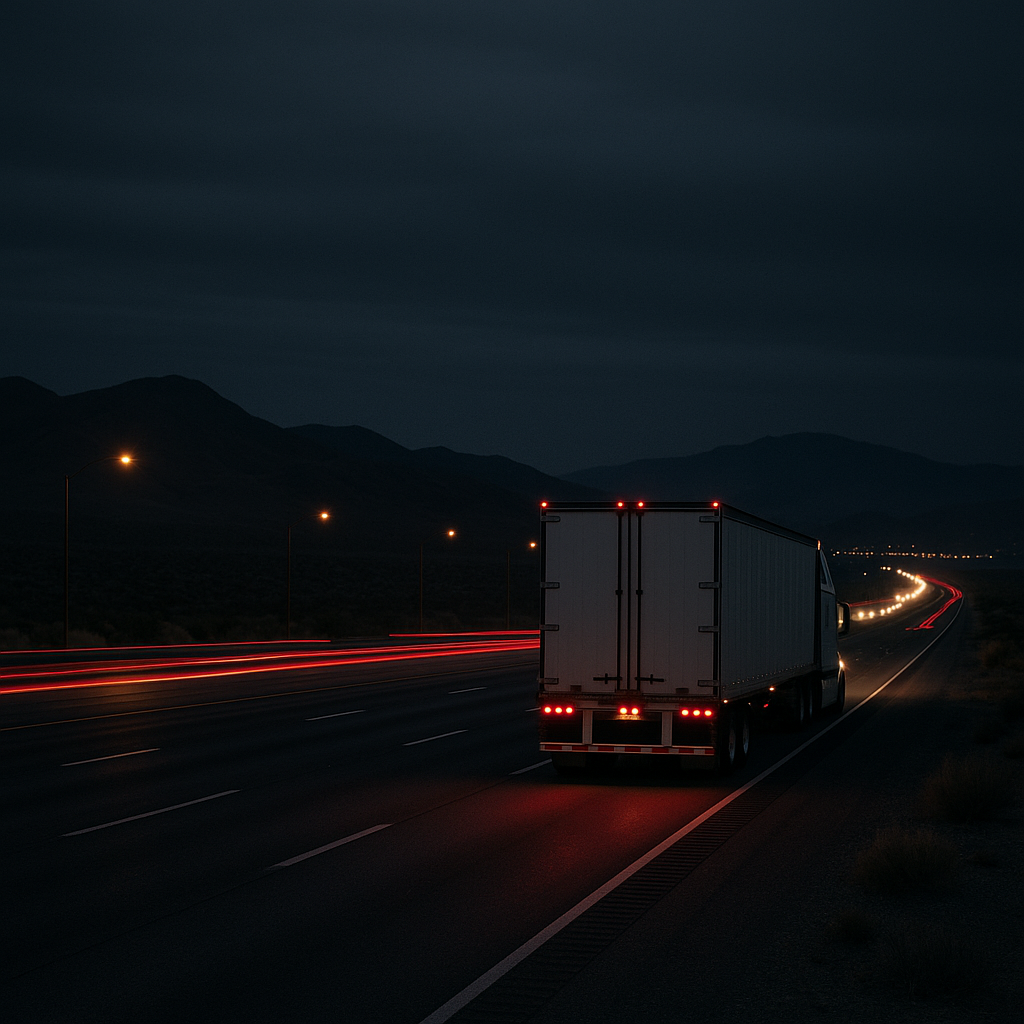
Night Freight Traffic Patterns in Nevada
Overview of the Freight Corridor or Trucking Activity
Nevada, with its wide-open roads traversing desert landscapes and mountainous terrain, is a critical freight corridor in the western United States. As one of the most truck-dependent states, Nevada’s highways—particularly Interstate 80, Interstate 15, and U.S. Route 95—form crucial links for goods moving between the ports of California, Salt Lake City, Denver, and the Pacific Northwest. Understanding night freight traffic patterns in Nevada is essential for businesses, drivers, and communities alike, as a significant volume of goods moves after sunset, taking advantage of less crowded highways and cooler temperatures.
Las Vegas serves as a freight nexus in southern Nevada, with major distribution hubs catering to industries such as retail, manufacturing, and tourism. In northern Nevada, Reno-Sparks and the Tahoe-Reno Industrial Center (TRIC) handle a mix of regional and long-haul trucking activities, benefiting from proximity to California while minimizing the congestion and regulations found across the border. Elko and Winnemucca, meanwhile, act as important rest and refueling stops along I-80’s stretch through the high desert.
The state’s geography and low population density outside urban areas encourage trucking companies to schedule long hauls overnight, especially when moving between state lines or making deliveries to regions with tight delivery windows. Night freight traffic patterns in Nevada are thus shaped by the need for efficiency, regulatory compliance with hours-of-service rules, and the desire to optimize delivery times around urban congestion peaks.
Common Truck Types and Freight Activity in the Area
Freight activity along Nevada’s highways encompasses a diverse array of trucks and cargo. The most commonly observed vehicles on the state’s roads during nighttime hours include:
– 53-foot Dry Van Trailers: The backbone of intercity freight, these trucks transport everything from packaged consumer goods to electronics and clothing. Their versatility makes them a common sight on I-15 and I-80, heading toward California from Reno, Las Vegas, or Salt Lake City.
– Refrigerated Trucks (Reefers): Essential for shipping perishable items, refrigerated trucks move dairy, produce, and frozen goods into Nevada’s urban centers and onward to other western states. Nighttime travel is especially common for reefers to take advantage of cooler desert nighttime temperatures, helping to maintain interior cargo temperatures and reduce cooling costs.
– Flatbeds and Heavy Haulers: Mining, construction, and large equipment are critical industries in Nevada, meaning flatbed trucks often transport oversized loads, minerals, or heavy machinery between remote locations and processing centers, frequently during nighttime hours to minimize road closures or pilot vehicle requirements during the day.
– Hazmat and Tanker Trucks: The state’s mining and chemical industries, along with fuel distribution logistics for Las Vegas and Reno, contribute to a notable overnight presence of tanker trucks. Federal and state safety guidelines often require these vehicles to follow specific night routing to limit risk to the general public.
Nevada’s freight ecosystem is thus composed of a complex mix of inbound and outbound logistics, with night operations dominating for long-haul sectors. Freight originating from Los Angeles, San Francisco, or Salt Lake City is often scheduled for nighttime arrival to Nevada’s hubs, while outbound goods are timed to beat morning congestion on interstates or local routes.
How Congestion or Merging Creates Risk
Although Nevada’s highways may seem quiet at night compared to daytime rush hours, specific risk factors associated with night freight traffic patterns deserve attention. While overall traffic volume decreases, the relative share of heavy trucks increases during late-night and early-morning hours—raising the stakes for highway safety.
Merging Lanes and On-Ramps: Merging zones near cities like Las Vegas and Reno become risk points as trucks enter and exit the highway from distribution centers or industrial parks. Reduced visibility at night can increase the likelihood of collisions, particularly if drivers misjudge distances or speeds.
Work Zones and Lane Closures: Nevada’s Department of Transportation often schedules maintenance and road construction during night hours to reduce daytime traffic disruptions. However, this results in sudden lane closures, narrowed travel paths, and changed traffic patterns—posing additional risk for fatigued drivers or those unfamiliar with temporary layouts. For truck drivers maneuvering long rigs or wide loads, these abrupt changes demand heightened awareness.
Congestion Around Major Interchanges: Despite lower traffic volume, night freight movement can create localized congestion at key junctures like the Spaghetti Bowl interchange in Las Vegas or the I-80/I-580 intersection in Reno. Here, the convergence of local delivery vehicles, long-haul freight trucks, and late-night motorists can create bottlenecks, increasing the risk of sideswipes and rear-end collisions.
Wildlife Crossings and Sudden Stops: Nevada’s open roads are prone to wildlife crossings—particularly in rural stretches along I-80 or US-95. At night, reduced reaction times and limited road lighting can make it difficult for truck drivers and other motorists to avoid collisions with animals, leading to sudden stops or swerves.
The combination of increased truck density, reduced visibility, and altered traffic configurations requires all drivers—especially those navigating commercial vehicles—to exercise additional caution during nighttime hours.
Time-of-Day and Seasonal Traffic Trends
The distinctive patterns of night freight traffic in Nevada show clear preferences based on time-of-day and season:
– Late Evening to Early Morning Peak: From roughly 9 p.m. to 5 a.m., Nevada’s interstate network experiences its highest concentration of freight vehicles. Truck stops and rest areas are busiest during these hours as drivers adhere to mandated rest periods or await timed delivery windows.
– Day/Night Overlap in Urban Centers: In cities such as Las Vegas, late-night freight traffic often overlaps with late-night recreational and service industry vehicle movement, especially on weekends. During special events or major conventions, after-hours deliveries may intensify to accommodate increased demand.
– Seasonal Changes: Winter months bring unique challenges, particularly on higher-elevation routes like I-80 or passes near the California border. Snow, ice, and fog reduce visibility and impair road conditions, often requiring truck drivers to adjust schedules or use chains—slowing overall freight movement. Summer months, in contrast, can see a rise in overnight driving as companies try to avoid daytime high desert temperatures that impact vehicle performance and driver comfort.
– Holiday and Event-Driven Spikes: Nighttime freight activity increases before major holidays or during Nevada’s signature events, such as the Consumer Electronics Show in Las Vegas or Burning Man near Gerlach. Retailers and organizers rely on overnight shipments to restock or set up infrastructure with minimal disruption and maximum secrecy.
Understanding these trends allows companies, drivers, and planners to better manage logistics, rest breaks, and route choices throughout the year.
Neutral Closing Paragraph
The night freight traffic patterns Nevada experiences are shaped by geographic, economic, and seasonal factors unique to the state. Long stretches of interstate, the demands of major urban hubs, and the rhythm of regional industry combine to create a dynamic after-dark freight ecosystem. While traveling Nevada’s highways at night poses challenges, it remains an essential part of the broader logistics network that supports the state’s economy. As shipping needs and infrastructure evolve, continued awareness of these patterns and their associated risks will help keep goods and motorists moving safely and efficiently across the Silver State.