
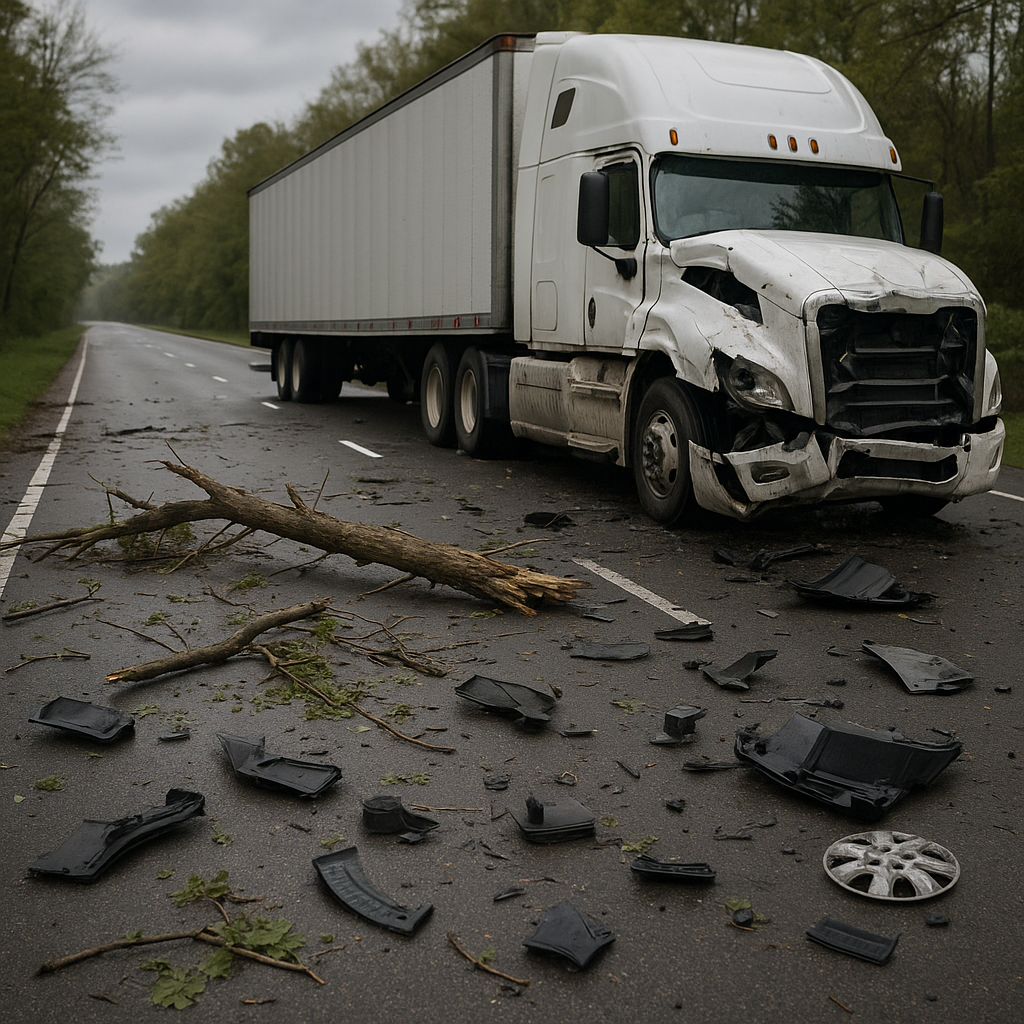
Road Debris After Storms and Truck Crash Dangers in Nevada
Overview of Nevada’s Unique Weather and Road Conditions
Nevada’s vast landscape, ranging from arid deserts to mountainous terrain, is subject to a variety of weather patterns and road conditions that can catch even experienced drivers off guard. Unlike neighboring states, Nevada can swing rapidly between clear skies and intense storms, particularly during the summer monsoon or sudden winter squalls in higher elevations. When storms sweep across the state, they can leave behind significant road debris—everything from rocks and branches to construction materials and remnants of prior accidents. For the trucking industry and everyday drivers, this debris poses a unique hazard to roadway safety.
Nevada’s roadways, especially on long stretches of I-80, I-15, and US-95, are heavily used by long-haul trucks transporting goods across the West. Coupled with adverse weather conditions, the risk factor for truck-related crashes spikes when debris is present, and the aftermath can be severe.
How Road Debris Impacts Trucks Differently than Cars
Heavy trucks and tractor-trailers play a vital role in Nevada’s commerce, but their size, weight, and handling characteristics make them particularly vulnerable when it comes to road debris after storms. Here’s why:
Larger Vehicles, Greater Response Challenges
Trucks require significantly more time and distance to stop or maneuver around unexpected obstacles compared to passenger cars. When debris like fallen branches, shattered glass, or rocks appears suddenly on the highway, a car can sometimes swerve or brake quickly and avoid a collision. For a fully loaded semi-truck, such evasive action is much harder—sharp maneuvers can cause jackknifing or rollovers instead of avoiding the debris. The truck’s longer wheelbase and higher center of gravity increase this risk, particularly on the winding or elevated routes common around Reno and through the Sierra Nevada foothills.
Wheel and Undercarriage Vulnerability
Trucks are built to carry heavy loads, but their tires and undercarriage are not immune from damage. Hitting sizable debris can blow out a tire, tear brake lines, or damage mud flaps, especially on older or heavily used routes like US-50, often called “The Loneliest Road in America.” Such sudden mechanical failures can increase the likelihood of losing control or even causing secondary crashes.
Additional Hazards: Cargo Shift and Spills
When a truck collides with debris, the impact can also shift cargo inside the trailer. If the load isn’t properly secured, this can throw off the vehicle’s balance or, in extreme cases, cause hazardous materials to spill. On Nevada’s major freight corridors, these incidents can block highways for hours or even days, amplifying public safety concerns and disrupting vital supply lines.
Why Crashes Become More Severe When Debris Is Present
The interaction between a heavy truck, storm-swept roads, and sudden debris isn’t just a recipe for crashes—it’s a reason why such crashes can be particularly severe in Nevada.
High-Speed Impact Amplified by Weight
On highways outside Las Vegas, where speed limits can reach 75 mph, the force of a collision is already significant for any vehicle. For a fully loaded semi-truck, which can weigh up to 80,000 pounds, hitting a block of concrete or fallen tree branches doesn’t just damage the truck—the debris might be pushed or shattered, endangering vehicles behind or beside the truck as well.
Limited Escape Routes in Remote Areas
Many of Nevada’s major highways cross remote, sparsely populated regions. If debris spans multiple lanes or covers a blind curve, trucks may have nowhere to go, especially with little shoulder room or passing zones. In these scenarios, severe multi-vehicle pileups are possible, and response times from emergency services may be longer, potentially worsening crash aftermaths.
Chain-Reaction Collisions
Due to their size and braking distance, trucks often cannot avoid debris in time to prevent a crash. The sudden stop or loss of control can lead to secondary accidents as following vehicles, unable to see beyond the trailer, may also become involved. These chain-reaction collisions are more common after sudden storms, especially in areas with limited visibility due to rain, dust, or early dusk in mountainous terrain.
Common Seasonal Patterns Impacting Road Debris and Truck Dangers in Nevada
Monsoon Season (July–September)
Nevada’s summer storms are notorious for striking quickly and with little warning, especially in the southern parts of the state near Las Vegas. Heavy downpours can wash rocks and sediment from the hills onto highways, while strong winds can topple signs, blow dust across the road, and leave behind unexpected obstacles. After these storms, maintenance crews work quickly to clear major expressways, but rural connectors and less traveled areas can remain dangerous for much longer.
Winter Storms in Northern Nevada
From late November through March, northern Nevada, including the Reno-Tahoe corridor, faces winter storms that can bring snow, ice, and high winds. Snowplows can inadvertently push debris like rocks or branches onto the cleared portions of the highway. Black ice increases the stopping distance for trucks, and hidden debris under fresh snowfall might not be visible until it’s too late to swerve or stop.
Springtime Flooding and Erosion
Flooding isn’t just a problem for the desert southwest; melting snow higher up can lead to flash floods in valleys and washes throughout rural Nevada. Roads may be washed out or covered in silt, mud, and gravel, making them treacherous for truckers. With Nevada’s frequent construction projects, leftover materials or barricades can also become road hazards after a sudden storm.
Wildfire Aftermath in Late Summer and Fall
Nevada’s wildfire season can leave behind weakened trees and loose brush. After an intense wildfire, even a moderate rainstorm can send debris sliding onto roads. For truck drivers unfamiliar with the area, these conditions can create unexpected hazards around turns or in freshly reopened sections of highway.
Staying Aware and Prepared in Nevada’s Dynamic Driving Conditions
Nevada’s ever-changing weather and landscape present constant challenges for both truckers and everyday motorists. Road debris after storms introduces a higher level of unpredictability, and truck crash dangers become heightened due to the unique characteristics of heavy vehicles navigating the state’s long and often isolated highways. By understanding how weather-related hazards and seasonal patterns affect roadway conditions, drivers can better anticipate potential dangers and adjust their travel plans accordingly.
Through continued awareness, timely roadway maintenance, and respect for Nevada’s powerful natural forces, everyone sharing the road can help minimize the impacts of debris and storm-related truck crash dangers throughout the Silver State. While not every hazard can be avoided, knowledge and caution remain the best defenses along Nevada’s open roads.