
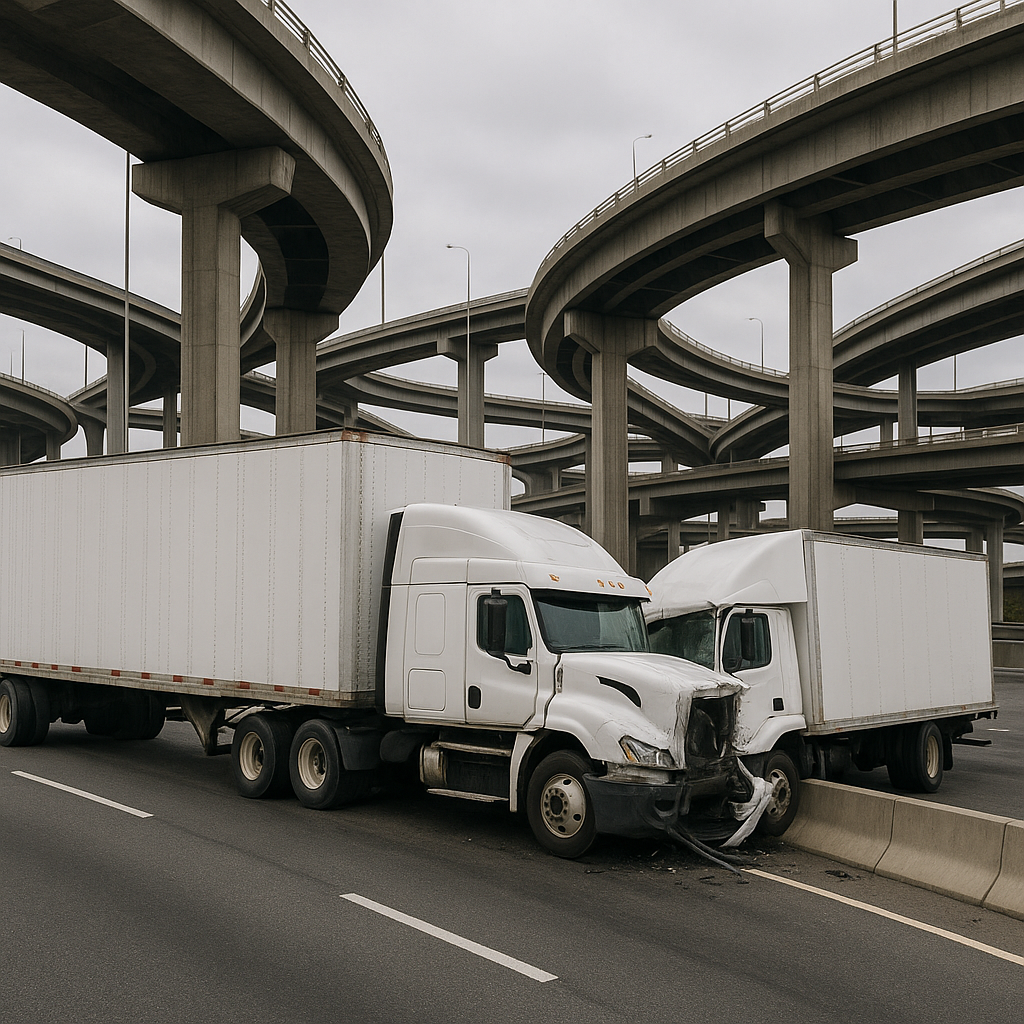
Spaghetti Bowl Interchange Crash Patterns Involving Trucks
Overview of the Trend or Pattern
The Spaghetti Bowl interchange in Las Vegas, Nevada, is a complex and heavily trafficked junction where several major highways converge, including Interstate 15 (I-15), U.S. Route 95 (US-95), and Interstate 515 (I-515). Its intricate design, featuring multiple ramps, loops, and connections, earns it the nickname “Spaghetti Bowl.” While this interchange facilitates critical regional mobility, it is also a hotspot for traffic incidents, particularly involving large trucks.
Spaghetti Bowl interchange crash patterns involving trucks have become a growing concern for transportation authorities and safety advocates. The large volume of commercial trucks passing through this interchange daily, combined with the intricate infrastructure and driver behavior, contributes to a unique set of crash dynamics.
Trucks—due to their size, weight, and operational constraints—pose specific challenges in navigating the Spaghetti Bowl. These challenges, in turn, affect how and why crashes occur in this area. Understanding these patterns is essential for improving safety and optimizing traffic flow in one of Nevada’s busiest transportation hubs.
Common Factors Behind the Pattern
Several common factors influence crash patterns involving trucks at the Spaghetti Bowl interchange:
Complex Road Geometry and Design
The Spaghetti Bowl is a multi-level interchange featuring tight curves, short merge lanes, and overlapping ramps. This intricate design creates limited reaction time and minimal space for trucks, which require longer distances to accelerate, decelerate, and maneuver safely. Trucks negotiating sharp curves or weaving between ramps are at increased risk of loss of control or side-swipes.
High Traffic Volume and Congestion
The interchange is a critical junction for freight movement in and out of Las Vegas. The combination of daily commuter traffic with substantial commercial vehicle flow results in congestion, especially during peak hours or holiday travel periods. Truck drivers often face heavy stop-and-go traffic, increasing the risk of rear-end collisions and sideswipes.
Speed Differentials and Driver Behavior
Truck drivers often travel at different speeds than passenger vehicles due to load weight, braking capabilities, and regulations. The speed difference combined with aggressive lane changes, sudden merges, or improper signaling by all vehicle types can exacerbate crash potential. Furthermore, some truck drivers unfamiliar with the interchange may hesitate or make unpredictable maneuvers, increasing crash risk.
Visibility and Blind Spots
Large trucks have significant blind spots, especially on the right side and directly behind the trailer. The complexity of the Spaghetti Bowl’s multiple lanes and ramps can cause vehicles to remain in these blind spots longer than usual. Passenger vehicles remaining in truck blind spots are at heightened risk of side collisions or being sideswiped during lane changes.
Weather and Environmental Conditions
Although Las Vegas enjoys predominantly clear weather, occasional rainstorms or dusty winds can reduce visibility and road traction. These less frequent but impactful conditions affect truck handling and stopping distances, especially on curved ramps or downhill sections of the interchange.
Inadequate Signage or Wayfinding Challenges
The Spaghetti Bowl’s complicated layout can confuse unfamiliar drivers, including some truck operators. While signage is designed to assist drivers, quick decision-making is often necessary. Missing or unclear signs may cause last-minute lane changes or abrupt braking, contributing to crash risks.
Why Severity May Be Higher in Nevada Conditions
Certain factors specific to Nevada elevate the severity of crashes involving trucks at the Spaghetti Bowl:
Heavy Commercial Vehicle Loads
Nevada serves as a critical freight corridor connecting the West Coast with inland markets. The soil and mineral extraction industries, manufacturing hubs, and distribution centers in the state contribute to the consistent presence of heavily loaded trucks on the road. Heavily laden trucks carry greater kinetic energy, making crashes more destructive and increasing the likelihood of vehicle rollovers or secondary collisions.
High Speeds and Interstate Roadways
The Spaghetti Bowl is part of the interstate system where higher speed limits apply, including speeds up to 70 mph in some stretches. When large trucks traveling at or near these speeds are involved in crashes, the results can be catastrophic, with more significant damage and severe injuries or fatalities.
Extreme Heat and Road Surface Conditions
Las Vegas experiences extreme summer temperatures, which can affect tire integrity and road surfaces. Hot asphalt can become soft, affecting traction, especially for heavy trucks whose tires are under tremendous pressure. Heat-induced tire blowouts or reduced braking efficiency can result in loss of vehicle control.
Limited Emergency Response Access
The complex structure of the interchange sometimes hinders quick access by emergency responders. Large accidents involving trucks can block multiple lanes, delaying closing roads, extricating injured persons, and clearing debris. Delayed response times and prolonged traffic disruptions can increase risk for secondary crashes.
Tourism and Visitor Drivers
Las Vegas attracts millions of visitors who may be unfamiliar with freeway driving in busy metropolitan areas like the Spaghetti Bowl. Tourist drivers unfamiliar with merging patterns, ramp arrangements, or truck operating nuances may inadvertently contribute to crash scenarios or misjudge truck movements.
How Patterns Change Over Time
Crash patterns at the Spaghetti Bowl involving trucks are not static and have evolved due to a variety of factors:
Infrastructure Improvements and Changes
Over the years, several upgrades, such as ramp extensions, improved signage, and lane reconfigurations, have aimed to enhance safety. These modifications impact crash frequencies and types. For example, wider merge lanes can reduce collisions caused by sudden lane changes, while clearer signage mitigates confusion.
Traffic Volume Growth
As the Las Vegas metropolitan area continues to grow, so does traffic volume, including commercial vehicle movement. Increased truck counts have shifted the pattern from isolated incidents to more frequent multi-vehicle crashes, sometimes involving multiple large vehicles.
Technological Advances in Trucks
The adoption of safety technologies such as automatic emergency braking, lane departure warnings, and electronic stability control in newer commercial trucks helps reduce certain types of collisions. However, older trucks without such features still operate on Nevada roads, creating a mix that affects crash patterns.
Regulatory and Enforcement Changes
Enforcement of truck size, weight limits, and hours-of-service regulations affect the behavior and presence of trucks during certain periods. For instance, restrictions on commercial vehicle operations during peak traffic hours can affect congestion-related crash types.
Behavioral Shifts Post-Pandemic
The COVID-19 pandemic brought changes in traffic mix, with reduced commuter traffic and increased freight delivery. These shifts temporarily altered truck-related crash patterns at the Spaghetti Bowl. As normal traffic resumes, accident trends continue to adapt.
Weather and Climate Variability
Occasional extreme weather events, like flash floods or windstorms, create spikes in crash incidents. Monitoring seasonal and yearly weather variations helps anticipate pattern changes.
Closing Thoughts
The Spaghetti Bowl interchange in Nevada is a vital yet challenging nexus for vehicle traffic, especially for commercial trucks. Understanding the crash patterns involving trucks in this complex interchange is crucial to identifying safety concerns and shaping effective transportation policies. While infrastructure improvements, advanced vehicle technologies, and informed driver behavior can contribute to reducing crashes, ongoing monitoring and adaptation are essential.
Nevada’s unique conditions—from heavy freight loads and high temperatures to tourist-driven traffic—combine to influence both the frequency and severity of crashes involving trucks at the Spaghetti Bowl. Stakeholders including transportation planners, commercial vehicle operators, and the driving public all play roles in fostering safer travel through one of Las Vegas’s busiest and most intricate highway interchanges. As the interchange continues to evolve alongside the city’s growth, addressing these crash patterns thoughtfully will support safer roads for all travelers.