
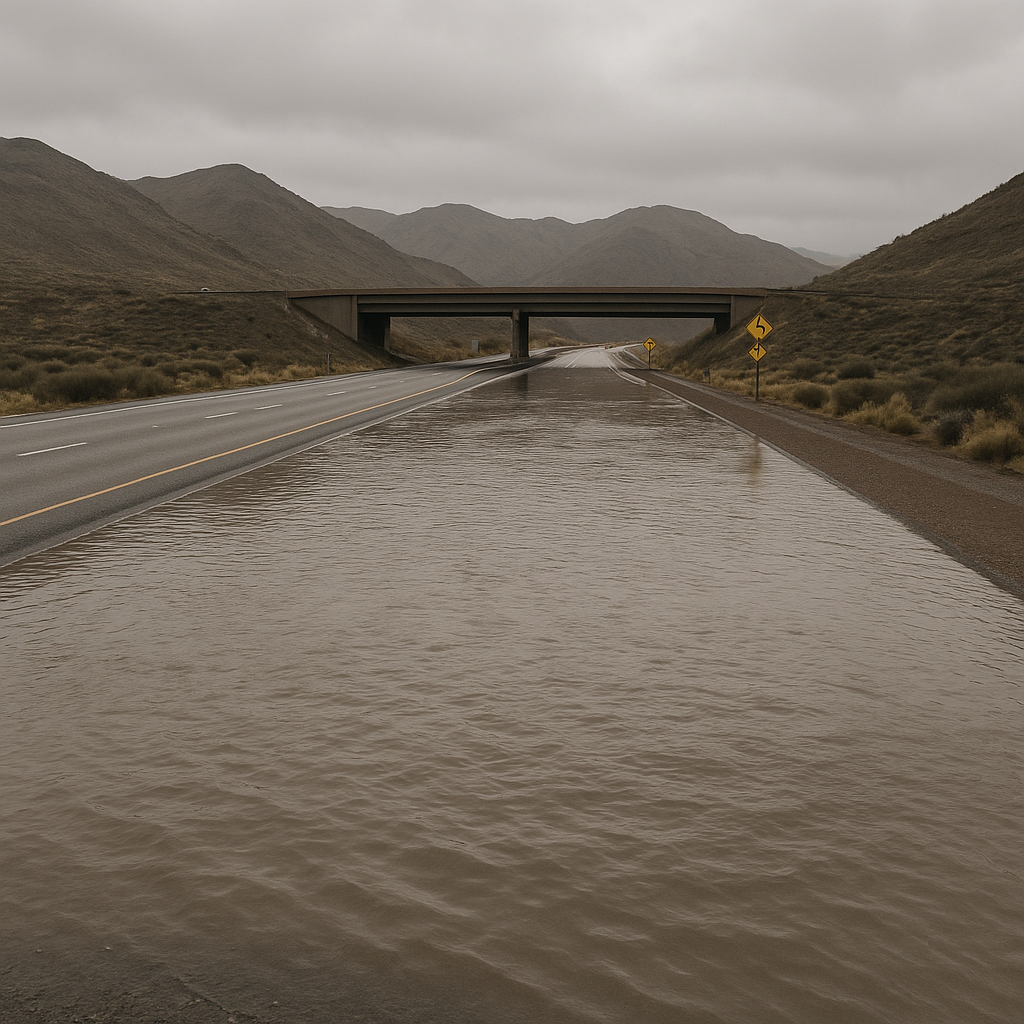
Standing Water Dangers on Nevada Freeways
Driving through Nevada can be an endlessly scenic experience, with vast desert landscapes and panoramic mountain backdrops. However, Nevada drivers know that the state’s weather can change in an instant—from relentless heat to sudden downpours. One highway hazard that often goes overlooked is the risk posed by standing water dangers on Nevada freeways. Even brief, localized rainstorms can turn safe roads treacherous, especially for high-speed travel. This article explores why standing water on Nevada roadways develops so suddenly, how it uniquely affects trucks and cars, and why accidents can turn severe in a matter of seconds.
Overview of Nevada Weather or Road Condition Factor
Nevada’s climate is best known for its dryness; Las Vegas receives less than five inches of rain per year. Yet, the state’s storms, when they do arrive, are often fierce. Many of Nevada’s freeways cross desert terrain with earth that can be hard-packed or even compacted by long periods between rains. When heavy rain does hit, water often fails to soak into the ground, instead accumulating quickly on road surfaces, especially in areas where there is inadequate drainage.
Freeways near Las Vegas, Reno, or along I-80 and I-15, can suddenly become home to sheet water after summer monsoons, thunderstorms, or even a particularly heavy winter rain event. Surface water may not always be visible in advance. Sudden pools can collect in lanes, at underpasses, or in dips, creating hazardous conditions for even the most attentive drivers.
The unique geography of Nevada also plays a role. Many freeways are built atop cut-and-fill sections, which can impede natural drainage. Storm drains, when present, can rapidly clog with desert debris—leaving rainwater nowhere to go but across the lanes.
How This Condition Affects Trucks Differently Than Cars
While standing water can spell trouble for any vehicle, the risks and effects are different for trucks compared to passenger cars.
Hydroplaning Dynamics:
Vehicles of any size can hydroplane when tires lose contact with the road surface and start riding on a thin film of water. However, due to their larger tire sizes and greater weight, trucks have a different hydroplaning threshold. Heavier commercial trucks may require a deeper pool of water to fully lose traction, but when hydroplaning occurs, recovery is much harder because of their mass and momentum.
Braking and Stopping Distance:
Trucks already need more room to stop than passenger cars under optimal conditions. Add standing water, and stopping distances grow even longer. The brakes themselves can become less effective if saturated, and water can reduce the friction between the tires and the road, further complicating stopping attempts.
Splash and Spray Hazards:
When passing through standing water at freeway speed, trucks generate enormous sprays that can blind adjacent drivers. The massive displacement can obscure line of sight not only for the truck driver but also cars in other lanes. This “curtain” of water is particularly hazardous at night or in low-light conditions when visibility is already reduced.
Weight Shift and Load Stability:
Water can cause uneven resistance, which may unexpectedly shift a truck’s load or cause trailer sway. Trucks carrying hazardous materials or those with high centers of gravity (like tankers or car haulers) face an elevated risk of loss of control or rollover incidents.
For all these reasons, truck operators and motorists alike must be extra cautious when Nevada’s wide-open freeways become waterlogged.
Why Crashes Can Become Severe Under These Conditions
Several factors combine to make collisions on water-logged Nevada freeways especially serious:
High Speeds on Open Roads:
Nevada’s rural interstates have some of the highest posted speed limits in the United States. When standing water appears suddenly, drivers traveling at high speeds have less time to react and a much greater risk of losing control.
Increased Impact Forces:
Wet surfaces dramatically reduce tire grip, making skids, spins, or rear-end collisions much more likely. At freeway speeds, even a brief hydroplane event can send a vehicle into barriers or other traffic with significant force.
Chain-Reaction Collisions:
In situations where heavy rain creates blinding spray, or when multiple vehicles hydroplane at once, “pile-ups” are a real risk. Rapidly changing weather in Nevada means some stretches of road can be perfectly dry while others, just over a hill, might be slick with standing water, catching drivers off-guard.
Remote Locations:
Many stretches of Nevada freeway are far from city centers or emergency response stations. Severe crashes can result in longer waits for assistance, which can be particularly dangerous in the event of injuries or hazardous material spills.
Barriers to Safe Pull-Off:
On some desert roadways, wide shoulders might give way to soft sand or rocky embankments, making emergency stops or evasive maneuvers even more hazardous.
Common Seasonal Patterns in Nevada
Understanding when and where standing water dangers emerge is crucial for Nevada drivers:
Monsoon Season (July–September):
The southern part of the state, including Las Vegas and the Mojave Desert, can experience sudden monsoon storms. What starts as a clear hot day can give way to powerful downpours within minutes. The rain rushes across superheated asphalt, overwhelming drainage ditches and quickly pooling on freeways—especially near city outskirts where stormwater infrastructure may lag rapid growth.
Winter Rain Events:
Northern Nevada (Reno, Sparks, and surrounding I-80 corridors) is prone to winter rain on snow, slush, or frozen ground, which can compound water pooling and ice risks. Warm, rain-heavy storms after a snow event cause water to flow rapidly across roads, sometimes overwhelming drainage systems designed for lesser loads.
Flash Flood-Prone Areas:
Certain low-lying freeway segments, such as portions of Highway 95 between Las Vegas and Tonopah, or the approaches to Death Valley National Park from Pahrump, are notorious for collecting floodwater during storms. The National Weather Service often issues flash flood warnings for these zones, and even a minor rain event can render a desert roadway impassable.
After Prolonged Drought:
Ground that has been parched for months becomes nearly impermeable. When rain finally arrives, the desert floor resists absorption, and runoff rapidly travels to the lowest point—often the freeway.
Neutral Closing Paragraph
Standing water dangers on Nevada freeways are a seasonal yet unpredictable reality. Whether you’re behind the wheel of a compact sedan or piloting a long-haul truck, recognizing the risks that standing water poses is a vital part of safe travel across the Silver State. By understanding why and when these hazards emerge, and how they uniquely affect different vehicles, Nevada drivers can better prepare for the state’s next sudden rainstorm.