
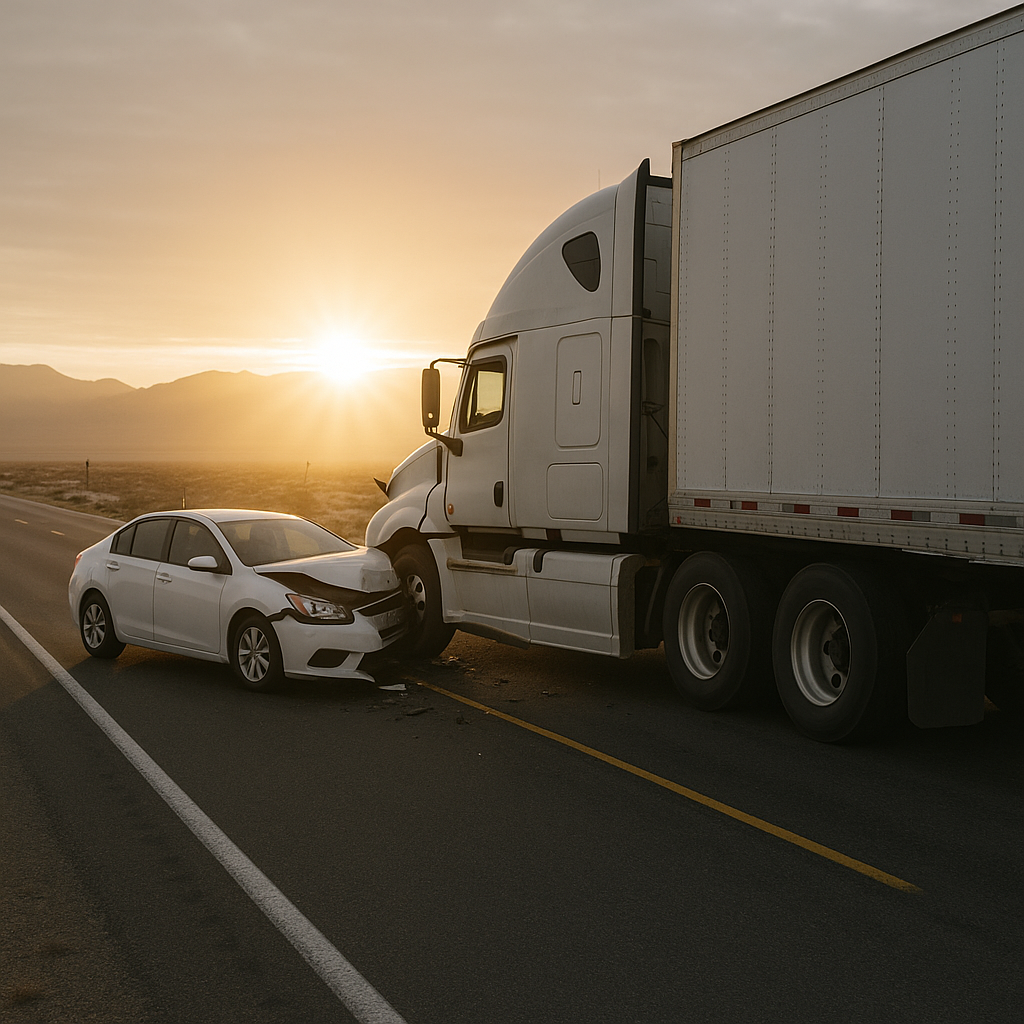
Sunrise Glare and Semi Truck Accidents in Nevada
Nevada’s unique landscape, combined with its climate and east-west running highways, presents distinctive driving hazards. Among these, sunrise glare stands out as an often underestimated risk—especially when it comes to large commercial vehicles. Sunrise glare semi truck accidents in Nevada are more frequent than many realize, and the consequences can be significantly more severe due to the combination of reduced visibility and the sheer size of the vehicles involved.
Overview of the Nevada Weather or Road Condition Factor
Nevada is known for its clear, sunny days—Las Vegas alone averages about 294 sunny days per year. While abundant sunshine is great for tourism and outdoor activities, it introduces challenges for drivers, particularly at dawn and dusk.
Sunrise glare is a phenomenon occurring when the sun is low on the horizon, typically in the early morning hours. As drivers head east on interstates like I-80 or U.S. Route 50, the rising sun aligns directly with their line of sight, creating dazzling conditions. The intensity of the glare can vary with the time of year, weather conditions (like a clear or hazy sky), and the topography along the road.
Highways crossing Nevada’s desert basins and mountain ranges often provide little shade, while stretches through urban areas—including the busy Las Vegas and Reno corridors—are equally exposed. In these environments, both daily commuters and commercial truck drivers face periods where the sun briefly but dramatically obscures their vision.
How This Condition Affects Trucks Differently Than Cars
While sunrise glare creates risky conditions for all drivers, it poses unique challenges for semi trucks and their operators.
First, the sheer size and design of semi trucks magnify visibility problems:
– Elevated cab position: While being higher off the ground can give truck drivers a better overall view, it can also put them directly in the line of intense sunlight, especially on flat highways or elevated stretches. Sun visors and tinted glass help, but powerful direct sunlight at sunrise can overwhelm these measures.
– Large windshields: The bigger windshield area on a truck allows more sunlight to enter, increasing the glare effect. In addition, dirt or streaks left from previous trips can refract or scatter sunlight, further reducing visibility.
– Long stopping distance: Trucks require considerably more distance to stop—potentially up to 40% more than smaller vehicles. When a driver is momentarily blinded by glare, even a split-second delay in reaction can have major consequences.
Second, cargo load and vehicle weight:
Heavy loads can increase both the amount of time it takes to stop and the likelihood that evasive maneuvers will be difficult or even unsafe. In some cases, truck drivers find themselves with minimal time to respond to vehicles that suddenly slow or stop ahead, especially when glare diminishes the visibility of brake lights or obstacles.
Additionally, Nevada’s highways often see higher traffic volumes in the hours just after sunrise, as cross-country shipments time their departures for overnight runs. This compounds the risk—there are more trucks on the road when glare is at its worst.
Why Crashes Can Become Severe Under These Conditions
When sunrise glare affects visibility, the risk of accidents for all vehicles increases—but the nature and severity of sunrise glare semi truck accidents in Nevada often stands out.
Reduced Reaction Times:
With limited forward visibility, truck drivers may not see slowing or stopped vehicles, road debris, or construction zones in time to slow down safely. Even a few seconds of blindness at highway speeds means covering the length of a football field or more without being able to react to the road ahead.
Chain-Reaction Pileups:
Nevada’s longer, open highway segments can sometimes lead to high speeds and close vehicle groupings. A single missed braking moment or abrupt stop can trigger chain-reaction collisions—particularly dangerous with multiple trucks involved.
Severity of Impacts:
The immense weight of semi trucks (often 20–30 times that of a passenger car when fully loaded) means any collision is likely to cause significant damage. Collisions involving glare can include rear-end impacts at speed, which are particularly dangerous for occupants of smaller vehicles.
Challenging Escape Routes:
Glare-related crashes can also happen near construction zones or areas with reduced roadway shoulders, making evasive maneuvers and post-collision escape routes difficult for all involved. Nevada’s mountainous terrain and desert stretches may further complicate rescue or response efforts.
Common Seasonal Patterns in Nevada
While sunrise glare is a risk year-round, its effects—and the corresponding risk of semi truck accidents—can fluctuate with the seasons in Nevada.
Fall and Winter:
During late fall and winter, the sun rises further south and stays lower in the sky. Its rays are more likely to align directly with east-west transit corridors, such as stretches of I-80, U.S. Route 50 (“The Loneliest Road in America”), and even some urban arterials in Las Vegas and Reno. Notably, sunrise also occurs later in the morning when there is typically more traffic. The result: more vehicles, including trucks, are on the move just as glare is at its worst.
Spring and Summer:
In the spring and summer, the earlier sunrise means glare affects early morning travelers, including the first round of commercial trucking. However, because days are longer and more driving occurs in the daylight, the risk window may be shorter. Nevada’s dry, clear atmospheric conditions during this time can make glare especially intense, particularly after rare rainfall that leaves roads with a reflective sheen.
Dust and Atmospheric Conditions:
Nevada’s arid climate occasionally leads to dust storms or haze, which may diffuse sunlight. Sometimes, this softens glare, but at other times, unexpected changes in visibility can catch drivers off guard. The sharp transition from hazy to clear conditions at sunrise may be especially hazardous.
Neutral Closing Paragraph
Nevada’s climate, highway design, and busy transportation routes all contribute to driving conditions where sunrise glare can dramatically increase the risk of semi truck accidents. Understanding how sunlight impacts visibility and recognizing the heightened risks for larger vehicles can help drivers take precautions, whether they operate a passenger car or a commercial truck. Awareness of the seasonal patterns and common routes affected by sunrise glare is a valuable step toward reducing accident risk and improving safety on Nevada’s roads. Remaining alert to changing light conditions and planning accordingly can be crucial measures for all who travel the Silver State’s highways at dawn.