
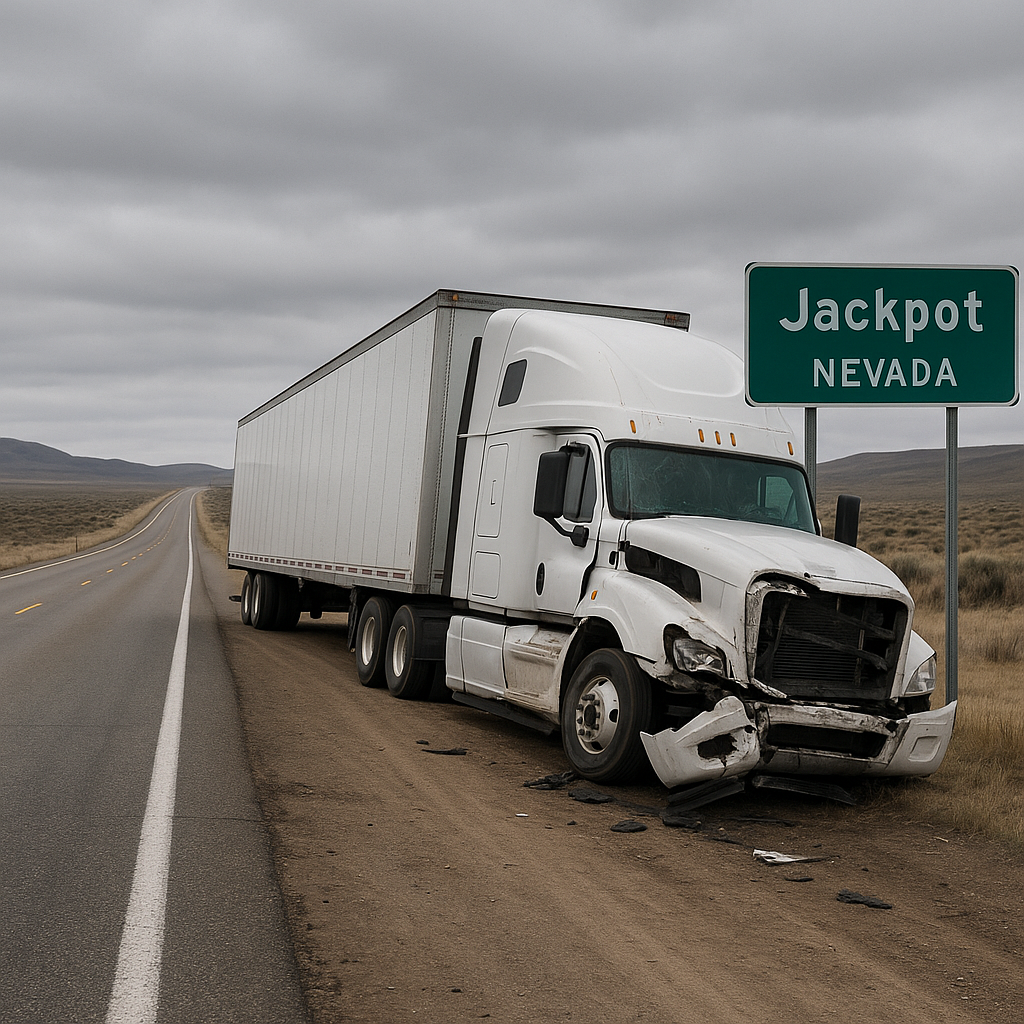
Truck Accident Hotspots Near Jackpot, Nevada
Overview of the Nevada Location and Highway Segment
Situated in the far northeastern corner of Nevada, the small town of Jackpot is a gateway for travelers moving between Nevada and Idaho, and it sits just south of the state line along U.S. Route 93. Though known for its vibrant casino scene and small-town hospitality, the area around Jackpot is also notable for its unique position along a major north-south commercial trucking route. The stretch of U.S. 93 near Jackpot, from the Idaho border southward toward Wells, Nevada, serves as a primary corridor for both local and long-haul freight traffic. This section of highway has been identified as having several truck accident hotspots, drawing attention from both local residents and transportation professionals.
Why Truck Accidents Are More Common in This Area
There are several factors that combine to make the area near Jackpot, Nevada, especially susceptible to truck accidents. These include challenging landscape features, unpredictable weather patterns, the design of the road itself, and the sheer volume of commercial vehicles using this route. While Nevada is known for its long stretches of open highway, the area around Jackpot presents unique circumstances that have led to its reputation as a hotspot for trucking incidents.
Road Design Factors That Influence Crashes
The segment of U.S. Route 93 near Jackpot is characterized by a series of features that play a significant role in the occurrence and severity of truck accidents.
Narrow Roadway with Limited Shoulders:
South of Jackpot, U.S. 93 often lacks wide shoulders or emergency pullouts, offering little margin for error. Trucks that stray out of their lane or need to stop suddenly have fewer safe spots to do so.
Winding Sections and Gradual Elevation Changes:
Although not mountainous, this part of Nevada includes subtle grades and long, sweeping curves. These can be deceptive to drivers unfamiliar with the area. Long trucks, especially those carrying heavy loads, may have difficulty maintaining control at higher speeds or when weather conditions change without warning.
Junctions and At-Grade Intersections:
Near Jackpot, intersections with local roads and casino entrances require trucks to slow down or stop abruptly, heightening the risk of rear-end collisions and sideswipes. Casino-related traffic, especially during busy periods, can increase confusion and lead to sudden lane changes.
Limited Lighting and Nighttime Visibility:
Nighttime driving poses another hazard, as much of this highway segment lacks modern lighting. This can complicate spotting animals, debris, or stopped vehicles on the roadway, especially for fatigued or distracted drivers.
Traffic Patterns and Truck Volume Considerations
The number of commercial vehicles using this portion of U.S. 93 is significant, and truck traffic is a constant presence year-round. Several traffic-related factors contribute to the high rate of accidents:
Heavy Commercial Freight and Seasonal Surges:
U.S. 93 is one of the principal connections between northern Nevada and points north into Idaho and beyond. The highway is heavily trafficked by long-haul trucks transporting goods such as agricultural products, mining materials, and consumer merchandise. Freight traffic intensifies during certain times of the year, such as harvest seasons or around major holidays.
Mix of Local and Long-Distance Drivers:
The area sees a mix of local traffic—drivers familiar with the quirks of the highway—and long-distance drivers who may not be prepared for sudden stops, sharp curves, or other local hazards. This combination can create unpredictable driving dynamics.
Casino and Tourism-Related Surges:
Jackpot’s reputation as a gaming destination means periodic surges in both passenger vehicle and bus traffic, especially on weekends and holidays. During these times, interaction between large commercial trucks and vehicles making multiple stops or sudden turns can lead to increased accident rates.
Weather Impacts:
While northeastern Nevada experiences a predominantly dry climate, sudden storms, high crosswinds, and winter snow or ice can quickly create hazardous driving conditions. Truck drivers unfamiliar with these rapid shifts may struggle with vehicle control or stopping distance, elevating the risk of accidents.
Safety Awareness Considerations
While truck drivers and other motorists traveling near Jackpot, Nevada, cannot alter the physical features of U.S. 93, an understanding of the region’s unique traffic and highway characteristics can foster greater situational awareness. Observing the patterns of truck movement and recognizing common risk factors along this route, such as busy casino entrances, winding segments, and narrow roadways, encourages vigilance behind the wheel.
The presence of heightened truck traffic in conjunction with tourism-related surges and variable weather conditions underlines the importance of staying alert and adjusting driving behaviors to suit changing environments. For transportation companies, awareness of these localized hazards may influence route planning and scheduling, while individual drivers—whether in passenger vehicles or commercial rigs—benefit from a well-calibrated approach to sharing the road.
Additionally, local and state agencies periodically review crash data to identify emerging hotspots and are proactive in targeting improvements with signage, speed enforcement, and public awareness campaigns. While upgrades and maintenance are ongoing undertakings, their effects are more noticeable when paired with a community-wide commitment to mindful driving.
Neutral Closing Paragraph
The region around Jackpot, Nevada, and the adjoining segment of U.S. Route 93, presents a unique mix of commercial, tourist, and local traffic, along with challenging roadway features. These factors create a setting where truck accidents occur more frequently, drawing the attention of those responsible for road safety as well as regular travelers. Increased awareness and informed observation of these well-documented truck accident hotspots can help promote safer travel through this vital corner of the Silver State. While the risks persist, acknowledgment of these patterns allows for informed decision-making by all those who rely on this crucial transportation corridor.