
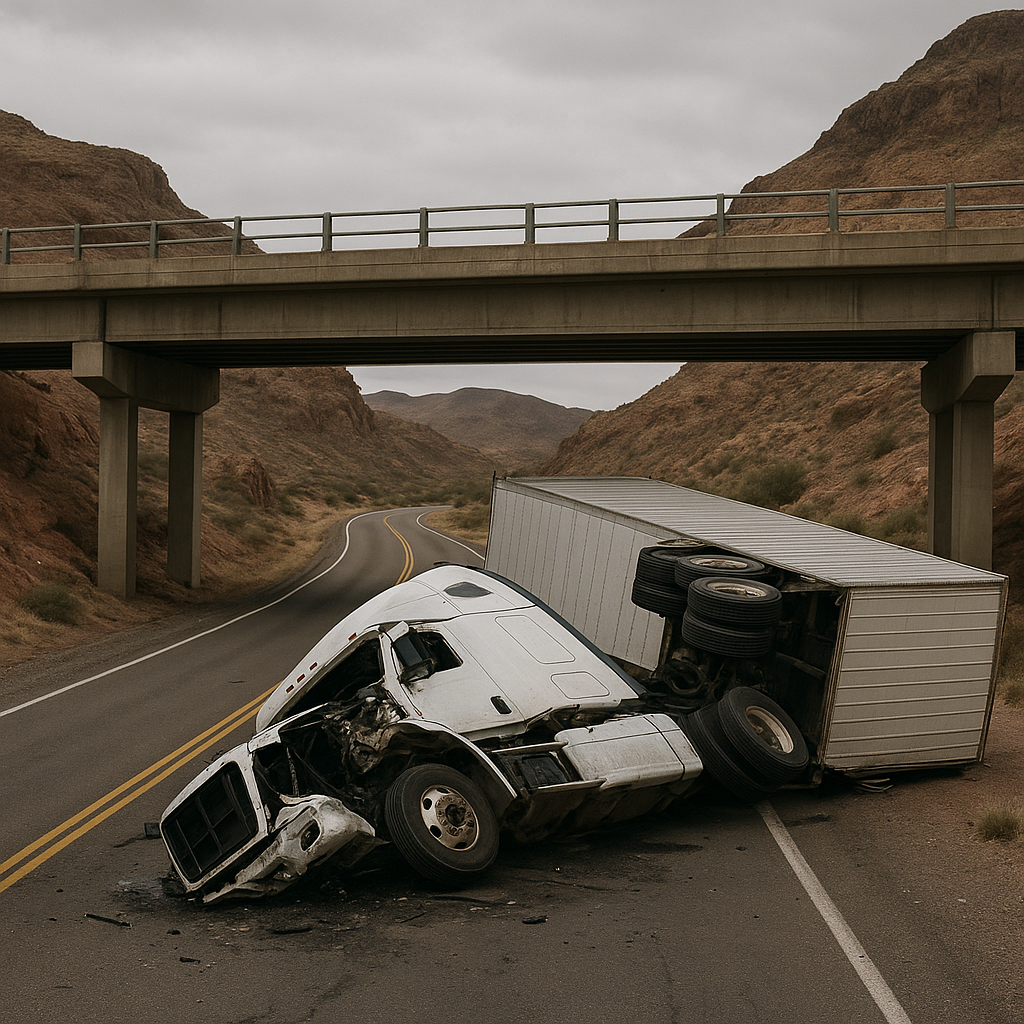
Truck Accident Risks Near Nevada Bridge Crossings
Overview of the Nevada Location or Highway Segment
Nevada’s vast landscape is connected by a web of highways, many of which cross canyons, rivers, and valleys via a variety of bridge structures. Notable segments include the Hoover Dam Bypass on U.S. Route 93, the bridges spanning the Truckee River along Interstate 80, and numerous smaller crossings scattered along U.S. Route 95 and State Route 160. These bridges are essential for connecting rural communities, supporting interstate commerce, and facilitating tourism. However, they also introduce unique challenges for both passenger vehicles and the extensive commercial trucking fleets that traverse the Silver State. The combination of high-speed freeway travel, sudden elevation changes, and often harsh weather conditions creates a landscape where “Nevada bridge crossings truck accidents” are a genuine concern.
Some of the busiest and most critical Nevada bridge crossings for truck traffic include:
– Hoover Dam Bypass Bridge (Mike O’Callaghan–Pat Tillman Memorial Bridge, U.S. 93) – Serving as a critical route for commercial vehicles bypassing the dam.
– I-80 over the Truckee and Humboldt Rivers – A main east-west shipping corridor providing access to and from Reno, Sparks, and Elko.
– Galena Creek Bridge (I-580) – A striking engineering feat set in mountainous terrain south of Reno.
– Clark County bridges on I-15 – Key for trucking routes between Las Vegas and Southern California.
Each of these crossings sees a blend of local drivers, long-haul truckers, and, at times, inclement weather, all of which can impact accident risks.
Why Truck Accidents Are More Common in This Area
Truck accidents near Nevada bridge crossings occur more frequently than in many other highway settings due to several factors: the engineering of the bridge approach and structure, changes in road conditions, and the increased traffic density forced into confined spaces.
Bridges, by necessity, create points of transition. Approaching a bridge may mean entering a narrower roadway, driving over different surfaces, coping with elevation changes, or dealing with high winds—which in Nevada’s open desert or mountainous passes, can be particularly unpredictable. Trucks, carrying heavier and sometimes awkwardly balanced cargo, experience more pronounced effects from these variables than other vehicles.
Data from the Nevada Department of Transportation (NDOT) and Federal Motor Carrier Safety Administration (FMCSA) indicate that infrastructure choke points, such as bridge crossings, see a higher concentration of collisions. These incidents can involve rollovers, jackknife events, or impacts with guardrails and bridge supports. In 2022 and 2023, several high-profile multi-vehicle piles occurred near bridges on I-80, US 95, and the Hoover Dam Bypass, often coinciding with weather events and periods of heavy truck traffic.
Road Design Factors That Influence Crashes
Key road design issues around Nevada bridge crossings can exacerbate crash risks.
1. Changing Road Surface and Width:
Transit from regular asphalt to concrete bridge decks can alter traction levels for all vehicles—especially when wet or icy. Additionally, the roadbed may narrow leading up to or on the bridge itself, leaving less margin for error, particularly for oversized or double-trailer rigs.
2. Entry and Exit Angles:
Some Nevada bridges—especially those in mountainous regions—may feature sharp curves, steep grades, or abrupt elevation changes on approach. For trucks, the laws of physics are unforgiving: heavy loads can shift, brakes overheat on downgrades, and momentum makes quick stops nearly impossible.
3. Barrier Placement and Crosswinds:
The presence and design of bridge railings, barriers, and wind screens can affect the containment of vehicles that lose control. On exposed bridges like the Galena Creek Bridge and segments of I-80 near the Pequop Mountains, high crosswinds frequently create hazardous driving conditions for tall trucks, increasing the risk of rollover or loss of lane position.
4. Limited Shoulders and Escape Routes:
Unlike open highway stretches, bridges offer little or no shoulder for maneuvering in emergencies, limiting recovery options for truck drivers who miscalculate entry speed or encounter sudden slowdowns. Even minor errors in steering or braking may lead to collisions with bridge elements, amplifying crash severity.
Traffic Patterns and Truck Volume Considerations
Truck volumes are notably high on Nevada’s interstates and major highways, especially on routes facilitating cross-country freight movement (I-80, I-15, I-11, and US-93). Bridges along these corridors often serve as pinch points, requiring temporary reductions in speed and forcing trucks and other vehicles into close proximity.
Rush Hour and Freight Scheduling:
Peak truck traffic—often coinciding with morning and afternoon commutes or scheduled freight deliveries—intensifies congestion near bridges. This can increase the pressure on commercial drivers to maintain schedules, sometimes leading to risky maneuvers when overtaking slower vehicles or merging to avoid construction on or near bridges.
Tourist and Local Traffic:
Many bridges on highways near Reno, Las Vegas, and Lake Mead (near the Hoover Dam Bypass) are also busy with local and visitor traffic, especially during holidays and special events. This mix of unfamiliar drivers, rental vehicles, and trucks increases the likelihood of unpredictable braking and lane changes, escalating the chances for “Nevada bridge crossings truck accidents.”
Safety Awareness Considerations (Non-Advice Tone)
Understanding the risks present on and near Nevada’s bridge crossings can contribute to a culture of awareness among all road users. Factors such as high wind advisories, rapidly changing weather, and sudden congestion are regularly part of the driving environment in the Silver State. Truck drivers, in particular, face unique challenges—ranging from managing long descents to adjusting for limited visibility when navigating bridge spans during dusk, dawn, or storms.
Public agencies like NDOT frequently deploy variable message signs and issue alerts concerning bridge conditions, closures, and wind warnings, especially on bridges susceptible to environmental hazards. Local reports and safety bulletins might highlight periods of increased accident rates around major holidays, during late-night freight runs, or in seasons when ice and snow impact higher elevation crossings.
Economic consequences of major truck collisions near bridges can be significant, sometimes resulting in traffic delays, damage to critical infrastructure, and extended closures that ripple through Nevada’s economy. Recovery and investigation efforts are complicated by the inaccessibility of bridge sites, which may be several miles from emergency facilities or located in rugged terrain.
Putting environmental, design, and human factors together, it’s clear that bridge crossings present dynamic driving scenarios. Each crossing, whether it spans a river, canyon, or rail line, demands heightened alertness from all drivers, particularly those at the wheel of large commercial trucks.
Neutral Closing Paragraph
Nevada’s bridge crossings are critical components of the state’s transportation network, carrying thousands of commercial trucks and passenger vehicles every day. While these structures represent engineering achievements that support economic growth and travel, they also create unique roadway environments where accident risks can be elevated. An awareness of local design challenges, traffic characteristics, and environmental factors helps illustrate why “Nevada bridge crossings truck accidents” remain a subject of ongoing study and public safety interest. By continuing to examine these risks and adapt to changing conditions, all stakeholders can play a role in supporting safer travel across Nevada’s vital bridge infrastructure.