
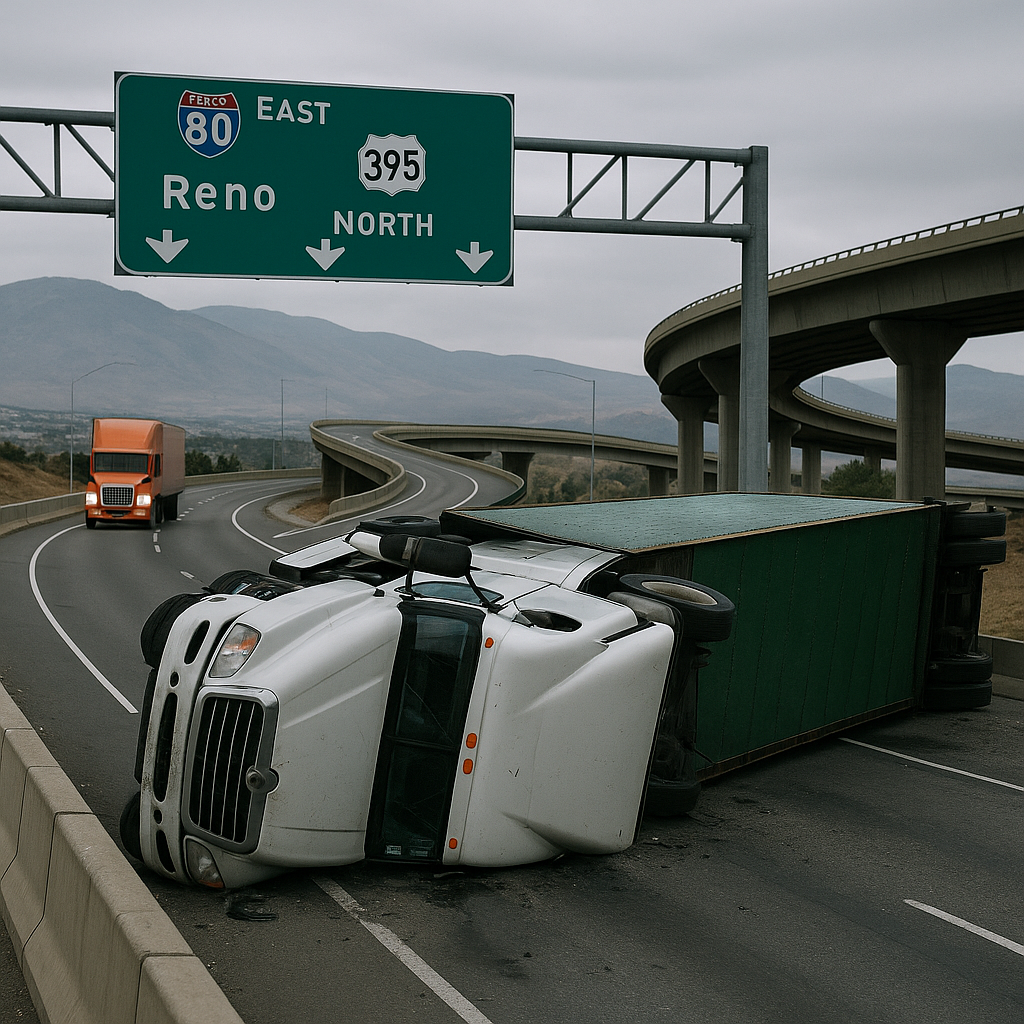
Truck Accidents Near Reno Nevada Highway Junctions: An In-Depth Look
Overview of the Nevada Location and Highway Segment
The region surrounding Reno, Nevada, sits at a strategic crossroads for both local and interstate travel. As the largest city in northern Nevada, Reno plays a crucial role in connecting the state with neighboring California as well as destinations further east and north. This positioning places the city near key highway junctions where several major routes intersect—including Interstate 80 (I-80), U.S. Route 395 (US-395), and the developing Interstate 580 (I-580). These highways not only serve the region’s residents but also act as essential freight corridors for cross-country and regional trucking.
The junction of I-80 and US-395/I-580 is recognized as one of the busiest interchanges in the Silver State, witnessing a constant stream of heavy-duty vehicles alongside regular commuter traffic. Near these freeway convergences, the Reno-Sparks metropolitan area experiences a distinct blend of urban and industrial environments, with numerous warehouses, logistics hubs, and distribution centers concentrated in the vicinity. This combination of factors makes Reno’s highway junctions a focal point for understanding truck accidents in Nevada.
Why Truck Accidents Are More Common in This Area
Reno’s unique landscape and economic importance give rise to a higher prevalence of truck accidents at its highway junctions. Several factors contribute to this elevated risk, resulting from the interplay of geography, infrastructure, and economic activity.
Road Design Factors That Influence Crashes
One prominent factor is the complexity of road design at major junctions. The convergence of multiple busy highways requires extensive sets of on-ramps, off-ramps, merging lanes, and decision points for drivers. These features, while necessary to facilitate large traffic volumes, also introduce opportunities for confusion and last-minute maneuvers—particularly for truck drivers operating longer vehicles with larger turning radii.
For example, the “Spaghetti Bowl”—the popular nickname for the I-80 / I-580 / US-395 interchange—has a reputation for congestion and challenging lane changes. Because of the close proximity of ramps and the necessity for timely merges, vehicles often jockey for position in a limited space. Truck drivers must carefully negotiate these features while taking account of their blind spots and the time it takes to accelerate or decelerate such massive rigs. Any miscalculation can lead to sideswipes, rear-end collisions, or jackknife incidents.
Further compounding the risk are elevation changes and weather conditions particular to the Reno area. The city’s elevation, proximity to the Sierra Nevada, and frequent shifts from dry to icy pavement in winter months can all magnify the difficulty of controlling heavy trucks in tight interchange settings.
Traffic Patterns and Truck Volume Considerations
Reno Nevada truck accidents are also affected by the region’s traffic composition and timing. As a corridor for freight headed to and from California’s populous Central Valley and Bay Area via I-80, the junctions around Reno are continuously busy with both long-haul and regional truck traffic. In addition to semis and tractor-trailers, delivery trucks servicing local industries are common.
During peak hours—such as morning and evening commuter rushes—passenger vehicles often fill the highways to capacity. This increased density can compress the available space for trucks, raising the potential for collisions. Trucks transporting heavy loads can also be subject to slower acceleration, increasing the likelihood of conflicts with merging vehicles.
Another significant pattern is the surge in freight activity during certain seasons, especially late summer and fall, when agricultural shipments from Nevada and surrounding states ramp up. This seasonal spike often correlates with a corresponding increase in truck-involved accidents near Reno highway junctions.
It is notable, too, that tourism affects traffic in and around Reno. Events like the Reno Rodeo or major conventions can dramatically increase the number of vehicles—including charter buses and trucks—sharing already crowded roads.
Safety Awareness Considerations
While the subject of truck accidents near Reno Nevada highway junctions is serious, there are several factors for the community and roadway users to be aware of as they relate to general safety. With Reno serving as a pivotal crossroads, the importance of infrastructure upgrades and public information campaigns is growing. State and local agencies closely monitor these accident-prone areas to identify trends and implement improvements.
Awareness of blind spots (sometimes called “No-Zones”) is critical for all drivers sharing the highway with trucks. Because trucks are particularly susceptible to limited visibility, the layout of merging lanes and ramp exits at complex highway interchanges is designed with these challenges in mind. Collaborative efforts between the Nevada Department of Transportation and trucking companies, including public messaging and signage, seek to remind everyone to allow extra space and to anticipate heavy vehicle maneuvers.
Road users in Reno should also recognize that construction activity is common, especially as state agencies work to modernize aging infrastructure to accommodate growing traffic. Construction zones can present temporary hazards, such as narrowed lanes or adjusted ramps, which require even greater attentiveness, particularly for truck drivers navigating unfamiliar detours in the region.
Large-scale investment in snow and ice removal—as well as clear communication about hazardous driving conditions—are additional priorities for minimizing weather-related incidents at major highway junctions. Various resources, such as electronic road condition signs and weather alerts, are instrumental in keeping roadway users informed.
Neutral Closing Paragraph
The challenges of truck accidents near Reno Nevada highway junctions stem from a combination of busy roadways, demanding interchange designs, and the region’s role as a crucial transportation hub. Local authorities, transportation planners, trucking professionals, and everyday drivers all share a stake in understanding and addressing the factors that contribute to these incidents. As northern Nevada continues to grow as a center for commerce and travel, ongoing attention to safety, infrastructure, and traffic management remains an important part of the region’s evolving transportation landscape.