
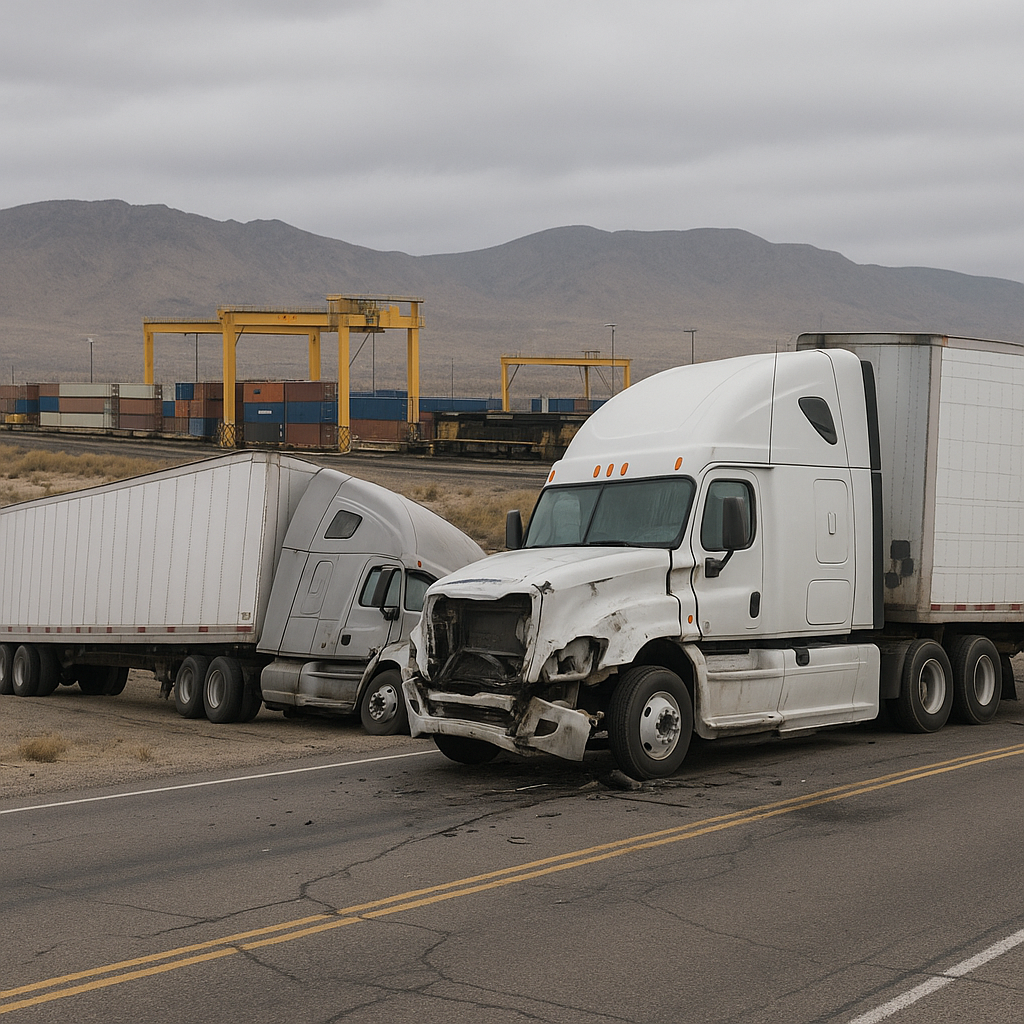
Truck Crash Hotspots Near Intermodal Yards in Nevada
Overview of the Nevada Location or Highway Segment
Nevada, serving as a critical corridor in the western United States logistics network, is home to several significant intermodal yards. These facilities, which support the transfer of freight between trucks and trains, are focal points of economic activity and transportation. Nevada’s strategic position along the I-80 and I-15 corridors means intermodal activity is particularly concentrated in areas like Sparks (Reno area) and Las Vegas.
The Union Pacific Intermodal Ramp in Sparks, adjacent to the Reno-Sparks metropolitan area, is one of the state’s most active sites. Another hotspot is near the western edge of Las Vegas, with its proximity to the massive Union Pacific Intermodal Terminal and nearby access to US 95 and I-15. These locations experience constant heavy truck movement due to their roles as transfer and distribution hubs for regional, national, and international freight.
Highway segments surrounding these intermodal yards—especially along I-80 between Vista Blvd and McCarran Blvd in Sparks, and the network of roads near North Las Vegas along I-15, Cheyenne Ave, and Craig Road—are notorious for elevated rates of truck-related crashes. Understanding why these areas are especially vulnerable can help highlight the complex interplay between infrastructure, traffic volumes, and freight logistics in Nevada.
Why Truck Accidents Are More Common in This Area
Several factors combine to make the areas around intermodal yards especially susceptible to truck crashes. The sheer number of trucks entering and exiting intermodal terminals creates a consistently high density of large vehicles. This high level of activity increases the risk of collisions, particularly during peak delivery and pick-up windows.
Many truck drivers in these areas are operating on tight schedules, often coordinating with federal Hours of Service rules, train arrivals, and the operational windows of their clients. This adds an extra element of time pressure, sometimes resulting in hurried maneuvers or split-second decisions that raise the risk of incidents.
Moreover, the road infrastructure near intermodal yards was often designed before the recent surge in freight volumes. In places like Sparks, for instance, surface streets such as Pyramid Way, Glendale Avenue, and S. McCarran Blvd handle not only local traffic but also a substantial flow of heavy trucks side-by-side with passenger vehicles. Similarly, the major arteries around North Las Vegas, including Cheyenne Avenue and Losee Road, regularly see congested, multi-modal traffic due to the clustering of industrial zones.
Road Design Factors That Influence Crashes
Nevada’s intermodal zones are often hemmed in by aging infrastructure, with certain design factors compounding the risk of truck crashes. Key influences include:
Complex Intersections and Short Merging Lanes:
In Sparks, short on/off ramps along I-80 combine with complex intersections at Vista Blvd and Greg Street. These areas challenge trucks, especially those fully loaded, in gaining speed or making safe lane changes. Similarly, Las Vegas’ Cheyenne Avenue and Craig Road feature multiple intersections close to intermodal entrances, where trucks must navigate tight turns and limited acceleration zones.
Limited Turning Radii:
Older roads near intermodal yards were not always built with modern long-haul vehicles in mind. Tight turning radii at intersections force truck drivers to perform wide, multi-point turns, increasing the risk of sideswipe collisions or encroachment onto sidewalks and medians.
Inconsistent Signage and Lane Markings:
The areas serving intermodal traffic often have worn or insufficient signage and lane markings. This is especially problematic for out-of-state drivers or those unfamiliar with the local layout, increasing confusion at busy junctions and yard entrances.
Industrial Curb Cuts and Multiple Entry Points:
Heavy industrial traffic means that numerous facilities near intermodal yards have their own closely spaced driveways (curb cuts). This layout can create unpredictable entry and exit moves for trucks, sometimes without dedicated deceleration or acceleration lanes.
Traffic Patterns and Truck Volume Considerations
Traffic patterns around Nevada’s intermodal yards differ significantly from typical highway or suburban streets. Key factors include:
Peak Freight Windows:
Trucking traffic surges are often timed to train arrivals or departures, meaning certain hours—early mornings, midday, late evenings—see high concentrations of truck movements. Passenger vehicles unfamiliar with these patterns may encounter long lines of trucks turning in and out of terminal gate areas, leading to unanticipated congested conditions.
Mix of Local and Long-Haul Traffic:
Unlike through-traffic highways, intermodal yard areas see a mix of local delivery trucks, regional haulers, and cross-country 18-wheelers, each operating with different priorities and levels of familiarity with the area.
Bottlenecks and Congestion:
The convergence of trucks from multiple routes, sometimes queued to enter yard gates, can cause backups onto public roadways. In places like Vista Blvd in Sparks or Cheyenne Ave in Las Vegas, trucks sometimes block lanes or intersections during busy periods, disrupting the flow of traffic for all road users.
Pedestrian and Non-Motorized Traffic:
Despite the industrial nature of these areas, pedestrian and bicycle traffic is not uncommon, particularly in zones where industrial employment is high. Interactions between trucks and non-motorized users near intermodal yards add another layer of risk, especially at unprotected crossings.
Safety Awareness Considerations (Non-Advice Tone)
Awareness of crash hotspots near Nevada’s intermodal yards is a growing topic of attention for both transportation industry leaders and local communities. Transportation departments, law enforcement agencies, and logistics firms regularly assess these zones to spot patterns and respond to emerging risks.
Specific efforts to raise awareness typically focus on gathering and sharing up-to-date traffic data, enhancing the visibility of road markings and signage, and supporting efforts to coordinate freight traffic management. Regular training for both professional and non-professional drivers on navigating intermodal approaches can contribute to a safer travel environment.
Technology is also making a difference. Real-time traffic monitoring, warning systems for upcoming congestion, and intersection cameras all play roles in improving the visibility of high-risk spots. In certain areas, pilot programs are testing freight signal priority systems and time-of-day restrictions to better manage truck flows.
Community stakeholders near intermodal hubs are also part of the conversation, advocating for investments in street redesigns and sharing observations about high-conflict locations. These community voices provide valuable context for planning future infrastructure upgrades around Nevada’s busiest intermodal gateways.
Neutral Closing Paragraph
Understanding the dynamics of truck crash hotspots near Nevada’s intermodal yards requires an appreciation for the interplay of road design, traffic volumes, operational pressures, and community impact. As Nevada’s role in national and international logistics continues to expand, continued attention to these areas remains vital. Recognizing the factors that shape crash risks near intermodal yards helps foster more informed conversations among freight operators, urban planners, and all road users. The ongoing efforts to monitor, analyze, and adjust approaches to roadway safety will be essential as Nevada’s transportation landscape evolves to meet the demands of modern commerce.