
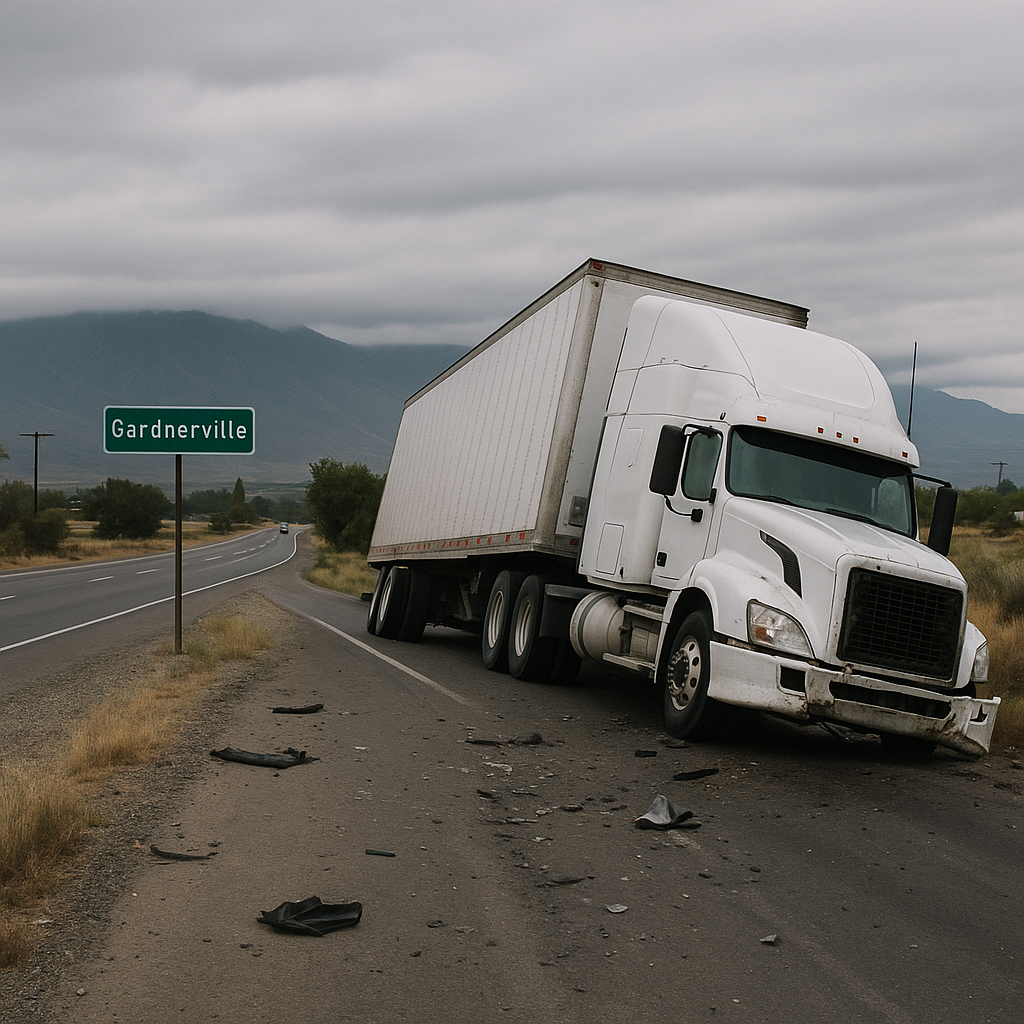
Truck Crash Risks Near Gardnerville Nevada Routes
Overview of the Nevada Location and Highway Segment
Nestled within the scenic expanse of Douglas County, Gardnerville, Nevada sits at a critical crossroads for regional transportation. Located just east of the Sierra Nevada foothills and only about 45 minutes south of Reno, Gardnerville’s strategic position along major Nevada thoroughfares like US Highway 395 and State Route 88 makes it a vital link for commercial trucking throughout the region. The area’s blend of rural charm and logistical necessity brings both economic opportunity and transportation challenges—especially when it comes to heavy truck traffic.
US 395, Gardnerville’s primary artery, is a north-south route that connects Reno to the north, Carson City to the northwest, and extends into California toward Bishop and Mammoth Lakes to the south. Highly utilized by freight trucks, agricultural vehicles, and local commuters alike, this corridor is central to goods movement between Nevada and California. State Route 88 and various local connectors serve as secondary channels but see significant traffic, especially during tourist seasons or when weather disrupts alternate routes.
Travelers through Gardnerville are often treated to impressive views and vibrant small-town activity, but the convergence of high-speed intercity freight traffic and local vehicles presents unique safety concerns. Understanding the Gardnerville Nevada truck crash risks starts with recognizing the area’s road conditions, vehicle volumes, and logistical relevance to statewide commerce.
Why Truck Accidents Are More Common in This Area
Several factors contribute to a higher incidence of truck crashes near Gardnerville compared to less trafficked rural or urban Nevada segments. The region acts as both a thoroughfare and a destination, creating points of conflict between local and through traffic. The following regional characteristics play critical roles:
– Transitional Terrain: Gardnerville sits along the eastern edge of the Sierra Nevada. Highway segments in this area can change from relatively flat valley floors to undulating grades and sharp curves near mountain passes. These transitions, paired with variable weather, test the limits of both human and mechanical performance, particularly for large trucks.
– Major Route Bottleneck: US 395 condenses multiple travel purposes. Trucks bound for California markets, local agricultural equipment, and drivers heading to Lake Tahoe or returning from the Central Valley all funnel through Gardnerville. Times of high demand—harvest season, weekends, or during regional events—can lead to congestion and elevated crash risks.
– Limited Alternative Routes: Few parallel highways or bypasses exist in this part of Nevada. Nearly all north-south truck traffic must use this corridor, increasing truck density relative to other stretches of rural road.
These factors result in a heightened risk environment, particularly for heavy trucks that require longer breaking distances, wider turning radii, and are less nimble in sudden traffic changes.
Road Design Factors That Influence Crashes
The physical attributes of Gardnerville-area routes are central to understanding Gardnerville Nevada truck crash risks. Specific elements combine to complicate truck maneuverability and collision avoidance:
– Narrow Lanes and Shoulders: Sections of US 395 near Gardnerville retain legacy layouts from earlier decades, leading to comparatively narrow lanes or minimal shoulders. Trucks straddling these lanes may experience reduced margin for error, especially when attempting to pass slower vehicles or avoid roadside hazards.
– Intersections and Driveways: The transition from rural stretches into the heart of Gardnerville means more frequent intersections, driveways, and business accesses directly off the highway. Unexpected stops or left turns in high-speed areas can surprise approaching trucks, for whom stopping distances are substantial.
– Curve Geometry and Elevation Changes: Approaching the foothills brings tighter curves and sudden elevation shifts. Trucks may be challenged by downhill momentum, especially in wet or icy conditions. Sharp curves can also cause trailer sway or load instability if speed and weight are not meticulously managed.
– Cross Traffic and Local Roads: Numerous secondary roads, including Waterloo Lane and Centerville Lane, intersect major routes. Trucks encountering sudden cross traffic or vehicles merging unexpectedly can face limited time to adjust, raising the potential for side-impact and rear-end collisions.
Traffic Patterns and Truck Volume Considerations
The mixture of local and commercial traffic in and near Gardnerville contributes profoundly to the unique safety profile of these routes. Key issues include:
– Peak Traffic Periods: Certain times of year, such as during winter recreation season or large local events, see spikes in both truck and passenger vehicle movement. Plowing and sand trucks may also be active in winter, sharing the roads with freight haulers.
– Varied Vehicle Types: Beyond traditional tractor-trailers, the corridor regularly serves agricultural machinery, recreational vehicles, and local delivery trucks. Each type of vehicle travels at different speeds and may operate under different traffic or regulatory constraints.
– Freight Volume Shifts: When incidents or closures occur on alternate routes—such as US 50 over Spooner Summit—truck volume on US 395 may surge as drivers seek alternative north-south connections, sometimes outpacing the road’s carrying capacity.
– Limited Overtaking Opportunities: Slow-moving vehicles can form long platoons, and passing zones are limited in certain segments. Impatient drivers may take risks during limited passing opportunities, affecting both truck and car safety.
These patterns increase the probability of congestion, sudden changes in traffic flow, and unpredictable driver behavior—all challenging scenarios for the operators of large, less-maneuverable trucks.
Safety Awareness Considerations
For those navigating the busy stretch near Gardnerville—whether truck drivers, local commuters, or visitors—an understanding of these truck crash risks supports greater situational awareness. The interplay between weather, terrain, and mixed vehicle populations requires patience and focus from all road users.
Local agencies regularly monitor crash data and collaborate with state transportation authorities to address known hazardous segments through signage, targeted enforcement, and periodic road improvements. Opportunities to educate the community about truck blind spots, stopping distances, and the challenges presented by local topography are ongoing.
Awareness campaigns and active communication about road closures, weather impacts, or construction projects are especially crucial in Gardnerville, where alternate routes may not be readily available. Truck drivers and others using navigation apps or updated transportation bulletins can better anticipate area-specific hazards.
Neutral Closing Paragraph
Gardnerville, Nevada’s unique position at the junction of key highways amid variable terrain and diverse vehicle traffic brings both economic vitality and complex transportation safety challenges. Recognizing the specific risk factors present along Gardnerville’s routes is essential for understanding why truck crashes occur with greater frequency here than elsewhere in rural Nevada. As population, commerce, and travel volumes continue to grow, ongoing attention to the region’s infrastructure, traffic patterns, and educational outreach remains fundamental to the safety of everyone who travels these important roadways.