
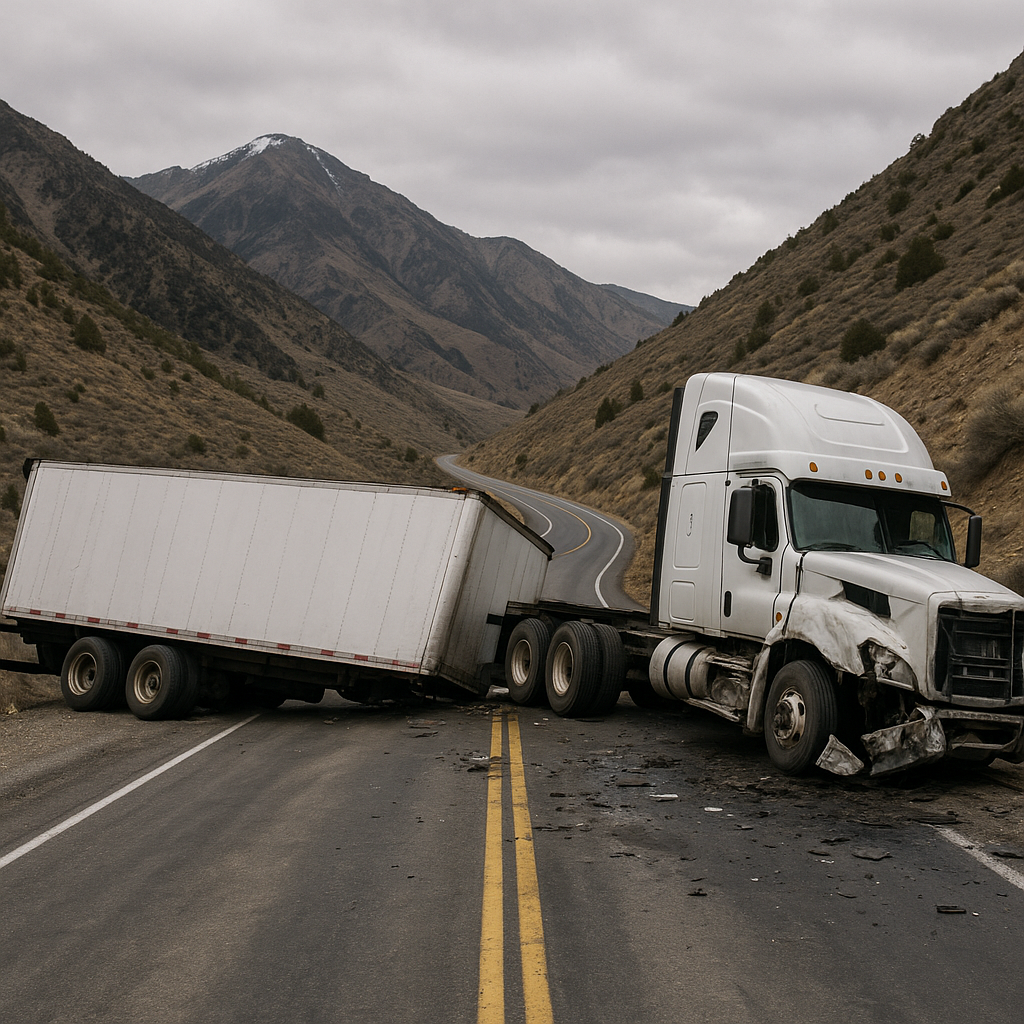
Truck Crash Risks on Mountain Passes in Nevada
Overview of the Nevada Location or Highway Segment
Nevada’s mountain passes offer breathtaking scenic drives, but they also present significant challenges for commercial trucking. With its rugged terrain, high-elevation routes, and variable weather conditions, Nevada has several mountain passes that see regular truck traffic—including key segments of U.S. Route 50, Interstate 80, and U.S. Route 93. The passes over the Sierra Nevada, Ruby Mountains, and other elevated areas are not just important transportation corridors. They are also focal points for potential truck-related incidents. Understanding truck crash risks on mountain passes in Nevada involves an examination of regional geography, highway design, and the demanding nature of long-haul transport through the Silver State.
Notable locations for Nevada mountain pass truck crash incidents include Donner Pass (on I-80, near the California border), Pequop Summit (east of Wells on I-80), and the grades between Ely and Eureka on U.S. Route 50—often called “The Loneliest Road in America.” These and other passes require drivers to navigate extended grades, sharp curves, and rapidly changing weather, highlighting why accident risk is a day-to-day reality.
Why Truck Accidents Are More Common in This Area
Mountainous regions in Nevada differ from desert highways not just in scenery, but in their inherent risks. Truck crashes on mountain passes are affected by:
1. Steep Grades and Long Descents: Truck drivers often encounter steep inclines and declines over long distances. Excessive speed on downhills or inadequate use of engine braking can lead to overheating brakes, runaway trucks, or loss of control.
2. Weather Variability: Sudden snow squalls, fog, or ice can occur high in the mountains even when valleys are dry and clear. These conditions reduce traction and visibility, increasing crash potential.
3. Isolation and Limited Support: Some mountain passes in Nevada are remote. Emergency response may take longer, compounding the challenge of navigating hazardous routes.
4. Fatigue: Crossing Nevada frequently involves long stretches with minimal services. Fatigue is a known factor in many truck-involved crashes, especially where elevation changes demand intense concentration.
Road Design Factors that Influence Crashes
Certain road design characteristics unique to Nevada’s mountain regions play a significant role in crash rates. These include:
– Narrow Lanes and Limited Shoulders: Unlike the multi-lane freeways of urban Nevada, mountain segments often have narrower lanes, less room for error, and limited shoulders for emergency stops or breakdowns. This increases the risk for Nevada mountain pass truck crash scenarios where recovery options are minimal.
– Curves and Switchbacks: Mountain route design often incorporates sharp curves and switchbacks to manage drastic changes in elevation. Long-haul trucks, particularly those with heavy or shifting loads, may struggle to maintain stability through a series of sharp turns.
– Grade Percentage: Some Nevada highway passes feature sustained grades of over 6%, which can cause engine and brake strain. Warning signs and runaway truck ramps are common but don’t eliminate the mechanical limits of trucks, especially in extreme heat or cold.
– Guardrails and Safety Barriers: In rugged terrain, the addition of guardrails protects vehicles from steep drop-offs. However, these structures may also limit recovery space and increase the severity of impacts when a truck is involved in a crash.
– Limited Runaway Ramps: While some key passes offer escape ramps for trucks experiencing brake failure, not every hazardous segment has this safety feature. The absence or availability of such ramps is a significant safety consideration on Nevada’s mountain highways.
Traffic Patterns and Truck Volume Considerations
Nevada’s mountain passes serve as vital commercial corridors, connecting the West Coast with the rest of the United States. Truck volume on these segments can be heavy, particularly during freight surges or seasonal peaks.
– Freight Corridors: Interstate 80, running east-west through the northern part of Nevada, is a primary transcontinental trucking route. High volumes of tractor-trailers, combined with variable passenger vehicle flow, can create complex traffic dynamics, especially during peak shipping periods.
– Seasonal and Agricultural Fluctuations: In certain months, truck traffic increases due to agricultural harvests or holiday retail surges. The added volume heightens congestion and the potential for Nevada mountain pass truck crash incidents, especially when combined with hazardous weather.
– Congestion and Bottlenecks: Mountain passes are often natural bottlenecks. Construction zones, lane reductions, or slow-moving vehicles can create sudden slowdowns, abrupt stopping, or rear-end collisions—challenges that are magnified for heavy trucks due to their longer stopping distances.
– Overtaking and Passing Issues: With limited opportunities for passing on two-lane mountain stretches, impatient drivers may take risks around trucks, or truck drivers may be compelled to maintain speed on grades, increasing crash risks for all vehicles.
Safety Awareness Considerations
Navigating Nevada’s mountain passes demands extra awareness from all road users. For truck drivers, adjusting to changing elevation and load dynamics is fundamental. For motorists sharing the road, understanding the limitations of large trucks—such as longer stopping distances and wider turning radii—can help anticipate movements around tight curves or on steep inclines.
Inclement weather requires vigilant attention to road conditions. Sudden snow or rain can make pavement slick, particularly on shaded sections of mountain highways. Reduced traction is a key factor in truck slide-offs and jackknife crashes. Additionally, signage regarding grade percentage, speed limits, and the availability of runaway ramps often require special attention; these warnings are there to help prevent incidents before they occur.
Another unique aspect of traveling in Nevada’s high country is widely varying daytime and nighttime temperatures, which can affect both vehicle performance and roadway surface conditions. Early morning ice patches and late afternoon heat-related tire stress often catch drivers off guard.
Commercial truckers passing through unfamiliar routes may benefit from staying alert to Nevada Department of Transportation (NDOT) advisories, especially regarding closures, construction zones, and inclement weather warnings that impact mountain passes.
Neutral Closing Paragraph
Mountain passes in Nevada are more than just scenic destinations—they are critical transportation lifelines, requiring careful navigation by all who travel them. By understanding the unique combination of geographical, design, and operational factors present in these corridors, drivers and carriers alike can better appreciate the challenges associated with Nevada mountain pass truck crash risks. As trucking and logistics remain at the heart of Nevada’s economy, ongoing attention to safety and situational awareness on these mountain routes will continue to play a vital role in keeping everyone moving—safely and efficiently—through the Silver State.