
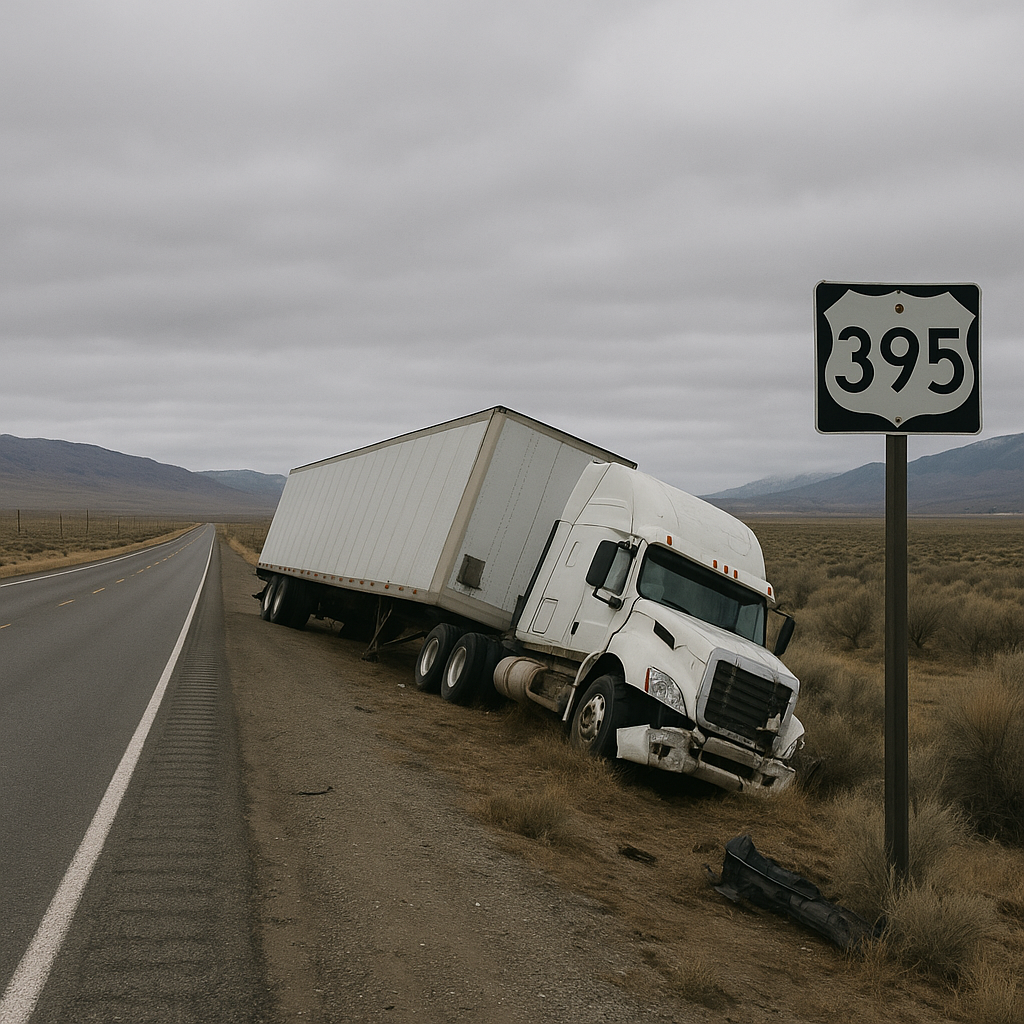
Truck Crashes Near US-395 Nevada Corridor
Overview of the Nevada Location or Highway Segment
US-395, winding through the western edge of Nevada, is a crucial north-south artery linking cities and rural communities. Stretching from the California border near Topaz Lake up to the Nevada-California state line just north of Reno, the US-395 corridor is a blend of high desert landscapes, mountainous passes, and bustling urban sectors. In Nevada, some prominent communities along US-395 include Carson City, Minden-Gardnerville, and the southern approaches to Reno.
The terrain US-395 traverses is as challenging as it is scenic. The route includes steep gradients, sharp curves, narrow canyons, and stretches prone to sudden weather shifts—particularly winter snow and freeway icing. The highway serves as a vital commercial link: not only is it a preferred route for local cargo, but it also accommodates transcontinental freight heading toward California or north to Oregon and Washington. As a result, this corridor sees a heavy flow of large commercial trucks sharing the road with local commuters, tourists, and regional business traffic.
Why Truck Accidents Are More Common in This Area
A combination of geographic, weather, and logistical factors converge along the US-395 Nevada corridor, resulting in a relatively higher incidence of crashes involving trucks compared to other state road segments. “US-395 Nevada truck crashes” are often the focus of safety discussions in the region, owing to the unique interaction between the highway’s role as a freight route and its inherent natural challenges.
Road Design Factors That Influence Crashes
Several roadway design elements amplify the risks for all motorists—especially for large commercial trucks—on US-395. In many areas, the highway narrows or transitions from four-lane divided sections to two-lane rural stretches. This change can create bottlenecks, force sudden changes in speed, and place increased stress on slowing and overtaking maneuvers.
Sharp, banking curves and elevation changes are characteristic of segments near Washoe Valley and the approaches toward Gardnerville or north of Carson City. These features pose handling challenges to long-haul trucks, particularly those hauling heavy or high-profile loads. Limited shoulder space in some segments reduces the margin for driver correction during evasive actions, and makes safe pull-off difficult during breakdowns or emergencies.
Furthermore, interchanges near urban centers, such as the Reno-Sparks region, are often complex. Congested ramps, merging lanes, and increased local traffic elevate the risk of multi-vehicle interactions. On the rural stretches, lack of lighting can complicate nighttime navigation and visibility, particularly during unfavorable weather.
Traffic Patterns and Truck Volume Considerations
The role of US-395 as a main northern Nevada freight corridor brings significant daily truck volume. Agricultural shipments, consumer goods, construction materials, and hazardous materials regularly move through the route. According to Nevada Department of Transportation data, some segments of US-395 see thousands of trucks each day, particularly between Carson City and Reno.
This high volume increases the probability and potential severity of collisions. Trucks mixing with local passenger vehicle traffic, especially during peak commuting hours or seasonal holiday travel, creates scenarios ripe for congestion, sudden stops, and erratic lane changes. Weekend recreation influx—summer camping or winter skiing in the Lake Tahoe basin—further complicates patterns, with unfamiliar drivers often encountering large trucks in winding or mountainous sections.
Weather is a pronounced factor affecting truck safety on this corridor. Rapid transitions from sunny desert stretches into fog, ice, or snow—especially along the Washoe Valley or at the foot of the Sierra Nevada—require attentive navigation and frequent speed adjustments. Even experienced drivers can be caught off guard by rapidly deteriorating surface conditions or sudden gusty winds as the highway crosses open valleys or ascends slopes. These abrupt shifts are particularly hazardous for loaded tractor-trailers, increasing rollover or jackknife risk.
Safety Awareness Considerations (Non-Advice Tone)
For many who routinely drive US-395 or occasionally visit, awareness of the region’s distinctive conditions is crucial for informed travel planning. The visible prevalence of large trucks, frequent highway patrol activity, and sometimes unpredictable weather events serve as reminders of the complexities involved in keeping the route accessible and safe for all users.
First responders and highway maintenance crews in Nevada play a consistently active role in the US-395 corridor, often appearing quickly at the scene of truck-related incidents. These large-scale responses sometimes result in temporary lane closures, traffic detours, and emergency response staging areas, all of which can add to delays and create secondary risks for subsequent crashes.
Local and state agencies, including the Nevada Department of Transportation and Nevada Highway Patrol, regularly run public awareness campaigns geared toward the unique challenges of sharing the road with commercial trucks. These initiatives often focus on understanding truck blind spots, maintaining adequate following distances, and the importance of reduced speed in work zones and adverse weather conditions. Electronic highway signage and message boards are also commonplace along US-395, warning travelers about winter chain requirements, upcoming construction, or particular crash risks during high wind events.
While these efforts are not a substitute for individual vigilance, they demonstrate a broader recognition of the persistent risks tied to “US-395 Nevada truck crashes.” Increased community awareness, ongoing infrastructure improvements, and adaptive responses to crash hot spots all contribute to the route’s overall safety.
Neutral Closing Paragraph
US-395 remains an indispensable part of Nevada’s transportation and economic landscape, serving as both a link for local communities and a lifeline for regional and interstate commerce. As development continues around cities like Reno and Carson City and freight demands persist, the challenges posed by truck crashes along this corridor are likely to remain a subject of public concern and policy interest. Ongoing efforts to improve roadway infrastructure, monitor traffic dynamics, and enhance driver awareness collectively shape the evolving safety profile of the US-395 Nevada corridor. Whether for business, travel, or daily commutes, those who use this vital highway will continue to see its role—and its risks—reflected on Nevada’s ever-changing map.