
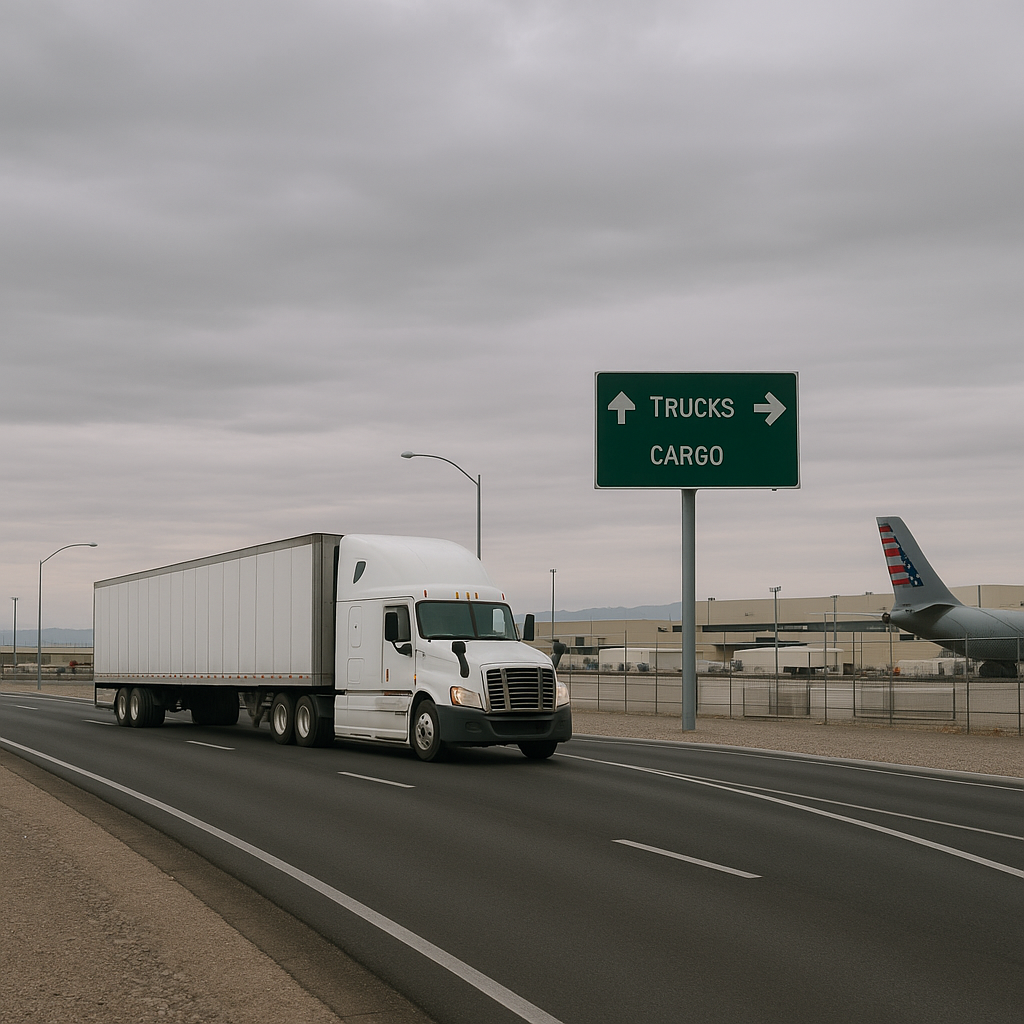
Navigating Truck Routes near Harry Reid International Airport Cargo
Overview of the Freight Corridor and Trucking Activity
Harry Reid International Airport (LAS), located just south of the Las Vegas Strip in Paradise, Nevada, serves as a central gateway for both passenger and cargo flights in the region. As the state’s busiest airport, Harry Reid International plays a crucial role in Nevada’s logistics and freight supply chain, especially for Las Vegas and neighboring communities. The area surrounding the airport has long been a hive of activity for freight carriers, thanks to its proximity to key transportation arteries and the city’s thriving economy.
The cargo operations at Harry Reid International Airport are concentrated along the eastern side of the airfield, with primary cargo facilities accessed from East Russell Road, Wayne Newton Boulevard, and other local trucking routes. The strategic location provides straightforward access to Interstate 215 (I-215), Interstate 15 (I-15), and U.S. Highway 95—major highways that form the backbone of Southern Nevada’s freight corridor. These routes ensure swift connections not only to the greater Las Vegas Valley but also to out-of-state destinations, supporting everything from time-sensitive air cargo shipments to bulk freight.
Route planning near the airport requires careful navigation of several key roads:
– East Russell Road: The principal surface road for entering and exiting the cargo facilities. It connects directly to major highways and is favored for its wide lanes and proximity to ramp entrances.
– Paradise Road and Swenson Street: These busy arterial streets serve as important connectors for trucks moving between the airport, local warehouses, and Las Vegas’s primary distribution centers.
– Interstate 215 and Interstate 15: The beltway (I-215) links the airport to both the western and eastern parts of the valley and serves as a feeder line for I-15, enabling quick access north to Salt Lake City or south toward California.
Due to its unique location near the city center, truck routes near Harry Reid airport cargo operations often interact with tourist and commuter traffic, presenting unique challenges and opportunities for local trucking operations.
Common Truck Types and Freight Activity in the Area
The diversity of freight arriving and departing through Harry Reid International Airport is reflected in the wide array of trucks that frequent the cargo access points. These include:
– Semi-trailers (18-wheelers): Most commonly used for long-haul and regional cargo, these large vehicles transport goods ranging from electronics and perishables to high-value casino and convention supplies.
– Box trucks: Mid-sized box trucks are regularly seen accessing the airport’s cargo terminals, particularly for last-mile deliveries and smaller freight loads that need quick turnaround.
– Refrigerated trucks (reefers): These are crucial for time- and temperature-sensitive goods such as pharmaceuticals and fresh food, ensuring safe transit through Nevada’s often harsh desert climate.
– Flatbeds and specialized trailers: Occasionally, oversized or unusual cargo—such as live event equipment or specialty aerospace parts—requires unique trailers and handling.
The freight activity is driven both by air cargo arriving on international and domestic flights and by ground-origin shipments that utilize the airport as a central transload or distribution hub. Common types of freight include:
– High-value electronics and perishables: Time-sensitive goods that arrive via overnight air freight.
– Casino-related supplies: Las Vegas’s hospitality and entertainment industry require frequent deliveries, both inbound and outbound, for everything from gaming equipment to food and beverage products.
– E-commerce shipments: With the rise in online retail, express parcel deliveries form a growing segment of truck traffic, particularly around major shipping carriers’ cargo facilities at the airport.
The convergence of multiple freight types and truck designs makes the area a dynamic space where logistics expertise and safe driving practices are especially critical.
How Congestion or Merging Creates Risk
The bustling nature of truck routes serving Harry Reid International Airport’s cargo terminals can present significant risks, particularly where traffic merges and congestion peaks. Several contributing factors make this corridor uniquely challenging:
– Proximity to The Strip and urban congestion: The airport’s close location to Las Vegas Boulevard means truck drivers are constantly negotiating a blend of commercial, tourist, and commuter vehicles—each with varying speeds, familiarity with the area, and expectations.
– Frequent merging and short acceleration lanes: Primary roads such as East Russell Road often see heavy merging where trucks transition between surface streets and freeway on-ramps. Short acceleration and deceleration zones increase the risk of sideswipe and rear-end collisions, especially during peak times.
– Construction and changing road conditions: Ongoing infrastructure projects often result in detours, temporary lane closures, or confusing signage along key access roads, further complicating the driving environment.
– Pedestrian and cyclist activity: In addition to vehicles, the area features crosswalks and sidewalks used by airport staff and travelers, demanding heightened awareness from truck operators during loading and unloading operations.
Congestion not only delays deliveries but can pose hazards, especially for large and heavily loaded trucks that require more stopping distance and wider turning radii. The mix of experienced commercial drivers and unfamiliar visitors adds additional unpredictability, stressing the importance of situational awareness and route planning.
Time-of-Day and Seasonal Traffic Trends
Truck traffic near Harry Reid International Airport cargo facilities follows marked trends depending on the time of day and seasonal fluctuations:
Time-of-Day Patterns:
– Morning rush hour (6:00 a.m. – 9:00 a.m.): Increased activity as overnight cargo flights arrive and commuter traffic builds, leading to slowdowns near surface street access points and freeway interchanges.
– Afternoon rush hour (3:00 p.m. – 6:00 p.m.): Shipping deadlines and shift changes often coincide with Las Vegas’s broader commuter rush, resulting in dense traffic on connecting routes.
– Late night/early morning: While less impacted by commuter traffic, these hours often see concentrated truck flows timed for overnight freight loads, particularly between midnight and 4:00 a.m. when inbound express cargo flights are processed.
Seasonal Trends:
– Convention and event season (spring and fall): Major conferences, sporting events, and entertainment shows at or near the Strip drive spikes in both time-sensitive and bulk deliveries, putting additional pressure on existing truck routes.
– Holiday peaks (November–December): The holiday shopping season amplifies e-commerce and parcel shipments, increasing both air cargo arrivals and last-mile truck deliveries in the area.
– Summer extremes: High temperatures may impact refrigeration needs and restrict the timing of certain kinds of freight, necessitating schedule adjustments for safety and efficiency.
Understanding these fluctuating patterns helps trucking companies and independent operators optimize their routes, minimize delays, and contribute to safer roads around the high-traffic airport environment.
Conclusion
Truck routes near Harry Reid International Airport cargo facilities are a vital component of Nevada’s freight infrastructure, connecting regional businesses, national logistics networks, and global supply chains. The unique interplay of urban congestion, varied freight demands, and time-sensitive delivery patterns requires careful navigation and adaptive planning from truck operators and logistics professionals alike. With continued growth in cargo activity and Las Vegas’s expanding economic footprint, local trucking around the airport will remain a dynamic and essential part of the Silver State’s transportation landscape.