
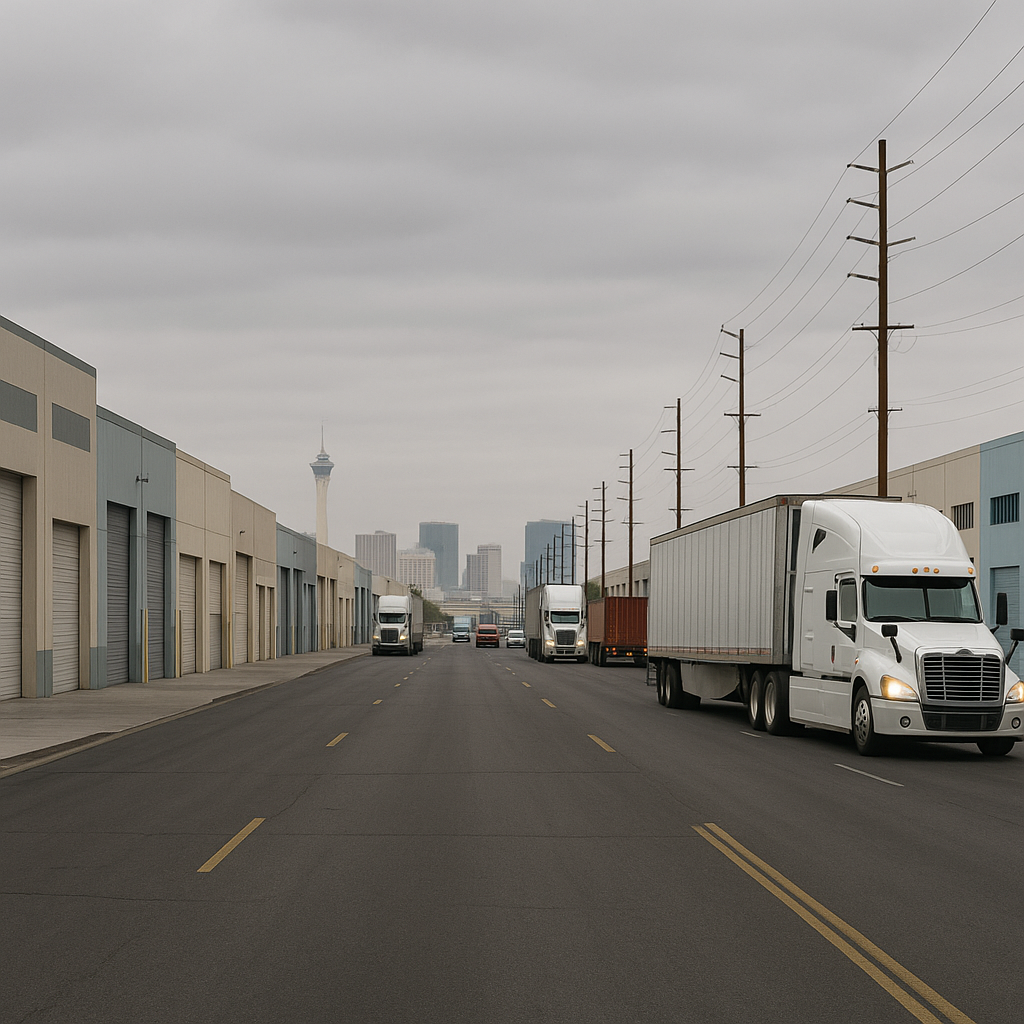
Warehouse Districts and Semi Truck Traffic in Las Vegas
Las Vegas is world-renowned for its vibrant entertainment, hospitality, and gaming industries, but another sector motors just beneath the neon glow: logistics and freight transport. As the city has grown into a major regional hub, warehouse districts and semi truck traffic in Las Vegas have become vital components of the local economy. These clusters of warehouse and industrial buildings—especially those near key transport corridors—host a constant flow of semi trucks, providing the backbone for distribution not just within Nevada, but throughout the Southwest.
Overview of the Freight Corridor or Trucking Activity
The strategic location of Las Vegas makes it an indispensable link for goods traveling between California, Arizona, Utah, and other states. Interstate 15 (I-15) is the main arterial freight corridor, slashing through Las Vegas from southwest to northeast. Along its route, expansive warehouse districts have developed, particularly in the southwest valley (around Paradise Road, Warm Springs, and Blue Diamond Road), North Las Vegas, and the area bordering the Harry Reid International Airport.
The growth of e-commerce has spurred a boom in distribution centers, with major brands setting up regional hubs to rapidly serve both the Las Vegas Valley and nearby consumer markets. Companies like Amazon, FedEx, UPS, and numerous third-party logistics providers rely heavily on efficient trucking operations within and around these warehouse districts. Semi trucks shuttle goods round-the-clock between warehouses, retailers, and last-mile delivery stations, keeping the city supplied while also feeding broader distribution networks.
Because Las Vegas sits at a logistical crossroads, much of the freight traffic is “through traffic,” with trucks delivering goods farther east toward Salt Lake City or north toward Reno. This mix of local and long-haul hauling creates a dynamic, sometimes congested network of freight movements, especially during peak shipping seasons.
Common Truck Types and Freight Activity in the Area
In Las Vegas’ warehouse districts, a variety of trucks and freight types crisscross the landscape. The most common vehicles include:
– 53-foot tractor trailers: The workhorse of over-the-road shipping, used for both dry van and refrigerated (reefer) freight.
– Box trucks: Smaller and more maneuverable, these commonly handle local deliveries between warehouses and retail locations, especially for last-mile logistics.
– Flatbeds: Used for oversized or irregular freight, such as construction materials, which are common in this rapidly expanding city.
– Parcel delivery vans: With the rise of e-commerce, delivery fleets (like those from Amazon, FedEx, and UPS) are a familiar sight.
The freight itself varies seasonally but remains diverse: consumer goods for hotels and casinos, food and beverages (often requiring refrigeration), construction equipment and supplies, event staging materials, and everything in between. Warehouses in Las Vegas not only serve city needs but also distribute to outlying desert communities and support industries like entertainment and trade shows.
Advanced logistics operations further define this sector. Modern warehouses are equipped with smart inventory management, automated loading docks, and specialized areas for perishable or sensitive goods. Coordinating the movement of goods in and out of these sites requires tight scheduling and efficient truck flow to prevent bottlenecks.
How Congestion or Merging Creates Risk
While semi truck traffic is crucial to the economic health of Las Vegas, the concentration of large vehicles on roads designed for mixed-use introduces several challenges and risks. Warehouse districts are often located near major highways, but semi trucks must still navigate surface streets, access roads, and complex intersections to reach their destinations.
One of the major concerns in Las Vegas is congestion around warehouse clusters, particularly during morning and afternoon peak periods. Trucks queuing for loading docks, merging from narrower industrial roads to busy arterials, or waiting at multi-lane intersections can create unpredictable traffic patterns. Passenger vehicles, delivery vans, and other road users complicate these situations, especially in areas where warehousing blends with retail or residential zones.
Merging and lane changes are especially fraught. Semi trucks require significantly more space and longer stopping distances than passenger cars. As trucks move between surface streets and freeway onramps, or as they shift lanes to access particular warehouse docks, the risk of congestion-related incidents increases. Sudden merges, restricted sightlines, and frequent starts and stops can lead to rear-end collisions, side-swipes, and near-misses.
Furthermore, the sometimes limited parking and staging areas around Las Vegas warehouses can force trucks to double-park or momentarily block traffic, further escalating congestion and safety concerns. Pedestrian and cyclist safety is an additional consideration in areas where these modes intersect with freight activity.
Time-of-Day and Seasonal Traffic Trends
The ebb and flow of semi truck traffic in Las Vegas’ warehouse districts is highly influenced by the time of day and the season. Typically, the busiest periods coincide with:
– Early mornings (4:00–9:00 a.m.): Many trucks aim to arrive before peak commuter traffic or unload shipments received overnight. This is when loading docks are busiest, and surface roads near warehouses see a surge in heavy vehicle traffic.
– Late afternoon and early evening (3:00–7:00 p.m.): Routes fill up again as trucks depart with outgoing freight or return for another cycle.
Between these peaks, traffic moderates, but never truly ceases given the 24/7 nature of logistics operations.
Seasonal traffic surges are notable as well. Major conventions, entertainment events, and especially the holiday shopping season (October through December) drive spikes in truck activity as Las Vegas gears up to meet the needs of visitors and residents. Additionally, summer can see increased shipments of beverages and perishables, while the influx of construction goods often tracks with the city’s robust building cycles.
Weather is another seasonal consideration. While Las Vegas generally enjoys favorable driving conditions, the rare rainstorm can compound congestion and slowdowns in warehouse zones, as can roadwork or major city events.
Neutral Closing Paragraph
The intricate dance of warehouse districts and semi truck traffic in Las Vegas is an essential, if often overlooked, part of the city’s lifeblood. As the region continues to expand and diversify its economy, the pressures on freight corridors and warehouse operations will likely increase, raising new questions about traffic management, safety, and urban planning. By understanding current trends and the unique logistical landscape of Las Vegas, residents, business owners, and policymakers can better navigate and support the city’s vital role as a regional freight hub.