
What Evidence Matters Most in Nevada Truck Accidents?
Why Nevada Drivers Ask This Question
Large commercial trucks—such as semis, tractor-trailers, and delivery vehicles—are common on Nevada’s highways, from I-15 linking Las Vegas to Reno’s bustling roads. When a collision involving a truck occurs, the results are often serious due to vehicles’ sheer size and weight. Understandably, anyone involved in a Nevada truck accident quickly wonders: What evidence matters most in Nevada truck accidents, and why is this evidence so important?
Drivers, passengers, and even trucking companies want to know which facts and materials carry the greatest weight after a crash. Whether you are focused on insurance claims, understanding fault, or documenting your full experience, knowing what’s essential helps ensure accurate investigations and fair assessments. Because Nevada’s rules and courts might differ from neighboring states, local truck drivers and accident victims have specific concerns that deserve clear answers.
Clear Explanation with Nevada Context
Strict trucking regulations and traffic laws in Nevada are designed to maintain safety—but when accidents happen, investigating them usually comes down to available evidence. The type and quality of documentation gathered after an incident will be at the center of any insurance reviews, police determinations, or potential court cases.
So, what evidence matters most in Nevada truck accidents? The key pieces include:
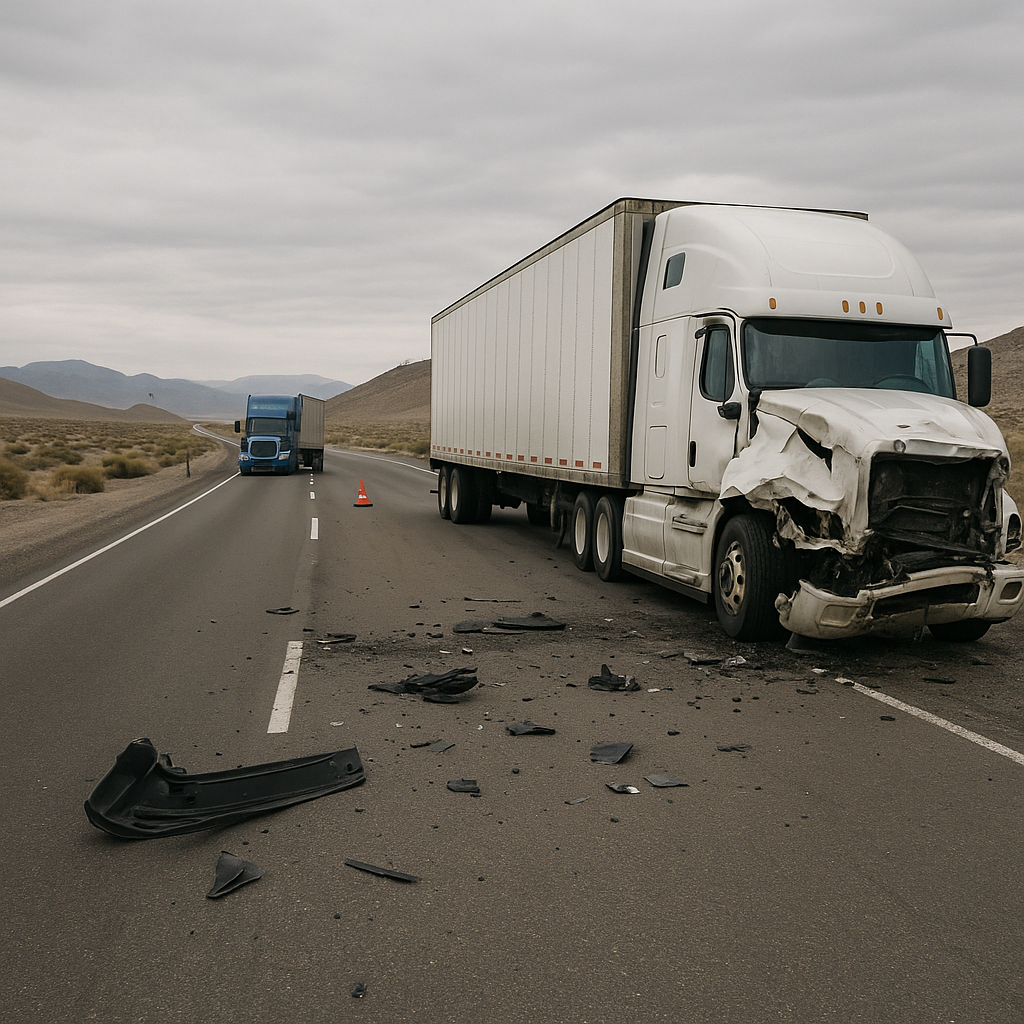
– Accident scene photos and videos: These visuals capture the final positions of vehicles, road conditions, skid marks, and visible damages. In the Nevada desert, harsh sunlight or nighttime lighting can impact image clarity, so multiple angles at different times can be critical.
– Police reports: Nevada law (NRS 484E.030) requires drivers to report crashes involving injuries, fatalities, or significant property damage. Officers’ accounts, attached diagrams, and listed citations document official perspectives and initial fault assessments.
– Eyewitness statements: Las Vegas, Reno, and highway accidents often occur in heavily trafficked areas. Independent accounts from drivers, pedestrians, or nearby workers offer valuable third-party perspectives about what happened.
– Truck driver logs and records: Nevada follows federal guidelines for driver hours and rest periods. These logs help establish whether truckers were fatigued or over their driving limit—a frequent factor in large vehicle accidents.
– Black box electronic data: Most commercial trucks have event data recorders (EDRs) that store speed, brake activation, and steering actions in the moments before a crash. In Nevada, this data can be critical to accurately reconstruct sequences of events.
– Maintenance records: Breakdown-related accidents or mechanical failures are not uncommon. Service logs and inspection reports help clarify if the truck was in proper working order prior to the incident.
– Medical documentation: Prompt medical reports for all injured parties—no matter how minor the injuries might seem at first—are crucial for insurance and investigative purposes.
Helpful Background Information
Nevada’s unique legal and environmental context also shapes what evidence is essential. Being a desert state, elements such as sand, heat, and fast-changing weather might erase or obscure accident scene details quickly. Local law enforcement often arrive with cameras and accident documentation kits, but waiting for an official report doesn’t guarantee all evidence is preserved.
Additionally, Nevada has a “comparative negligence” system. That means fault may be assigned in percentages across involved parties, not simply as “one side right, one side wrong.” In these cases, robust evidence is even more important, since every detail may influence the assignment of fault and, by extension, compensation or liability.
Local trucking companies are also subject to both Nevada regulations and federal rules from the Federal Motor Carrier Safety Administration (FMCSA). This dual regulation means paperwork and digital records are often available, but quick action is needed to request and protect them—especially black box and logbook data, which may be routinely overwritten.
Common Misconceptions
Many people involved in Nevada truck accidents assume that a police report alone is enough to establish fault or determine the outcome. While accident reports are a central piece, insurance adjusters and legal teams often dig deeper, seeking physical evidence and corroborating details to build a full picture.
Another misconception is that truck driver records and electronic data are always easily available. In reality, trucking companies may hold onto these records only as long as required by law. Delays in requesting critical data—like dashcam video or EDR files—can result in those records being overwritten or lost.
Some also believe witness testimony loses value over time. While it’s true that prompt statements tend to be more accurate, even after days or weeks, neutral observations from third parties can carry significant weight, especially when they align with physical or electronic evidence.
Finally, it’s often assumed that only injuries immediately visible at the accident scene matter for future proceedings. In Nevada—as elsewhere—soft tissue injuries or shock can become apparent only hours or days later, making thorough, timely medical documentation critical.
Closing Paragraph
Ultimately, the evidence that matters most in Nevada truck accidents is that which paints the clearest, most comprehensive picture of what happened before, during, and after the collision. From scene photos and police reports to truck driver records and black box data, a wide range of facts, files, and materials play a vital role. For anyone navigating the aftermath of a Nevada truck accident, understanding the importance of swift and thorough evidence collection—within the state’s local context—can make a substantial difference in the resolution and recovery process. The sooner essential records are gathered and preserved, the better equipped everyone will be to achieve clarity and fairness.