What Happens When a Semi Truck Is Towed After a Crash in Nevada
When a large commercial vehicle like a semi truck is involved in a crash on Nevada’s highways, the aftermath is complex and often misunderstood. Unlike regular vehicle incidents, crashes involving semi trucks require enhanced coordination among various agencies, careful documentation, and rigorous safety procedures—especially once the decision is made to tow the semi truck from the scene. This article explores what happens in Nevada after a semi truck is towed following a crash, focusing on state-specific systems, reporting expectations, and common misunderstandings that often arise during this critical process.
Overview of Crash Response and Reporting Systems in Nevada
Nevada’s unique geographic and infrastructural landscape features busy highways such as I-15, I-80, and US-95, frequented by commercial trucks transporting goods across the West. When a semi truck is involved in a crash, the response and aftermath is guided by both state and federal regulations, combined with the procedural standards of local agencies.
Once an accident involving a semi truck occurs, priority is immediately placed on human safety, traffic management, and environmental protection. Clearing the roadway efficiently is vital to restore normal traffic flow and prevent secondary accidents, especially on high-speed corridors. The process of towing a semi truck—given its size, potential hazardous cargo, and strategic importance—introduces additional logistical considerations.
Central to the response is the coordination managed through Nevada’s Department of Public Safety (DPS), which often works in tandem with local police departments, the Nevada Highway Patrol (NHP), firefighters, and emergency medical services (EMS). The presence of commercial cargo, hazardous materials, or complex vehicle recovery needs can also prompt involvement from other specialized teams, including environmental and hazardous material units.
Common Agencies and Reporting Steps (Educational)
Several agencies are typically involved at the scene of a semi truck crash and in the subsequent towing and reporting process:
Nevada Highway Patrol (NHP):
Responsible for responding to crashes on state and interstate highways. The NHP typically oversees incident command, ensures safety, and initiates preliminary crash investigations for commercial vehicles.
Local Law Enforcement Departments:
Within city or county jurisdictions, agencies such as city police or county sheriffs may take lead roles or provide support, particularly in urban areas like Las Vegas, Reno, or Henderson.
Fire Departments and Emergency Medical Services (EMS):
If injuries, fires, or cargo spills are involved, fire departments and EMS handle rescue, first aid, and containment duties concurrently with scene management.
Nevada Department of Transportation (NDOT):
NDOT assists with traffic diversion, scene safety, and roadway hazard mitigation (such as spill clean-up or infrastructure inspection following a crash).
Commercial Vehicle Towing and Recovery Operators:
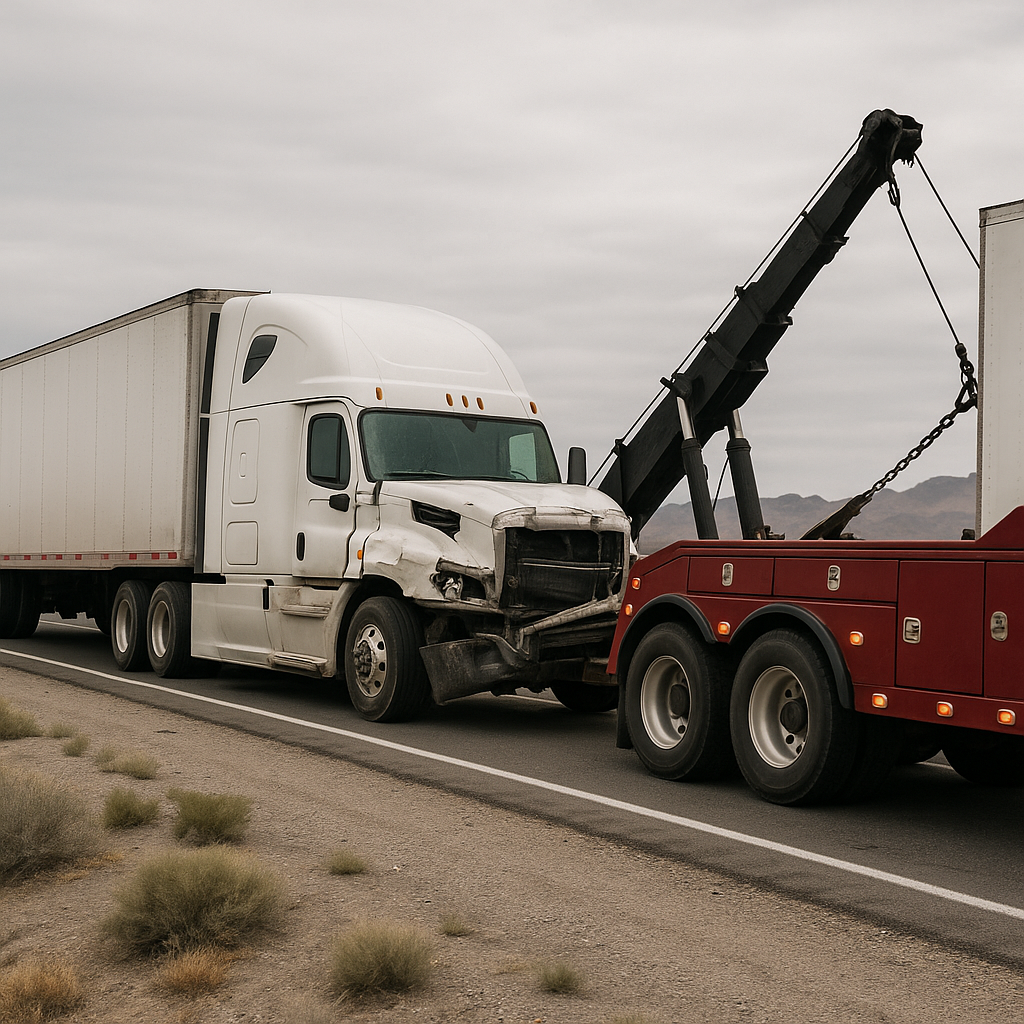
Towing companies certified and contracted with Nevada law enforcement or transportation agencies are called to handle the specialized job of moving damaged semi trucks and trailers safely. Because semi trucks can weigh tens of thousands of pounds and often carry cargo, recovery can require sophisticated equipment and highly trained tow technicians.
Commercial Vehicle Companies (Carriers):
Trucking companies and their insurance providers are notified and may send representatives to the crash scene or designated tow yards to manage claims, conduct internal investigations, or arrange transport for remaining cargo.
Once the situation is stabilized and tow authorization is given (typically by the lead officer or NHP supervisor), the semi truck is moved to a secure location, often an impound yard under security surveillance. Major accidents or those involving injuries and hazardous materials may warrant additional oversight from hazardous materials teams and, in some cases, federal investigators from the National Transportation Safety Board (NTSB).
Documentation Typically Involved
Accurate documentation is a critical element in semi truck crash scenarios in Nevada. This documentation serves multiple purposes: satisfying legal reporting requirements, supporting future insurance and liability claims, and contributing to public safety records and regulatory enforcement.
Official Crash Report:
After a semi truck crash, law enforcement agencies complete a detailed crash report, which usually includes a comprehensive diagram of the incident, information about all parties involved, vehicle and cargo details, witness contacts, and preliminary observations regarding the cause or contributing factors.
Towing and Impound Records:
Tow operators generate separate paperwork that includes the vehicle’s condition upon arrival, specifics of the tow (location, time, reason for removal), and inventory of cargo and personal property present in the truck. This documentation is crucial for chain-of-custody purposes and in resolving any disputes regarding cargo or equipment.
Hazardous Materials Reports (if applicable):
If a semi truck is carrying regulated chemicals or materials, specialized reporting is required under both state and federal laws. These forms detail the type, quantity, and disposition of hazardous substances and outline any mitigation or containment measures deployed at the scene.
Cargo and Insurance Documentation:
Carriers and third-party insurers may require additional records, including cargo manifests and insurance claim forms. Insurers often send adjusters to inspect the towed vehicle and cargo at the impound lot to assess damages and initiate the claims process.
Environmental Incident Reports:
Should a crash result in fluid or cargo spills, environmental health agencies may require reporting and documentation of cleanup procedures, contamination assessments, and remediation efforts before the vehicle is released.
Common Reporting Misunderstandings
The complexities of trucking accidents often lead to misunderstandings about what happens after a semi truck is towed. One prevalent misconception is that towing immediately absolves parties of responsibility or halts investigations; in reality, the towing event can open the door for deeper analysis. Vehicles are often held in secure impounds until law enforcement, insurers, or regulatory agencies complete their investigations. Forensic examinations—including mechanical inspections and data downloads from truck event data recorders—are frequently conducted at the impound site rather than at the crash scene.
Another frequent area of confusion involves cargo custody and disposition. Cargo is not always released to the carrier or cargo owner immediately, particularly if the material is perishable, hazardous, or tied to an ongoing investigation. The chain of custody must be clearly documented, and retrieval can be delayed by regulatory or evidentiary requirements.
Additionally, some believe that crash reports and tow records are immediately accessible to the public. In practice, much of the documentation, especially in cases involving injuries, fatalities, or complex liability questions, may remain confidential for extended periods. Access is often limited to involved parties and their legal representatives or insurers.
Neutral Closing Paragraph
Towing a semi truck after a crash in Nevada is a multi-faceted process involving careful coordination among law enforcement, towing specialists, regulatory agencies, and trucking carriers. Each step, from the initial crash response through towing and post-incident documentation, is designed to promote safety, ensure accurate records, and uphold the rights and responsibilities of all parties involved. While the process can be complicated, understanding the typical procedures and reporting expectations can clarify what happens during these critical incidents, whether you’re a commercial driver, carrier, or a concerned member of the public.