
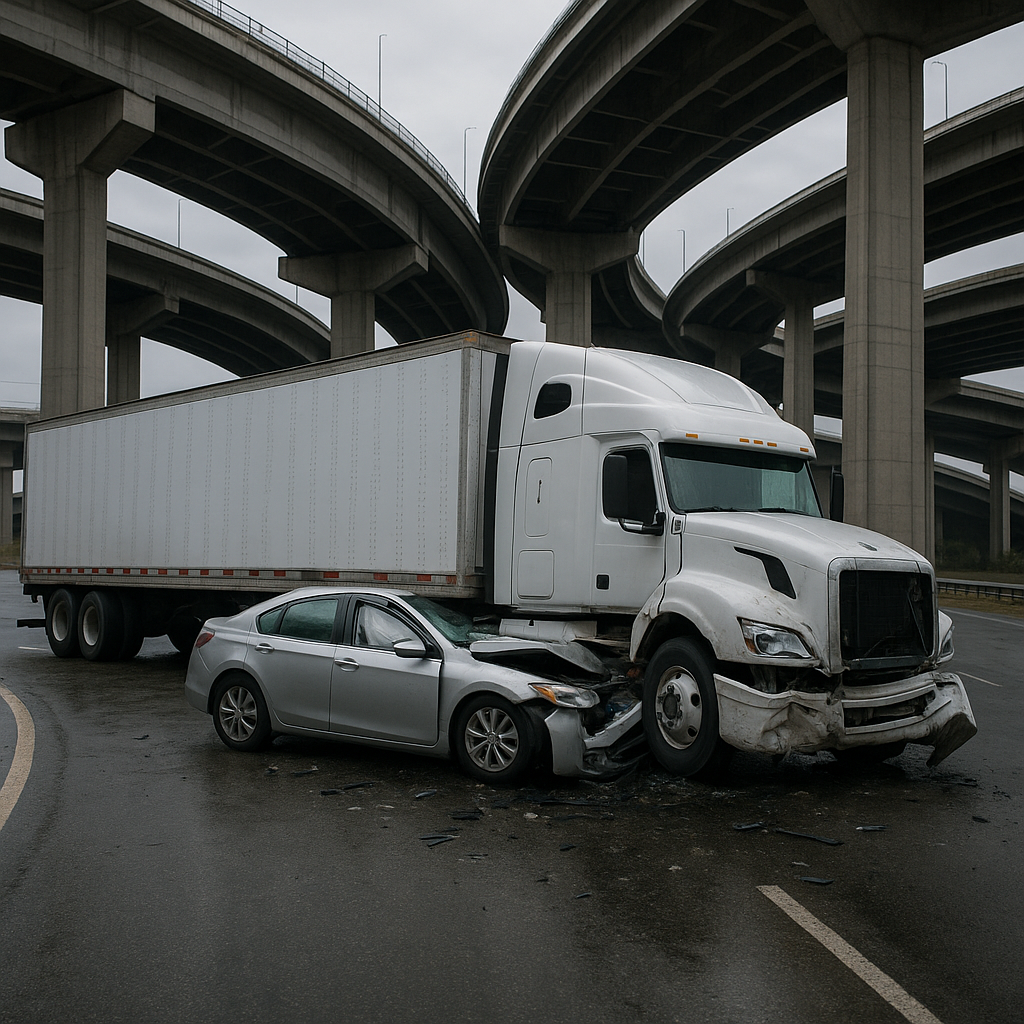
What is the Spaghetti Bowl and Why is it Dangerous?
If you drive through Las Vegas, chances are you’ve heard the term “Spaghetti Bowl.” But what actually is the Spaghetti Bowl, and why do so many Nevada drivers talk about its risks? Concerns about truck crashes and general road safety make this tangle of highways a major focal point in local conversations. This article breaks down the Spaghetti Bowl, examines why it’s considered dangerous, and dispels some common myths.
—
Why Nevada Drivers Ask This Question
With its neon-lit sky and bustling tourism, Las Vegas sees thousands of drivers daily—locals and out-of-towners alike. This heavy traffic converges at a unique spot: the Spaghetti Bowl, officially known as the interchange linking Interstate 15 (I-15), U.S. Route 95, and several local roads.
Many Nevada drivers, particularly those living in Las Vegas, regularly pass through or around the Spaghetti Bowl, often during high-pressure rush hours or while sharing the road with an increase in semi-truck traffic. News headlines frequently mention “Spaghetti Bowl dangerous truck crashes” or accidents involving passenger vehicles. All these factors naturally spark concerns and questions about why this particular interchange is so perilous.
—
Clear Explanation with Nevada Context
The “Spaghetti Bowl” refers to the central highway interchange just north of downtown Las Vegas. It ties together I-15, which runs north-south, with U.S. 95, which runs northwest-southeast, forming an intricate web of ramps, exits, and merging lanes. Its nickname comes from the aerial view: a confusing, intertwined mass reminiscent of a plate of spaghetti.
Why is the Spaghetti Bowl Dangerous?
A perfect storm of factors makes this interchange especially risky for drivers:
– Complex lane changes: Drivers often need to cross multiple lanes in a short distance to reach their exits, increasing sideswipe and merging accidents.
– Heavy truck traffic: Las Vegas is a commercial hub. Trucks using the Spaghetti Bowl can make tight curves and sudden merges even more hazardous. News about “Spaghetti Bowl dangerous truck crashes” isn’t uncommon during peak hours or after a rainstorm.
– High traffic volumes: Tens of thousands of vehicles travel through the Spaghetti Bowl daily, especially during commute times and on weekends.
– Limited visibility: Curved ramps, crowded merging lanes, and frequent overpasses reduce driver sight lines, leaving little time to react.
– Construction and lane shifts: The Nevada Department of Transportation (NDOT) often upgrades or repairs sections, changing familiar lane layouts, sometimes overnight.
– Out-of-town drivers: Tourists unfamiliar with local roads (and sometimes distracted by Las Vegas sights) may slow unexpectedly, miss turns, or make last-second lane changes.
Let’s look deeper at the context and popular perceptions.
—
Helpful Background Information
The Spaghetti Bowl was originally designed in the 1960s and 70s, when Las Vegas was a much smaller city. Nobody could have predicted the current daily traffic volume or the sheer size of today’s 18-wheelers. Over the decades, it has undergone numerous expansions and redesigns, but the interchange struggles to keep up with growth.
While NDOT’s Project Neon (completed in 2019) greatly improved lanes and ramps, traffic studies still list this interchange among Nevada’s most accident-prone spots. According to NDOT data, hundreds of collisions occur here each year, ranging from fender-benders to severe multi-vehicle pileups.
For truck drivers, the tight curves and sudden lane changes required by the design make navigation a challenge—especially during bad weather or in heavy congestion. Even small mistakes can lead to rollovers, jackknifes, or major multi-car wrecks. As a result, headlines about “Spaghetti Bowl dangerous truck crashes” commonly resurface during peak traffic periods.
—
Common Misconceptions
Despite its reputation, not every crash at the Spaghetti Bowl is a dramatic pileup. Here are a few misconceptions worth clearing up:
– “It’s dangerous because drivers speed there.”
Speeding is a factor, but a bigger problem is sudden slowing, rapid lane shifting, and overcompensating due to confusion. Sometimes, slower speeds combined with lane changes can trigger rear-end collisions or sideswipes.
– “Truck crashes are the main problem.”
While high-profile truck accidents make the news, most incidents involve passenger vehicles. Still, large trucks pose additional hazards due to their size and slower maneuverability when making quick lane changes or taking sharp on-ramps.
– “It’s only dangerous during rush hour.”
The Spaghetti Bowl sees crashes at all times—not just during the a.m. and p.m. rush. Nighttime brings its own risks, with reduced lighting, fatigue, and occasionally impaired drivers on the road.
– “Better signage could solve the issue.”
New signs and clearer pavement markings have helped, but the root challenge remains the interchange’s basic design and overwhelming traffic volume—especially as Las Vegas continues to grow.
—
Closing Paragraph
The Spaghetti Bowl is a critical transport link for Las Vegas and Nevada, but its complexity, high traffic, and significant truck presence make it a challenging drive for many. Awareness of its unique risks—including confusing merges and heavy truck activity—can help drivers approach this interchange with caution. While local and state agencies continue working to enhance safety, understanding what makes the Spaghetti Bowl dangerous empowers Nevada drivers to navigate it more confidently and safely. Drive smart, stay alert, and always respect the tangle of highways that keeps Las Vegas moving.