
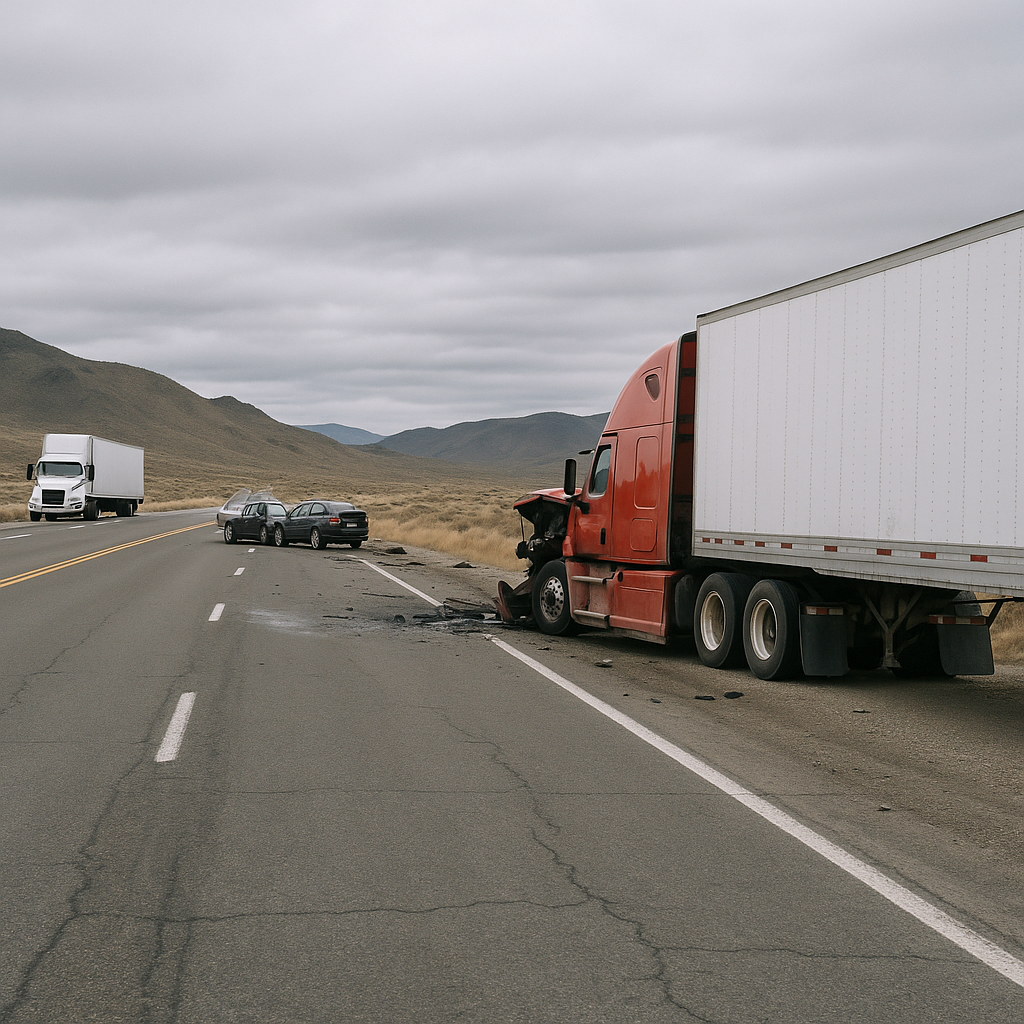
Why Certain Freight Corridors See Repeat Crashes in Nevada
Nevada’s vast landscapes and strategic cross-country corridors make the state a linchpin in the nation’s freight movement. However, the state’s busiest freight corridors are often hotspots for repeat crashes—raising crucial questions for logistics professionals, transportation planners, and everyday drivers alike. To understand why certain freight corridors encounter frequent collisions, it’s important to examine the unique blend of truck activity, road design, congestion, and local traffic trends that characterize Nevada’s highway system.
Overview of the Freight Corridor or Trucking Activity
Nevada’s trucking industry is driven by its central geographic location and its robust mining, tourism, and logistics sectors. Much of this activity is concentrated along the state’s key freight corridors, notably Interstate 15 (I-15), Interstate 80 (I-80), U.S. Highway 95, and sections of the I-11/I-515 corridor near Las Vegas. These thoroughfares connect Nevada to California, Arizona, Utah, and northern regions, acting as major arteries for regional and national freight.
According to data from the Nevada Department of Transportation (NDOT), these highways account for a significant share of Nevada’s truck traffic. I-15, carrying goods between Los Angeles and Salt Lake City, is especially notorious for intense freight volume. Likewise, I-80, bisecting Nevada from east to west, serves as a major passage for freight traveling to and from the San Francisco Bay Area and the Midwestern states.
The high volume of trucking—often with a mixture of local delivery vehicles and long-haul tractor-trailers—produces unique roadway dynamics. In places where high freight activity merges with urban population centers or complex interchanges, the risk of accidents tends to rise sharply. Understanding the most common types of trucks and industrial cargo moving through these Nevada corridors helps shed further light on why crashes are so frequent.
Common Truck Types and Freight Activity in the Area
Freight corridors in Nevada see a wide array of commercial vehicle types, each with specific handling characteristics and operational patterns. The most prevalent are:
– Class 8 tractor-trailers (18-wheelers): These are primarily responsible for line-haul freight, including dry goods, perishables, and raw materials moving cross-country.
– Tanker trucks: Commonly transport fuel from refineries to urban and rural Nevada, often seen along US-95 and I-15.
– Flatbed trailers: Essential for the mining sector, carrying heavy machinery, ore, and building materials.
– Refrigerated trucks (reefers): Prominent on I-15 and I-80, moving produce and temperature-sensitive goods between California and distribution hubs in Las Vegas or Reno.
– Local delivery vehicles: Including box trucks and straight trucks, which navigate city interchanges and off-ramps more frequently.
The wide mix of vehicles creates an environment where heavy, slow-accelerating trucks share space with lighter, more maneuverable cargo vans and passenger vehicles. This disparity can lead to increased collision risks, particularly in congested settings or during adverse weather conditions commonly experienced along I-80 and the northern high deserts.
How Congestion or Merging Creates Risk
Crash statistics reflect the impact of congestion and merging patterns on Nevada’s freight corridors. Bottlenecks often occur near city entries and major interchanges—such as the Spaghetti Bowl in Las Vegas (I-15/I-515/I-215), or where I-80 transitions through the Reno-Sparks area. Here, traffic density jumps as local vehicles weave between lanes while heavy trucks attempt to maintain steady speeds or change lanes to comply with truck route restrictions.
Three primary risk factors arise:
1. Differential Speeds: Passenger cars often accelerate or decelerate more quickly, while loaded trucks require longer distances to brake or merge.
2. Limited Sight Lines: Large trucks may obstruct drivers’ views of lane changes, exit ramps, and merging vehicles—especially dangerous during rush hours or construction.
3. Short Merge Distances: Nevada’s fast-growing urban areas have significant development near highways, reducing merge lane lengths and increasing pressure for quick, sometimes unsafe, lane adjustments.
Road configuration also plays a role. For example, some sections of I-15 near Las Vegas have restricted lanes for trucks, compelling last-minute lane changes. Construction zones and seasonal maintenance can further compress lanes, as seen on I-80 during winter repairs or asphalt overlays.
In rural stretches, the monotonous landscape and long distances between services can foster driver fatigue—particularly among truckers adhering to tight delivery schedules. Fatigue impairs reaction time and can lead to drifting between lanes, a common factor in single-vehicle truck crashes or sideswipes involving multiple vehicles.
Time-of-Day and Seasonal Traffic Trends
Understanding when crashes most frequently occur along Nevada’s freight corridors reveals further insight into the hazard landscape. According to NDOT and Federal Motor Carrier Safety Administration (FMCSA) data, both time-of-day and seasonal surges have a marked influence.
Time-of-Day Patterns
– Morning and evening rush hours (6–10 a.m. and 4–7 p.m.): These windows see dense overlap between commuter and freight traffic, especially in metro Las Vegas and Reno areas. Collisions involving trucks and passenger vehicles are more likely due to higher vehicle concentrations and increased merging maneuvers.
– Late night/early morning: Freight-heavy corridors often carry significant truck traffic overnight, when driver fatigue is more common. Reduced visibility, empty stretches of rural highway, and sometimes higher travel speeds contribute to nighttime crashes, particularly rear-ends and rollovers.
– Midday lulls: Although overall traffic is lighter, these hours often align with time-sensitive deliveries and warehouse appointments, forcing drivers to prioritize speed or efficiency—sometimes at the cost of safety.
Seasonal Traffic Surges
Nevada’s most critical freight corridors also experience seasonal spikes in traffic, which further strain safety measures.
– Winter months (December–February): Northern Nevada highways, such as I-80 over Donner Pass, can experience sudden snowstorms, black ice, and high winds. Truck crashes due to weather are common, as well as chain-reaction pileups when vehicles are unable to stop on slick surfaces.
– Summer and tourist season: I-15 and US-95 see increased out-of-state and recreational traffic, as tourists flock to Las Vegas or transit through to California’s national parks. This influx of unfamiliar drivers navigating alongside local freight haulers leads to a spike in merging-related incidents and sideswipes.
– Special events and construction: Large conventions, sporting events, or highway improvement projects significantly alter traffic patterns—especially in the Las Vegas corridor. Temporary rerouting or narrowed lanes can lead to confusion and increased crash rates involving heavy trucks.
Neutral Closing Paragraph
Freight corridors in Nevada are among the busiest and most economically significant in the western United States, connecting diverse regions through challenging terrain and rapidly growing urban centers. The combination of varied truck types, merging complexities, congestion, and shifting traffic patterns creates a complex environment where repeat crashes can and do occur. By better understanding these Nevada-specific risk factors, transportation stakeholders, community planners, freight carriers, and drivers alike can work towards strategies that mitigate risks and promote safer roads for everyone. While there is no single solution, increased awareness and responsive planning remain key to reducing repeat crashes on the Silver State’s critical freight corridors.