
Why Do Nevada Semi Truck Accidents Cause Catastrophic Injuries?
Why Nevada Drivers Ask This Question
Nevada’s highways are a familiar sight for residents and travelers alike, filled with cars, RVs, and—especially—massive semi trucks moving goods across the state and country. Every year, stories about severe injuries and tragic losses resulting from big-rig collisions surface in local news reports. This recurring pattern naturally leads Nevada drivers to wonder: Why do Nevada semi truck accidents cause catastrophic injuries? Understanding the reasons behind such devastating outcomes is essential for everyone who shares the road with these powerful vehicles.
Clear Explanation with Nevada Context
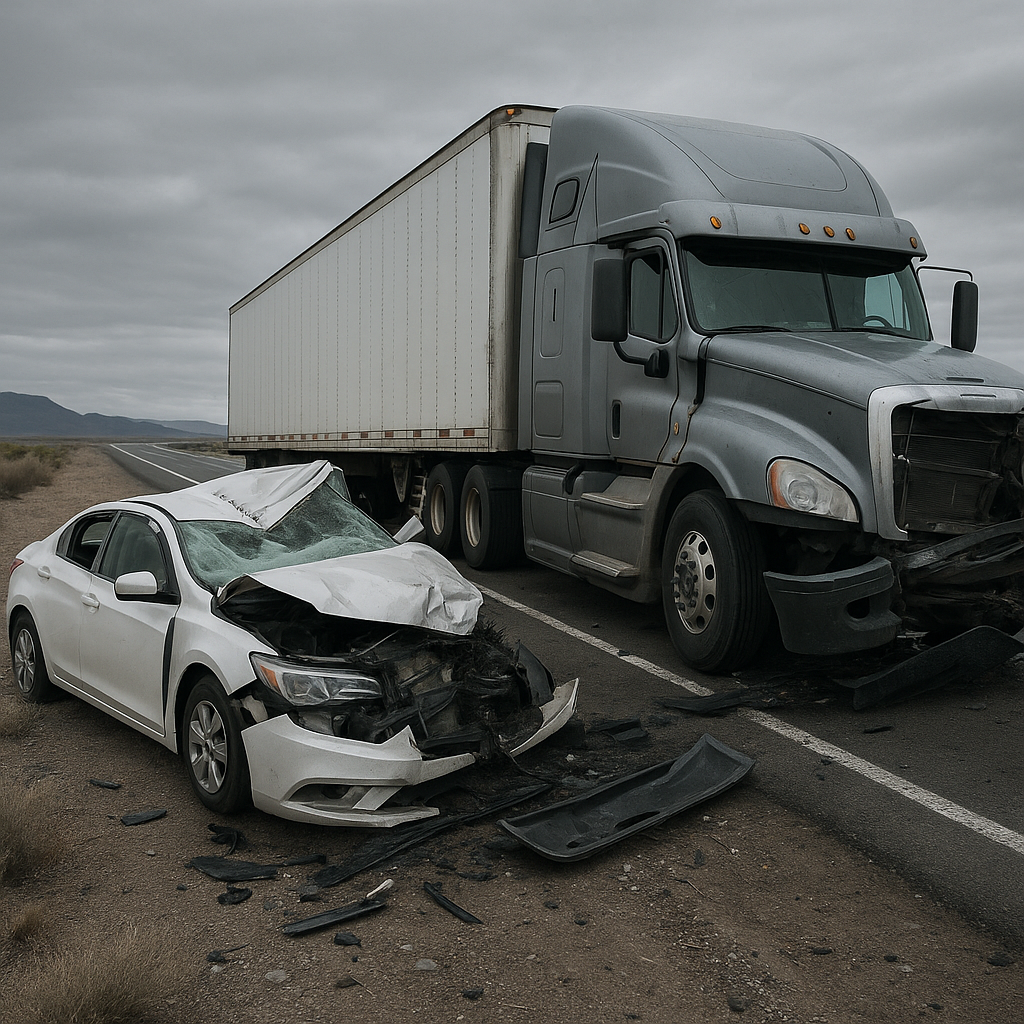
Semi truck accidents in Nevada are far more likely to result in catastrophic injuries than typical passenger vehicle crashes, and several local factors come into play. One of the leading causes is the sheer size and weight of semi trucks. Fully loaded, these vehicles can weigh up to 80,000 pounds, dwarfing the average sedan, which weighs around 3,000 to 4,000 pounds. This massive disparity makes any collision extremely dangerous for occupants of smaller vehicles.
Nevada’s vast and often desolate highways, such as Interstate 15, Interstate 80, and U.S. Route 95, see heavy commercial traffic day and night. Long, straight stretches may invite higher speeds, while sudden wind gusts and desert weather conditions present unique challenges. When an accident does occur, it frequently happens at high speeds or in circumstances where visibility and stopping distance are compromised, heightening the risk of catastrophic injuries.
Urban areas like Las Vegas and Reno add another layer of complexity. Dense traffic, rapid lane changes, and notorious bottlenecks (for example, the Spaghetti Bowl interchange) mean semi trucks must maneuver in tight quarters. These conditions significantly increase the chance of severe crashes, especially when a large truck collides with multiple vehicles in quick succession.
Helpful Background Information
Nevada is a logistical hub, serving as a crossroads for trade routes between Southern California, the Pacific Northwest, and the Rocky Mountain region. According to data from the Nevada Department of Transportation (NDOT), commercial trucks account for a substantial percentage of vehicles on the state’s highways. The long hours and monotonous stretches some truckers face can result in fatigue—one of the most cited contributing factors for major crashes.
The construction of Nevada roads—especially rural highways—often features limited barriers or shoulder space. In the event of a tire blowout, sudden braking, or steering error, a semi truck has little room to recover, which can easily lead to multi-vehicle pileups or rollovers.
Catastrophic injuries in these crashes often include traumatic brain injuries, spinal cord damage, amputations, severe burns, and even fatalities. The force of impact, high speeds, and the potential for secondary accidents (such as fires or hazardous material spills) create a high risk of serious harm.
Common Misconceptions
One common misconception is that semi truck drivers are usually at fault when catastrophic injuries occur. In reality, crash causation is complex and often involves a chain of events including weather, road conditions, mechanical failure, and actions taken by other drivers. Commercial drivers in Nevada undergo specialized training and follow rigorous federal and state regulations.
Another misconception is that modern safety features—such as advanced crash barriers, electronic stability controls, and improved vehicle designs—have eliminated the risk of catastrophic injury. While these technologies help, the inherent danger of a collision involving a vehicle as large and heavy as a semi cannot ever be entirely mitigated.
It’s also commonly misunderstood that rural and less-busy roads are safer. In fact, many of Nevada’s most severe semi truck accidents take place on seemingly “empty” highways, where higher speeds and slower emergency response times can make accidents even more deadly.
Closing Paragraph
The reality is that Nevada semi truck accidents are uniquely dangerous because of a mixture of heavy commercial traffic, high-speed corridors, challenging weather and road conditions, and the physics involved in massive vehicle collisions. While advances in technology and stringent safety practices help somewhat, the sheer force of a semi truck accident often results in catastrophic injuries for those involved. Raising awareness and understanding the factors at play is essential for all Nevada drivers as they travel the Silver State’s busy roadways. By recognizing the unique risks associated with sharing the road with commercial trucks, everyone can take some steps to increase safety and reduce the likelihood of tragedy on Nevada’s highways.