
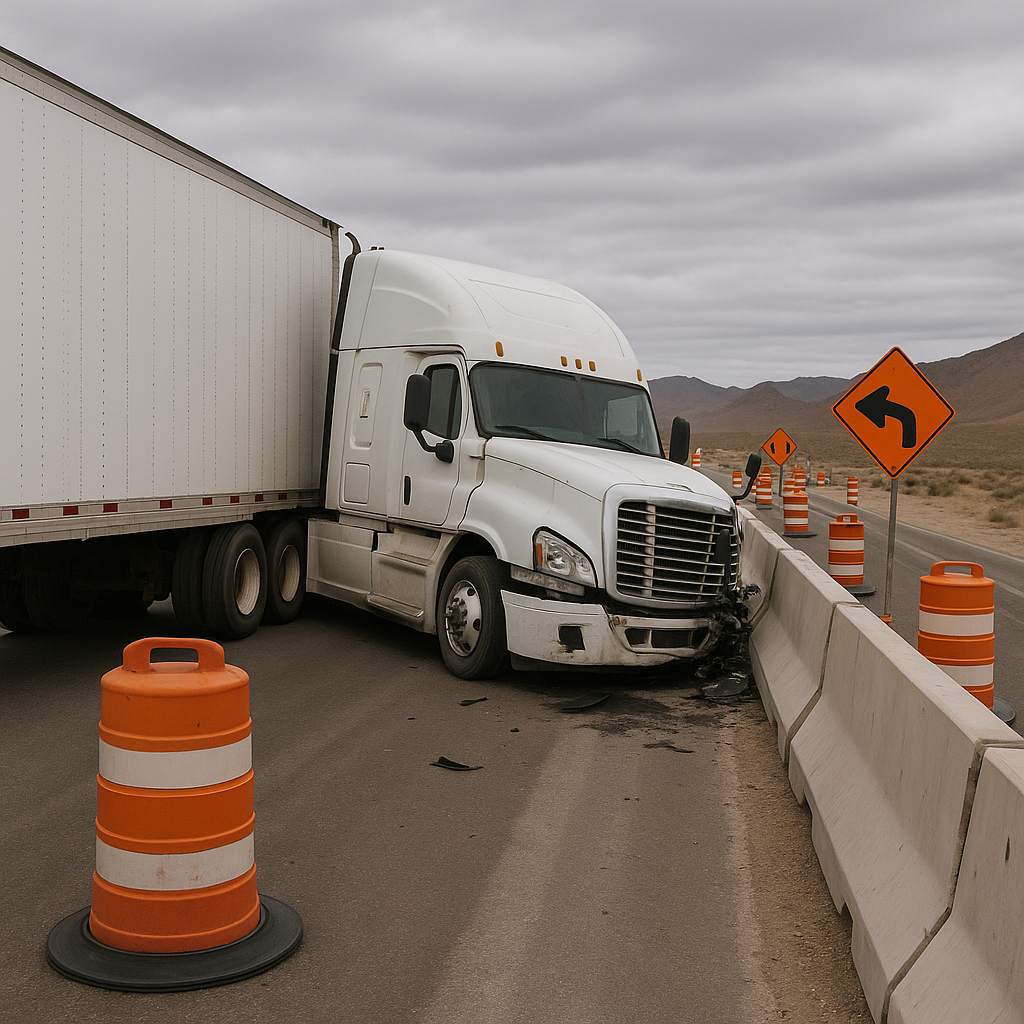
Why Do Nevada Truck Accidents Happen in Work Zones?
Why Nevada Drivers Ask This Question
Work zones are a common sight on Nevada’s highways and roads, especially with ongoing infrastructure improvements in cities like Las Vegas, Reno, and along Interstate 15 and Highway 95. However, with the frequent appearance of orange cones and flashing signs comes a troubling reality: truck accidents in work zones are more common than many realize. Nevada drivers, commercial truckers, commuters, and road crews want to understand why Nevada truck accidents happen in work zones with such alarming regularity. Knowing the risks can help everyone—from motorists to construction workers—navigate these zones more safely and avoid preventable accidents.
Clear Explanation with Nevada Context
Work zones introduce a unique set of hazards for all drivers, but especially for large commercial trucks. Nevada’s vast highways, frequent tourism, and steady flow of commercial traffic create a heightened risk in these already-dangerous environments. Here are the main reasons why Nevada truck accidents happen in work zones:
Reduced Lane Widths and Sudden Shifts
Many work zones result in temporarily narrowed lanes or altered traffic patterns. For truck drivers in Nevada—who may already be maneuvering oversized loads—this can make it exceedingly difficult to maintain safe lane discipline. The challenge increases at night or during poor weather, both common in desert areas and mountain passes.
Frequent Stop-and-Go Traffic
Work zones often involve lowered speed limits and unpredictable stops. Trucks, due to their size and weight, need significantly more distance to come to a complete stop compared to passenger vehicles. When traffic suddenly slows in a Nevada work zone, truckers may not have sufficient room to react, leading to rear-end collisions or chain-reaction crashes.
Distractions and Unclear Signage
Even with Nevada’s efforts to improve work zone signage, shifting detours, unclear lane markers, and last-minute changes can cause confusion. Truck drivers passing through unfamiliar areas—especially tourists or those hauling cargo long distances—may find it difficult to anticipate abrupt changes, increasing the likelihood of collisions.
Aggressive Driving and Noncompliance
Unfortunately, Nevada drivers don’t always reduce their speed as required in work zones, and trucks are not exempt. According to the Nevada Department of Transportation, violations of speed limits and work zone rules are a leading factor in crashes. In addition, some truck drivers may feel pressured to maintain tight delivery schedules, leading to unsafe lane changes, speeding, or following too closely.
Presence of Road Workers and Equipment
Construction zones in Nevada are often busy with workers and heavy equipment positioned close to the active lanes. A minor error—such as drifting out of a narrow lane—can have severe consequences, not only for the truck driver but also for vulnerable workers on foot.
Helpful Background Information
Understanding the reasons why Nevada truck accidents happen in work zones begins with acknowledging the scope of the problem statewide. The Federal Highway Administration reports that a significant percentage of work zone fatalities nationwide involve large trucks. Nevada, with its extensive network of freight corridors and frequent highway upgrades, is no exception.
Key points for background:
– Nevada’s Unique Terrain: Long stretches of desert roadway can lull drivers into a false sense of security or contribute to fatigue. When these stretches suddenly become congested with cones and barriers, the situation can quickly turn hazardous for inattentive or tired truckers.
– Increase in Work Zone Projects: Both urban and rural areas are seeing more roadwork, especially in fast-growing communities around Las Vegas and Reno. More work zones mean more potential for accidents.
– Stringent Enforcement: Nevada law enforcement often increases their presence in work zones to enforce reduced speed limits, though violations remain common.
Common Misconceptions
When considering why truck accidents happen in Nevada’s work zones, several misconceptions arise:
– “It’s always the truck driver’s fault.” In reality, fault is often shared. Passenger vehicles may cut off trucks, misunderstand directions, or brake suddenly in front of a heavy rig. Work zone layouts themselves can also introduce unavoidable hazards.
– “Work zones are safe because everyone slows down.” While speed limits are lowered, not all drivers comply. Sudden lane changes, confusion, or impatience can actually increase risk, especially for trucks with longer stopping distances.
– “Truck drivers are more experienced, so they shouldn’t crash.” Experience helps, but even the most seasoned trucker faces new or unexpected dangers in every work zone—especially in Nevada, where wide-open highways can shift quickly to tight, congested corridors.
– “Signage and barriers prevent most accidents.” While these measures are crucial, they aren’t foolproof. Some signs can be missed or misinterpreted, particularly at night or in high-traffic areas, leading to avoidable accidents.
Closing Paragraph
Nevada truck accidents happen in work zones for a complex mix of reasons—from challenging traffic patterns and driver behavior to road conditions and the nature of the trucking industry itself. As Nevada continues to expand and improve its roadways, understanding these risks is crucial for truck drivers, everyday motorists, and road workers alike. By staying aware of work zone dangers and adapting driving habits accordingly, everyone can contribute to making Nevada’s roads safer for all who travel on them.