
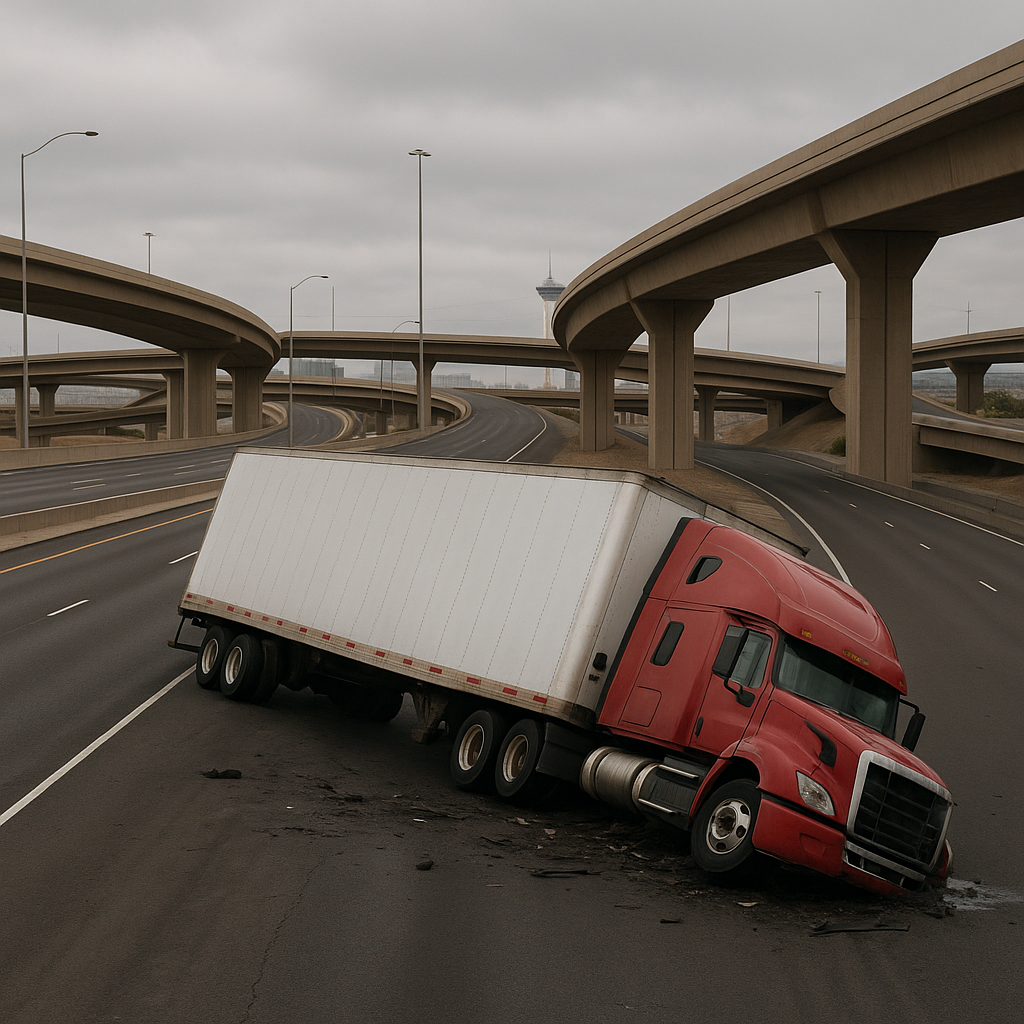
Why Do Semi Truck Crashes Happen Near Las Vegas Interchanges?
Why Nevada Drivers Ask This Question
If you’ve ever commuted in Las Vegas or driven through its maze of highways and interchanges, you’ve likely witnessed or heard about semi truck crashes. These incidents, particularly around interchanges like the Spaghetti Bowl, I-15, and the I-215 Beltway, are frequent enough to spark concern among local drivers. Nevada residents and visitors alike often ask: What is it about Las Vegas interchanges that leads to semi truck crashes?
This question is more than just curiosity—it’s a matter of safety and practical significance for daily commuters, commercial truck operators, and the thousands of tourists traveling the city’s busy roadways each day.
Clear Explanation with Nevada Context
Understanding why semi truck crashes happen at Las Vegas interchanges requires looking at the region’s unique roadways, traffic patterns, and environmental factors.
Helpful Background Information
Las Vegas is a major transportation hub in the Southwest. Highways like I-15 and US-95 carry large volumes of commercial traffic between California, Arizona, Utah, and beyond. These routes converge at a handful of crucial interchanges near the city center and airport—acting as bottlenecks during peak volumes.
Vital background factors include:
– High Volume of Commercial Freight: Las Vegas interchanges handle a mix of local, tourist, and regional freight traffic. The concentration of semi trucks is much higher than in smaller Nevada cities.
– Complex Layouts: Interchanges such as the Spaghetti Bowl (I-15/I-515/US-95 junction) are complicated by multiple lanes, sharp curves, short merge ramps, and frequent lane changes.
– Tourist Traffic and Inexperienced Drivers: The city’s tourism draws visitors unfamiliar with local highway patterns. Sudden lane changes and missed exits are common, especially from rental cars and rideshare drivers.
– Time Pressure: Truck drivers often face tight delivery schedules, particularly with perishable goods and casino-related supplies. This urgency can lead to speeding or abrupt maneuvers through interchanges.
– Weather Fluctuations: While Las Vegas is known for its dry weather, sudden rainstorms do occur. The first rain after a dry spell can create slick surfaces, increasing the risk of losing control—especially for heavy trucks.
Common Causes of Semi Truck Crashes at Interchanges
– Sudden Traffic Changes: Interchanges naturally create choke points where traffic merges, splits, or slows rapidly. Trucks, with their increased stopping distances, are vulnerable to rear-end collisions or sideswipes.
– Narrow or Short Merge Lanes: Older interchanges weren’t designed for today’s high truck volumes. Short ramps limit the space semi trucks have to merge safely at highway speed.
– Blind Spots: Large trucks have significant blind spots, making it easy to miss smaller vehicles maneuvering aggressively in interchange traffic.
– Fatigue: Long-haul drivers passing through Las Vegas may be tired after hours on the road, reducing reaction times—especially during late-night hours, when city traffic can remain surprisingly heavy.
– Construction Zones: ongoing highway improvements, such as Project Neon, often mean frequent lane shifts or temporary barriers, adding confusion and reducing maneuvering room for trucks.
Common Misconceptions
There are several myths about semi truck crashes near Las Vegas interchanges that are worth debunking:
– Myth: “It’s Just the Trucks’ Fault.” While large trucks are inherently harder to maneuver, many crashes result from passenger vehicles cutting too closely in front of trucks, braking suddenly, or lingering in blind spots.
– Myth: “Interchanges Are Dangerous Everywhere, Not Just Las Vegas.” While interchanges nationwide do pose risks, the combination of Las Vegas’ heavy freight, complex road design, and constant influx of unfamiliar drivers makes local interchanges especially hazardous.
– Myth: “Crashes Only Happen During Rush Hour.” Semi truck crashes can occur at any time, but Las Vegas’s 24/7 tourism industry means high traffic volumes and commercial deliveries occur across all hours, not just predictable commuter times.
– Myth: “The Weather Is Never a Factor in Las Vegas.” Many drivers assume dry desert conditions mean safer driving. However, rain, high winds, and even rare icy mornings can drastically increase crash risk for trucks.
Closing Paragraph
The question of why semi truck crashes happen near Las Vegas interchanges comes down to a complex set of local factors: high traffic volumes (including a mix of freight and tourists), intricate and sometimes outdated road designs, unexpected weather, and the relentless, around-the-clock activity of a major tourist destination. By understanding these contributing elements, Nevada drivers and visitors can better appreciate the risks and adopt safer habits when navigating the roadways that define the city. While no single measure can eliminate the dangers, increased awareness and caution—on the part of truck drivers and passenger vehicles alike—can help reduce the frequency and severity of semi truck crashes at Las Vegas interchanges.