
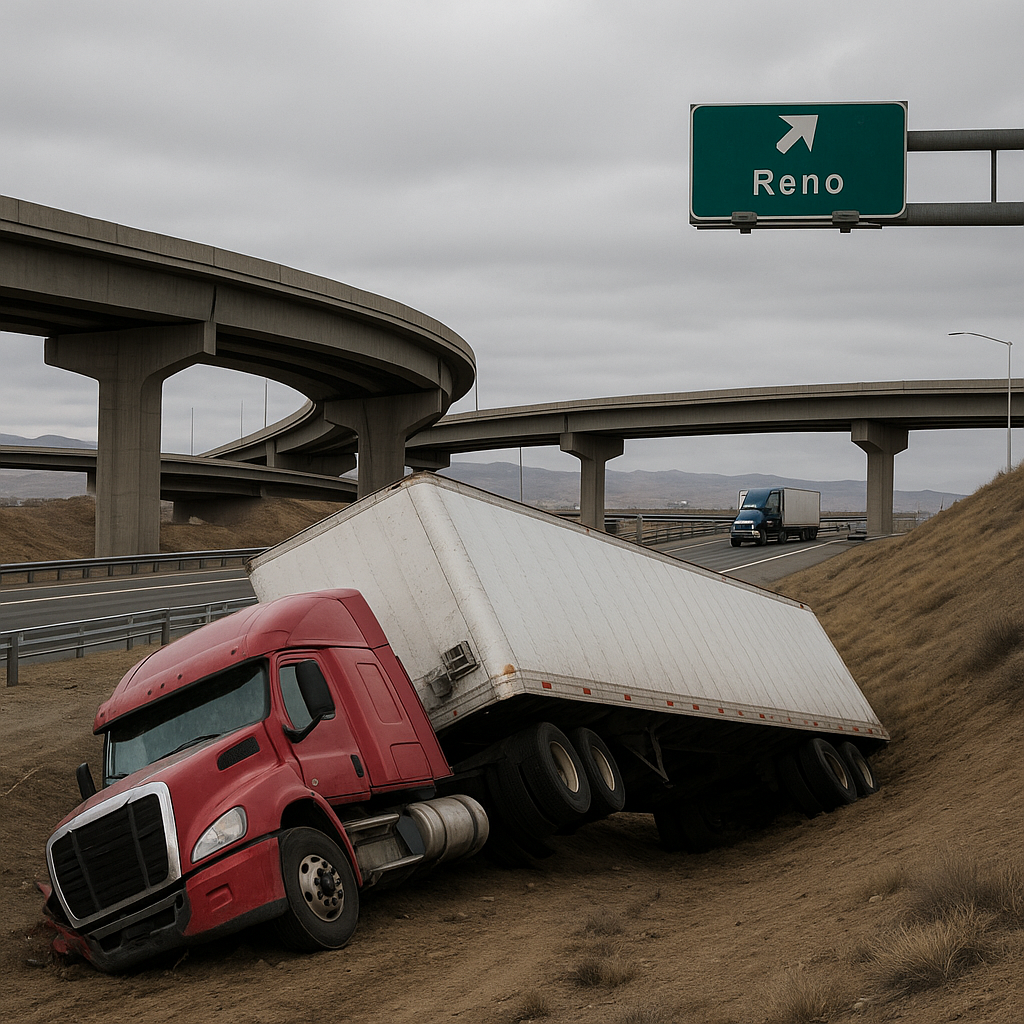
Why Do Truck Crashes Happen Near Reno Interchanges?
Why Nevada Drivers Ask This Question
If you commute through Reno or live in Northern Nevada, you’ve probably seen flashing lights and detours near the city’s busy freeway interchanges. Truck crashes near Reno interchanges aren’t just occasional headlines — they’re frequent enough to raise real concerns for local drivers, commuters, and businesses that rely on safe passage through the region.
Nevada drivers ask about truck crashes near these Reno interchanges because they impact daily commutes, create dangerous road conditions, and can lead to major traffic delays. Questions come up every time another incident causes police shutdowns on I-80, Pyramid Way, or the spaghetti bowl interchange. Is there something about Reno’s interchanges that causes more trucking accidents? Are the roads designed poorly? Or do outside factors play a bigger role? These concerns are especially relevant as Nevada grows and more trucks travel its highways.
Clear Explanation with Nevada Context
The reason truck crashes are more common near Reno interchanges comes down to a mix of traffic patterns, unique geography, and human error — all magnified by the region’s rapid growth and important role as a transportation hub.
Helpful Background Information
Reno’s Strategic Location
Reno sits at the crossroads of major highways like Interstate 80 and US 395/Interstate 580, acting as a bridge between the Bay Area, Salt Lake City, and the Pacific Northwest. These interstates aren’t just vital for local commuters — they’re essential freight corridors. As the region expands with more distribution centers and warehouses, there’s been a significant uptick in truck traffic (according to Nevada Department of Transportation studies).
Interchange Complexity
Reno’s freeway interchanges, especially the famous “Spaghetti Bowl” where I-80 and I-580 meet, require quick lane changes, tight curves, and frequent merges. These complex maneuvers are manageable for most vehicles, but large trucks need much more space and time to safely complete them. The mix of local commuter traffic and out-of-state truckers unfamiliar with Reno’s unique highway network increases the risks for everyone, especially during peak hours.
Weather and Terrain Factors
Unique Nevada factors like winter storms, black ice, high desert winds, and sudden elevation changes complicate driving through Reno’s interchange zones. Truck drivers negotiating a downhill grade or sudden curve with a heavy load face greater challenges than in flatter, milder climates.
Common Misconceptions
“It’s always the truck driver’s fault.”
Many assume that truck drivers are solely to blame for crashes near Reno interchanges, but accident reports often reveal a mix of contributing factors. Sometimes, a passenger car will cut off an 18-wheeler during a merge, leaving no time or room to avoid a collision. In other cases, weather conditions or sudden stop-and-go traffic play a role.
“Better road signs or widening lanes would prevent all crashes.”
While clearer signage and wider lanes can improve safety, they won’t eliminate hazards entirely. Human error — from distracted driving to misjudging a merge — still plays a significant part. Plus, unexpected changes in weather or construction zones can catch even the most prepared truck driver off guard.
“Truck crashes only happen during bad weather.”
It’s true that snow and ice contribute to some accidents, but truck crashes near Reno interchanges also occur during clear weather. High traffic volume, confusion over exits, or even poorly secured cargo can cause a crash on sunny days.
Closing Paragraph
Understanding why truck crashes happen near Reno interchanges helps everyone — from daily commuters to logistics companies — stay safer on Northern Nevada’s vital roadways. It’s not just one factor, but a combination of heavy truck traffic, complex interchange designs, rapid merging, unpredictable weather, and human error. As Reno continues to grow and thrive as a Western transport hub, staying aware of these risks will help keep drivers alert and highways moving more smoothly — and hopefully, lessen the frequency of those flashing lights at our city’s busiest interchanges.