
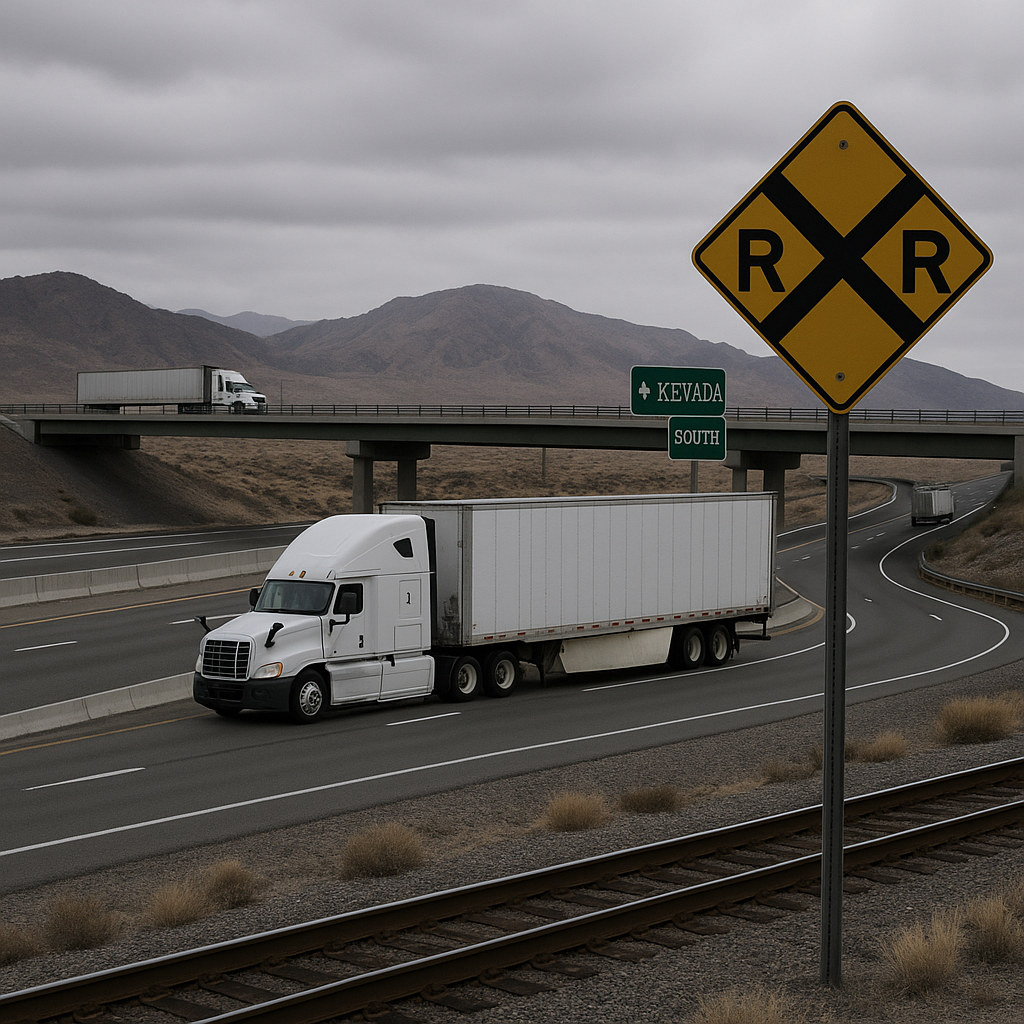
Why Nevada is a Key Freight Crossroads
Overview of the Freight Corridor or Trucking Activity
Nevada’s strategic location in the American West has cemented its status as a key freight crossroads for the nation’s trucking and logistics industries. Flanked by California and sharing borders with Arizona, Oregon, Idaho, and Utah, Nevada sits at the intersection of several major north-south and east-west transportation routes. This unique positioning is further amplified by the state’s relatively sparse population, open terrain, and well-maintained interstate infrastructure, all of which make it a preferred route for long-haul freight trucks.
Interstate 80 (I-80) and Interstate 15 (I-15) are the primary freight corridors crossing through Nevada. I-80, stretching from San Francisco to New Jersey, crosses the northern part of Nevada, linking major logistics hubs in Northern California to Salt Lake City and points farther east. I-15, meanwhile, runs through the southern tip of Nevada, connecting Los Angeles with Las Vegas and onward to Salt Lake City. Nevada Route 95, which travels from Las Vegas through the heart of the state, is also an important north-south artery for freight movement.
Nevada’s central role in North American trade is underscored by its proximity to key ports and urban centers. Loads departing the busy ports of Los Angeles and Long Beach often pass through Nevada en route to the Midwest and eastern United States. In addition to through-traffic, the state has seen significant investments in logistics hubs and warehousing, particularly in Reno-Sparks and the Las Vegas area. Companies like Amazon, Tesla, and Walmart operate large distribution centers in Nevada, taking advantage of low taxes, business-friendly policies, and the state’s central reach to western markets.
The combination of robust highway infrastructure, central geography, and growing warehousing capacity has turned Nevada into a vital node for freight traffic—making it an indispensable part of America’s supply chain.
Common Truck Types and Freight Activity in the Area
Given Nevada’s importance as a freight corridor, a variety of truck types and cargoes traverse its highways each day. The most common trucks include:
– Dry Vans: These are the standard enclosed trailers used to carry packaged consumer goods, electronics, clothing, and other non-perishable goods. Dry vans are the workhorses of the Nevada freight network due to high volumes of retail and e-commerce shipments passing through the state.
– Refrigerated Trucks (Reefers): Transporting perishable goods such as produce, dairy, and pharmaceuticals requires climate-controlled trailers. Nevada is a critical path for refrigerated freight between California’s fertile Central Valley and distribution centers further east.
– Flatbeds: Used for hauling oversized loads, construction materials, machinery, and vehicles, flatbeds are especially common given the state’s proximity to construction booms in Las Vegas and Reno.
– Tanker Trucks: Flammable liquids, chemicals, and fuels also pass through Nevada regularly, supporting both regional needs and cross-country deliveries.
– Hazardous Material (Hazmat) Carriers: With key energy and mining sectors in the state, hazmat trucks are a constant presence, transporting everything from mining byproducts to industrial chemicals.
Freight activity is diverse, reflecting both through-traffic and local economic demand. Outbound loads might include Nevada’s own mineral resources, such as gold and silver from mining operations, while inbound freight carries everything from groceries and electronics to construction supplies for the state’s rapidly growing urban centers.
Warehouse and distribution centers near Reno and Las Vegas further boost shuttle truck activity, with many short-haul trips delivering imported goods to local stores or repackaging shipments for last-mile delivery. These trends illustrate the variety and intensity of freight-related trucking seen across Nevada every day.
How Congestion or Merging Creates Risk
While Nevada’s highways are generally open and less congested than those of surrounding states, certain stretches and bottlenecks can still create challenges and risks for truck drivers and other motorists alike.
Urban bottlenecks: In Las Vegas, one of the nation’s fastest-growing cities, I-15 and the “Spaghetti Bowl” interchange with US-95 regularly experience heavy traffic, especially during morning and evening commutes. The merging of on- and off-ramps creates complex traffic patterns, where high volumes of passenger vehicles and commercial trucks interact in close quarters. This increases the risk of side-swipe accidents, sudden braking, and rear-end collisions.
Construction zones: Nevada’s ongoing infrastructure improvements often lead to lane reductions and temporary traffic pattern changes. Reduced speeds and sudden merges, especially in active construction zones outside Reno or along I-80, can pose significant hazards for longer vehicles that require more space to maneuver.
Border crossings: Truckers heading from California into Nevada through the Donner Pass (I-80) or the Cajon Pass (I-15) frequently encounter congestion and mandatory inspections at state points of entry. This can lead to queues and backup, particularly during periods of high freight volume, forcing truck drivers to frequently stop and start or merge with flowing traffic—scenarios that heighten the risk of accidents as large vehicles take longer to accelerate or stop.
Mountain passes and variable weather: Northern Nevada’s mountain passes (especially along I-80) see increased congestion and merging risk during adverse weather. Snow, ice, and high winds can force temporary closures, requiring sudden rerouting and increasing the potential for accidents as truck drivers and passenger vehicles compete for safe passage on alternate routes.
These risks are an ever-present consideration for Nevada’s freight operators, making defensive driving and route planning essential elements of safe and efficient freight activity.
Time-of-Day and Seasonal Traffic Trends
Freight traffic in Nevada exhibits clear patterns by time of day and season, reflecting everything from warehouse operating hours to consumer demand cycles and weather influences.
Time-of-Day Trends
– Morning (5 a.m. – 9 a.m.): Early morning hours see a surge in both long-haul truck departures and local deliveries, coinciding with the start of warehouse shifts and retail replenishment schedules. Commuter traffic adds to urban bottlenecks, especially in Las Vegas and Reno.
– Midday (10 a.m. – 2 p.m.): Highway congestion often decreases as commuters reach their destinations. Many truck drivers take advantage of this window to make steady progress along Nevada’s interstates, reducing the probability of delays.
– Afternoon and Evening (3 p.m. – 7 p.m.): Congestion spikes again in urban centers with the end of the workday, mixing commercial trucks with heavy passenger vehicle traffic. This is particularly pronounced on I-15 through Las Vegas.
– Night (8 p.m. – 4 a.m.): Overnight hours see fewer passenger vehicles on the road, and many long-haul drivers prefer to travel during this time to avoid congestion. However, reduced visibility and driver fatigue can create other safety challenges.
Seasonal Trends
– Winter: Northern Nevada regularly experiences snow and ice, especially on I-80. Severe conditions can prompt closures or require trucks to use tire chains, especially in the Sierra Nevada. Traffic volumes may dip slightly, but risks and the potential for delays increase.
– Spring and Fall: These shoulder seasons are popular for shipping, as weather is milder and produce harvests in California and Nevada prompt increased refrigerated freight movement.
– Summer: Hot weather drives up energy demands and can increase the number of tanker trucks transporting fuels. Tourism-related passenger vehicle traffic is also higher, especially near Las Vegas, raising the likelihood of congestion.
– Holiday Seasons: The period between October and January sees a significant bump in freight volume, as retailers and distribution centers ramp up shipments for the holidays. This leads to more trucks on the road, busier warehouses, and higher demand for available capacity.
Recognizing these time-of-day and seasonal patterns aids both logistics planners and everyday commuters in making informed decisions—and helps maintain the safety and efficiency of Nevada’s key freight corridors.
Conclusion
Nevada’s role as a key freight crossroads is the result of its strategic location, robust infrastructure, and connection to some of the United States’ busiest commerce routes. With major interstates funneling goods to and from the West Coast, a diverse array of freight activity, and constant efforts to adapt to changing traffic patterns and risks, Nevada remains central to the region’s supply chain success.
For logistics professionals, fleet operators, and anyone traveling Nevada’s highways, understanding the state’s unique freight environment is essential. By staying alert to congestion points, time-of-day and seasonal trends, and the ever-evolving landscape of freight activity, all road users can contribute to the continued safe and efficient movement of goods through this vital crossroads of American commerce.