
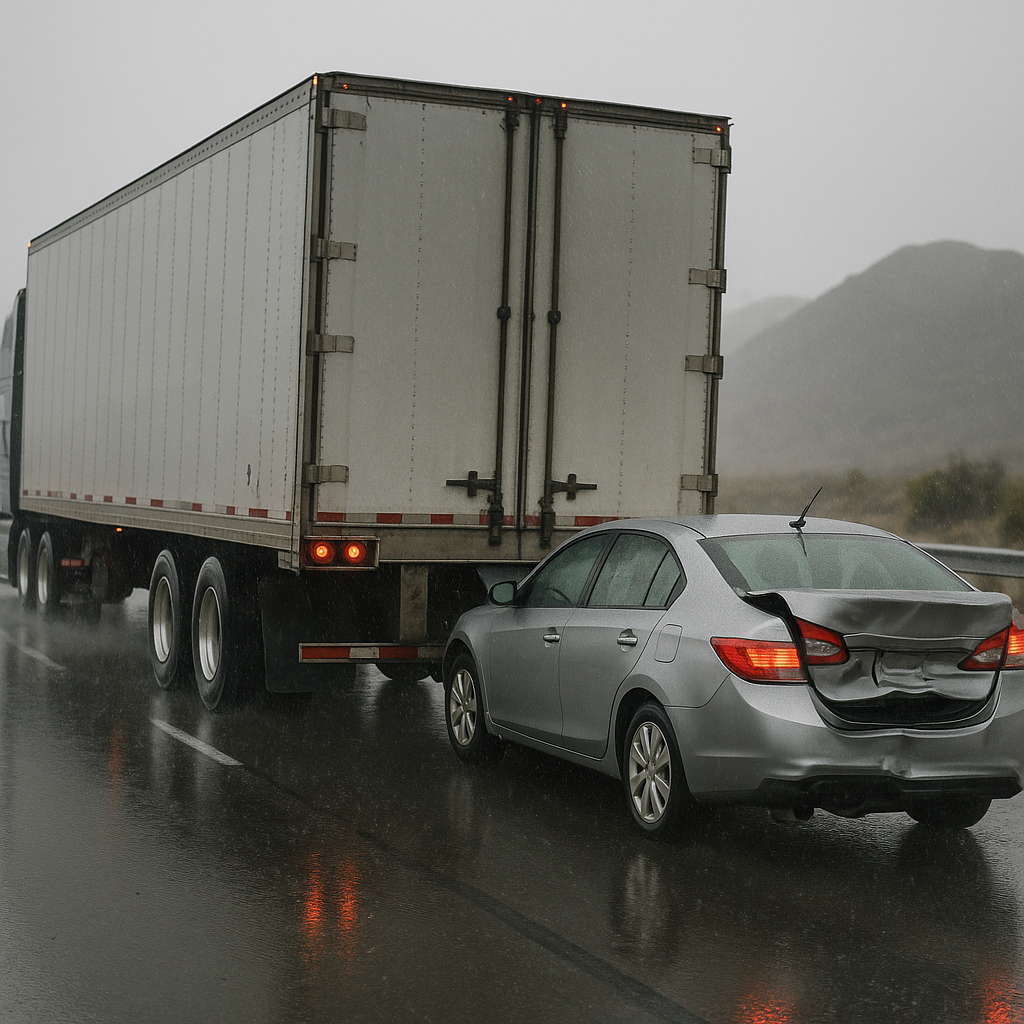
Why Nevada Rain Increases Rear End Truck Crashes
Nevada is famous for its sweeping desert landscapes, glittering cities, and generally dry climate. However, when rain does fall in the Silver State, it can spell trouble—especially for large trucks on the road. Many drivers are surprised to learn just how much a little rainfall can affect crash risk, but the data and regional reality make it clear: Nevada rain increases rear end truck crashes in ways that are unique to the state’s weather and road conditions.
Overview of the Nevada Weather or Road Condition Factor
Nevada’s climate is predominantly arid. The state averages less than 10 inches of rainfall annually across much of its terrain, and in some places—especially within the Mojave Desert—annual precipitation totals are close to half that figure. This means that Nevada’s roadways experience rain infrequently, and when they do, those conditions can change rapidly and dramatically. What seems like a mild drizzle can actually introduce dangerous risks for motorists, especially for those operating or driving near commercial trucks.
Slick Roads and Poor Drainage
Because of the infrequent rain, many Nevada roads accumulate dust, oil, and debris during long dry periods. When rain finally falls, even lightly, this accumulation quickly turns the pavement into a slick surface. Unlike states where regular rain washes away roadside grime, Nevada roads can become alarmingly slick within minutes of the first shower. Moreover, the state’s infrastructure isn’t always designed for frequent, heavy rainfall. Drainage systems may not be as robust, leading to unexpected pooling and localized hydroplaning hazards.
Sudden Weather Patterns
Nevada’s weather can shift quickly. A clear day can turn into a rainstorm with little warning, creating a hazard for unprepared drivers. For truckers, who often cover long distances across rural stretches, encountering unpredictably wet roads poses a serious challenge.
How This Condition Affects Trucks Differently Than Cars
While every type of vehicle faces risks from slick and sudden rain, large trucks are uniquely vulnerable due to their sheer mass, braking mechanics, and operational limitations.
Longer Stopping Distances
Commercial trucks, especially semi-trailers and eighteen-wheelers, require much more distance to come to a complete stop—even in dry conditions. On rain-slick Nevada roads, stopping distances can double or more. If a passenger vehicle in front of a truck brakes suddenly due to road slickness, the truck may not be able to stop in time, increasing the risk of a rear end collision.
Heavier Loads and Skidding
When rainwater mixes with surface oil and dust, traction is further reduced—a particular problem for trucks hauling heavy loads. The higher a truck’s weight, the more inertial force must be overcome to stop safely. If traction is compromised, trucks may skid or even jackknife, a situation where the trailer swings out of alignment with the cab, endangering multiple lanes of traffic.
Visibility Challenges
Large trucks have significant blind spots—areas around the vehicle where the driver’s view is obstructed. Rain, especially when combined with splash from other vehicles, further reduces visibility. Truck drivers may not see sudden obstacles or braking vehicles ahead as clearly as those in passenger cars, increasing the likelihood of a rear end collision.
Out-of-State and Inexperienced Drivers
Nevada is a crossroads for interstate commerce. Many truckers passing through are from wetter climates and may underestimate the slipperiness of “first rain” Nevada roads. This unfamiliarity can lead to caution errors—either driving too fast for the conditions or following too closely.
Why Crashes Can Become Severe Under These Conditions
The combination of reduced traction, limited stopping distance, and poor visibility makes truck-involved rear end crashes in Nevada rain especially dangerous.
High Impact Forces
Trucks can weigh up to 80,000 pounds when fully loaded—20 to 30 times more than the typical passenger car. A rear end impact at even moderate speeds can have catastrophic consequences, not just for the vehicle struck, but for everyone nearby. The forces involved can easily crush smaller vehicles, breach cargo containers, or result in multi-vehicle pileups.
Chain Reaction Collisions
When Nevada rain makes roads unexpectedly slick, it’s not uncommon for an initial rear end collision to set off a chain reaction. Vehicles following behind may skid as they try to slow down, compounding the chaos, particularly on busy interstate highways such as I-15 and I-80.
Longer Emergency Response Times
Some Nevada stretches—especially outside major cities like Las Vegas and Reno—are remote, with emergency crews taking longer to arrive. Severe rear end truck crashes can block highways, magnify injuries, and delay aid, increasing the risk of serious outcomes.
Common Seasonal Patterns in Nevada
While Nevada’s overall precipitation is low, rainfall patterns are highly seasonal and regionally distinct.
Monsoon Rains in Southern Nevada
From July through September, southern Nevada—including Las Vegas—experiences monsoon-influenced thunderstorms. These storms produce sudden, heavy rainfall, often after long dry periods. Pavement can become treacherous in minutes, and visibility can plummet, creating the perfect conditions for rear end truck crashes.
Winter Rains and Mountain Passes
Northern Nevada typically receives more winter precipitation. Rain can quickly freeze overnight, creating black ice on roadways, but even above-freezing rain brings risks of slick pavement. Mountain passes along key freight routes can be particularly hazardous as rain transitions into sleet or slush.
Spring Showers
Early spring sometimes brings brief but intense rainfall, especially along the Sierra Nevada foothills. These short-lived events tend to surprise drivers who have grown accustomed to long dry spells, increasing the risk of weather-related rear end truck accidents.
Neutral Closing
While Nevada rain increases rear end truck crashes for many reasons—from rarely washed roads to the unique challenges posed by commercial vehicles—it’s possible for all motorists to adapt. Understanding why these risks spike during and after rainfall can encourage drivers of both trucks and cars to take extra caution during Nevada’s wet weather events. By respecting the potential hazards and adjusting driving behavior accordingly, the roads can be made safer for everyone, rain or shine.