
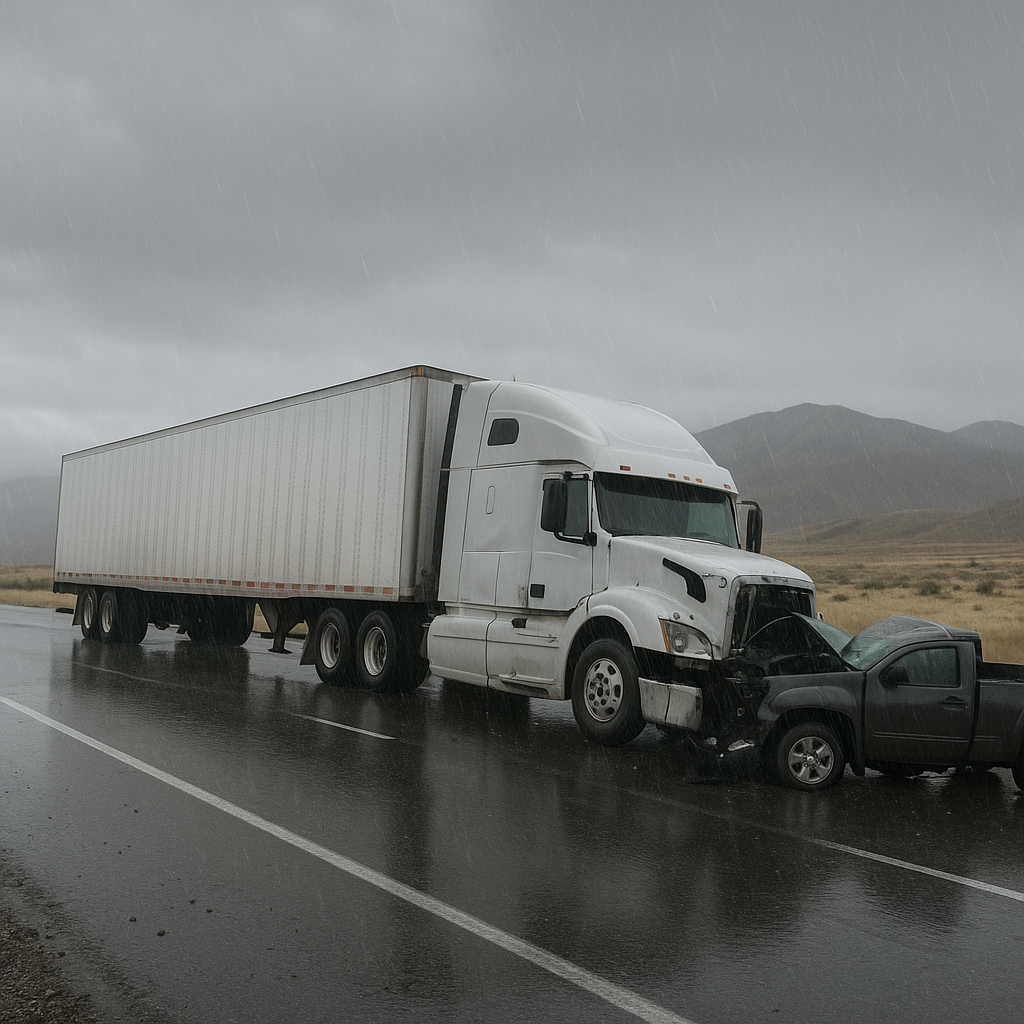
Why Rain Increases Truck Crash Severity in Nevada
Overview of the Nevada Weather or Road Condition Factor
Nevada is renowned for its arid landscapes, with its sweeping deserts, dramatic mountain ranges, and long stretches of highway. Typically known for dry, sunny conditions, much of the Silver State averages less than 10 inches of precipitation per year. However, when rain does arrive—often unexpectedly and sometimes in heavy downpours—it can dramatically alter the state’s road conditions.
The rarity of rain in Nevada means that roads accumulate dust, oil, and debris on the surface. When rain finally falls, even a brief shower can lead to a hazardous, slick layer over the asphalt, reducing traction for all vehicles. Many drivers, including those in large commercial trucks, may be unaccustomed to navigating wet roads in Nevada, leading to difficulties adapting their driving habits and increasing the likelihood of serious crashes.
How This Condition Affects Trucks Differently Than Cars
Large trucks—such as tractor-trailers and semi-trucks—navigate Nevada’s highways alongside passenger vehicles every day. However, rain poses unique and compounded risks to these heavier and longer vehicles compared to standard cars. Several factors contribute to why rain increases truck crash severity in Nevada:
Increased Stopping Distance
Trucks are already at a disadvantage with much longer stopping distances than cars, even in ideal conditions. On rain-slicked Nevada roads, the braking distance for an 18-wheeler can increase substantially. The heavy mass of a fully loaded semi requires more time and distance to come to a halt, and wet surfaces further extend this distance. When the pavement is slick from a sudden downpour, the tires have less grip, making it much harder for truck drivers to stop or slow down to avoid collisions.
Reduced Maneuverability
The size and weight of trucks also mean they are less agile than cars. Sudden evasive maneuvers—like swerving or making sharp turns—become even more difficult on wet roads. The risk of jackknifing, where the trailer swings out and forms an acute angle with the cab, is heightened when the roads are slippery. In Nevada, where rain can take drivers by surprise, this loss of control can quickly escalate into a severe accident, affecting multiple lanes or vehicles.
Hydroplaning Risk
Although all vehicles can hydroplane, trucks face an increased risk due to their wide tires and heavy loads, especially on uneven or worn Nevada highways. Hydroplaning occurs when a layer of water builds up between the tires and the road, resulting in a complete loss of traction. Even a few minutes of rain can create enough of a slick film on Nevada highways to cause hydroplaning—particularly dangerous for vehicles carrying thousands of pounds of cargo.
Why Crashes Can Become Severe Under These Conditions
Trucking accidents in rainy Nevada conditions can quickly turn severe for several reasons:
Larger Mass and Momentum
The sheer size and weight of commercial trucks amplify the force of any collision. On rain-soaked roads, loss of control can lead to rear-end accidents, multi-vehicle pileups, or trucks overturning. The high speeds often seen on Nevada’s rural highways make these outcomes even more severe. A crash that might be minor between two cars can become catastrophic when a truck is involved.
Cargo Complications
Many trucks carry hazardous materials or heavy, potentially unstable cargo. Sudden braking or swerving, especially on wet surfaces, can cause loads to shift or even fall from the trailer. This not only endangers the truck driver and other motorists but also increases the risk of road blockages or environmental hazards.
Chain Reaction Collisions
Nevada’s highways, especially during rain, can have limited visibility due to road spray and glare from headlights reflecting off the wet pavement. If a truck crashes or jackknifes, it can block multiple lanes or cause a domino effect. Vehicles behind may have limited time to react, leading to multi-car pileups. The sparse emergency response coverage in some rural areas of Nevada can also hinder timely assistance, increasing the impacts of any crash.
Driver Inexperience with Wet Roads
Because rain is infrequent in Nevada, many truck and car drivers are less practiced in adjusting their speed and behavior for wet conditions. Sudden heavy rainfall, often associated with desert storms or monsoonal weather, may catch unprepared drivers off guard, further increasing accident severity.
Common Seasonal Patterns in Nevada
Nevada’s unique climate means that rain events tend to cluster in specific seasons, most notably during the late summer monsoon cycle and occasional winter storms.
Monsoonal Rains
From July to September, Nevada experiences its version of the North American monsoon. Moisture moves north from the Gulf of California and the Pacific, resulting in scattered thunderstorms and short, intense rainfall events. These heavy downpours can overwhelm the usually dry roadways, creating hazardous driving conditions in a matter of minutes—just enough time for oils, rubber fragments, and dust to combine with water and create a dangerously slick surface.
Winter Storms
At higher elevations and in northern Nevada, winter storms can bring rain, sleet, or a mix of precipitation to highways. Rapid temperature changes can cause freezing rain or icy patches, contributing to even more treacherous conditions for trucks traversing mountain passes or descending into valleys.
Sudden, Localized Events
Because Nevada’s terrain is mainly desert, rain usually falls in short, localized bursts rather than as extended, gentle showers. Flash flooding is possible, leading to water pooling quickly on highways and causing abrupt changes in traction. Truck drivers crossing a dry area can be suddenly faced with standing water or hydroplaning risks around the next bend.
Conclusion
While rain is infrequent in Nevada, its arrival can dramatically increase the severity of truck crashes on the state’s highways and urban roadways. The combination of rarely wet roads, accumulation of surface contaminants, the unique challenges faced by large commercial vehicles, and patterns of sudden, intense storms all contribute to making wet-weather crashes particularly hazardous. Understanding these factors is essential for everyone sharing Nevada’s roads, especially during those rare but dangerous rainy days. Being alert, reducing speed, and increasing following distances during precipitation events can help reduce the risk for both truck drivers and other road users.