
Why Reno Sparks is a Logistics Hub
The region of Reno Sparks, nestled in Northwestern Nevada, has grown into one of the West’s most prominent logistics hubs. Strategically poised near the intersection of major trucking corridors and within quick reach of California’s economic centers, Reno Sparks logistics hub activity has transformed the area into a critical player for distribution, warehousing, and freight movement. But what makes Reno Sparks so vital for freight and logistics? Let’s examine the key factors, common freight activities, traffic trends, and risks that shape this thriving Nevada transport corridor.
—
Overview of the Freight Corridor or Trucking Activity
Reno Sparks’ logistics prowess is tied closely to its exceptional geographic location. Sitting just east of the Sierra Nevada mountains and a mere 22 miles from the California border, the region offers prime access to major highways—most notably Interstate 80 (I-80) and U.S. Highway 395 (now I-580). These arteries form the backbone of long-haul trucking between San Francisco, Salt Lake City, Portland, Seattle, and points beyond.
Nevada has long embraced its role as an inland port. The state’s pro-business regulatory climate, lack of a state income tax, and affordable commercial real estate entice companies to set up major distribution centers here. As a result, household names such as Amazon, Walmart, Tesla (with its Gigafactory), and Zulily have spearheaded large warehouse operations in the vicinity, further fueling growth.
The Reno Sparks logistics hub is also buoyed by proximity to the largest population base along the West Coast. Products can be trucked to more than 60 million consumers within a single day’s drive, making the area immensely attractive for time-sensitive and high-volume shipments.
In short, Reno Sparks combines fast interstate connections, competitive business conditions, and access to millions of consumers, earning its status as Nevada’s logistics heartland.
—
Common Truck Types and Freight Activity in the Area
The Reno Sparks logistics hub witnesses a constant ballet of trucks and trailers carrying a vast array of goods. Here are some of the most common truck types and freight movements found in the area:
1. Dry Van Trailers:
These versatile, enclosed 53-foot trailers are ubiquitous on I-80 and I-580, transporting everything from electronics and apparel to canned foods and general consumer goods. The region’s distribution centers frequently rely on dry vans for both inbound and outbound shipments.
2. Refrigerated “Reefer” Trucks:
Refrigerated trailers keep Nevada’s perishable freight—such as dairy, produce, pharmaceuticals, and specialty foods—at regulated temperatures. With Reno Sparks as a conduit for westward and eastward fresh food supply chains, these trucks are key players.
3. Flatbeds and Heavy Haul:
Flatbed trucks shuttle construction materials, large machinery, and industrial equipment to and from Reno Sparks’ robust manufacturing and industrial sectors. The Tesla Gigafactory, for example, requires regular shipments of batteries and auto parts.
4. Intermodal Containers:
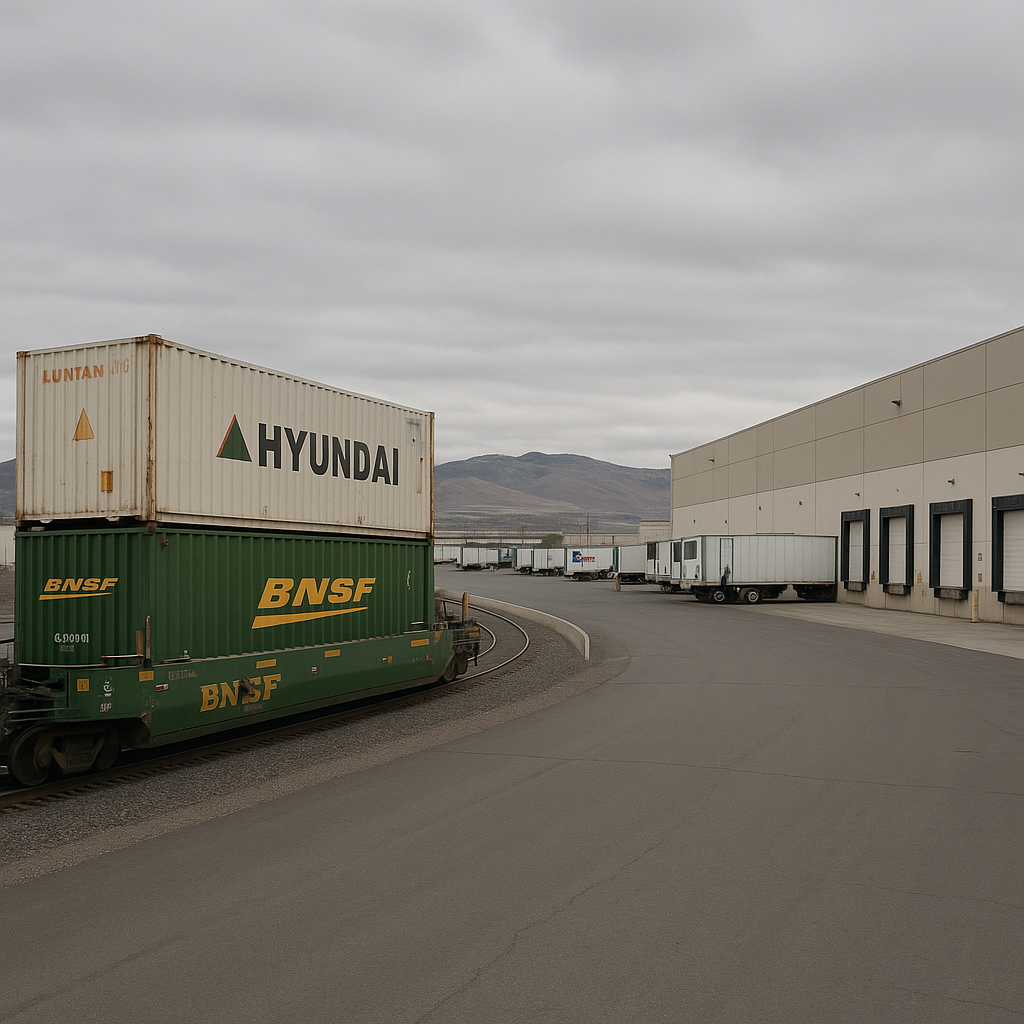
Reno Sparks benefits from close rail connections, including service by Union Pacific and BNSF. Intermodal containers often arrive via rail before being transferred to trucks for final delivery across Nevada, California, and other neighboring states.
5. Tanker Trucks:
With the region’s mining and manufacturing sectors, tanker trailers carrying fuel, chemicals, or other bulk liquids are frequent sights on Reno-area highways.
6. Local Delivery Trucks:
Smaller box trucks and local delivery vehicles serve the last-mile segment, ensuring goods reach warehouses, retailers, and homes in Sparks, Reno, and surrounding communities.
These diverse trucking fleets work in tandem to keep goods flowing rapidly in and out of the region; in fact, Reno Sparks saw nearly 200,000 truck-loading activities recorded in some recent years, illustrating the scale of its supply chain operations.
—
How Congestion or Merging Creates Risk
While Reno Sparks’ infrastructure is robust, its rapid freight growth poses safety challenges—especially where truck volume, traffic congestion, and merging patterns intersect.
Highway Interchanges:
Key interchanges, such as the Spaghetti Bowl where I-80 and I-580/US-395 converge, funnel immense numbers of trucks and passenger vehicles together. Trucks merging onto or exiting busy interstates may face abrupt speed changes or congestion, increasing the risk for sideswipe, rear-end, and underride collisions.
Work Zones and Construction:
Nevada’s Department of Transportation continually upgrades roads to keep pace with freight growth. Temporary lane closures or shifting patterns can confuse motorists and create unexpected merging points, particularly hazardous for large trucks with longer stopping distances and larger blind spots.
Time-of-Day Bottlenecks:
Freight operations often peak during daytime business hours, overlapping with commuter rushes. The heavy mix of commercial and private vehicles during these periods strains ramp and merge areas—a key risk factor for accidents.
Limited Alternate Routes:
In Northern Nevada, geographical constraints (such as the Sierra Nevada) and sparse alternate highways mean that even minor congestion or incidents on I-80 can amplify delays and crash risks across the logistics corridor.
For these reasons, transportation planners and trucking companies alike stress the importance of driver awareness, real-time route monitoring, and careful coordination in the Reno Sparks logistics hub.
—
Time-of-Day and Seasonal Traffic Trends
Freight movement in the Reno Sparks logistics hub isn’t evenly distributed across the clock or the calendar. Several distinct traffic trends shape how—and when—goods move through the region:
Peak Freight Times:
– Early Morning (4 a.m.–9 a.m.): Many linehaul trucks aim to depart Reno Sparks’ distribution and fulfillment centers before the peak commute, using the quieter morning hours to get on the road.
– Afternoon and Early Evening (2 p.m.–6 p.m.): Receipt and sorting of inbound goods ramps up. Shift changes at warehouses and the overlap with commuter traffic can cause localized congestion on feeder roads and highway ramps.
Seasonal Variations:
– Winter Weather: I-80 through the Sierra can be impacted by snow and chain controls from October through early spring. This not only complicates westbound transports, but also increases traffic—and collision risk—for both trucks and passenger vehicles navigating icy conditions.
– Holiday Rush: From late October through December, Reno Sparks freight activity surges as companies stockpile for the holidays. More trucks vie for dock space and highway capacity, and local roads see more delivery traffic as holiday packages are distributed.
– Construction Season: Warmer months often coincide with major highway repair or widening projects, creating detours and merged lanes that temporarily slow freight and increase risk around work zones.
Ongoing Growth:
Year-over-year, overall truck volume in the Reno Sparks logistics hub continues to rise. New warehousing projects and regional population growth mean traffic planners anticipate further increases in freight movement—and with it, the need for adaptive traffic management.
—
Neutral Closing Paragraph
The Reno Sparks logistics hub exemplifies Nevada’s vital role in the broader supply chain network across the Western United States. Its ideal location, multimodal infrastructure, and business-friendly climate attract ongoing investment from manufacturers, retailers, and transportation providers alike. While growth does bring new challenges—such as congestion and roadway risk—the region remains committed to safe, efficient freight movement. As Reno Sparks continues to evolve, it will undoubtedly maintain its reputation as a significant crossroads for goods, innovation, and economic opportunity.