
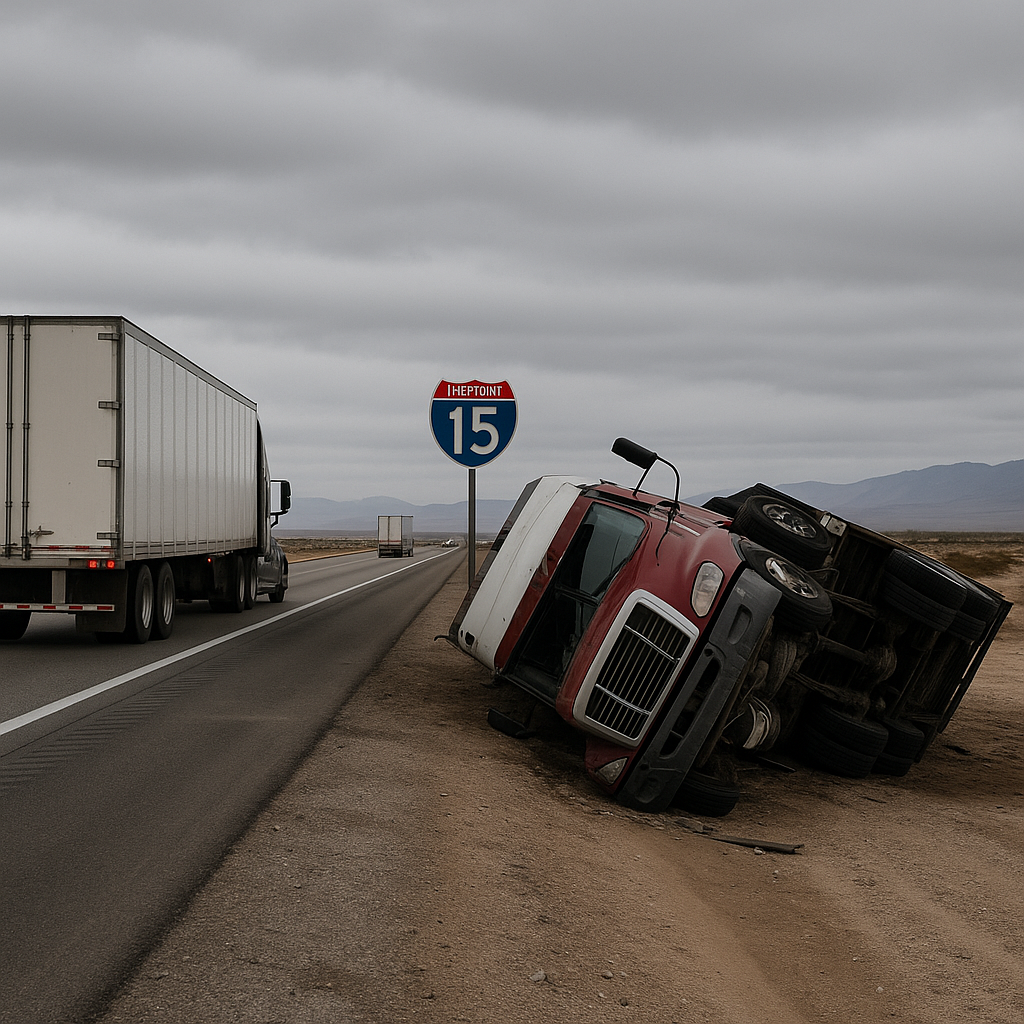
Why Truck Accidents Are Common on I-15 in Nevada
Overview of the Nevada Location or Highway Segment
Stretching over 120 miles within Nevada, Interstate 15 (I-15) is a vital highway artery that carries travelers, commuters, and commercial vehicles across the southern part of the state. Entering Nevada from California just south of Primm and running northeast through Las Vegas before exiting toward Arizona, I-15 is a critical route for regional commerce and tourism. The ripple effect of significant cities, statewide economic demand, and the draw of world-famous Las Vegas means that this corridor sustains some of the heaviest vehicular and commercial trucking traffic in the western United States.
This stretch of I-15 offers a unique combination of urban, suburban, and vast desert landscapes. Most notably, about 50 miles of the interstate pass directly through the Las Vegas metropolitan area—especially through Clark County, which is Nevada’s most populous region. With this convergence of tourists, local commuters, and thousands of long-haul trucks, I-15 in Nevada experiences a distinctive set of challenges leading to higher rates of truck accidents compared to some other routes.
Why Truck Accidents Are More Common in This Area
I-15 Nevada truck accidents occur more frequently due to a web of interlinked factors. The combination of booming population growth in southern Nevada, the steady pulse of tourism, aggressive commercial transportation schedules, and the unique design characteristics of the highway itself all play a role.
Truck drivers passing through Nevada, especially on I-15, often contend with long stretches of open highway, variable weather, fluctuating traffic densities, and frequent roadwork or construction updates. In addition, the stretch between the California border and Las Vegas functions as a primary supply route, making it a hotbed for continuous trucking activity—often under pressure to meet tight delivery windows.
Road Design Factors That Influence Crashes
Several elements of I-15’s design make it specifically prone to truck-related collisions in Nevada:
– Sudden Lane Merges and Exits: The highway features abrupt lane shifts and closely spaced on-ramps and off-ramps near Las Vegas. Merging traffic competing with trucks at high speeds can increase accident risk.
– Variable Speed Limits: The speed limit on I-15 in Nevada regularly transitions, especially when approaching urban areas, construction zones, or during adverse weather events. Trucks require longer stopping distances, so unexpected slowdowns or speed limit changes can create hazardous situations.
– Sharp Curves and Limited Visibility: While much of I-15 is relatively straight, certain segments—especially near the Spaghetti Bowl interchange in Las Vegas and near mountainous or desert bluffs—have sharper curves or reduced visibility, increasing the risk for trucks that are heavy, long, and less maneuverable.
– Construction Zones: Due to rapid growth in southern Nevada, road construction on I-15 is frequent. Temporary lanes, uneven road surfaces, and variable signage can challenge even the most experienced truck drivers.
– Narrow Shoulder Areas: In some parts, especially closer to city centers, I-15’s shoulder lanes are narrow or nonexistent due to infrastructure limitations or ongoing construction. This leaves less room for large trucks to pull over safely during emergencies—or to avoid collisions caused by sudden stops or swerves.
Traffic Patterns and Truck Volume Considerations
The traffic patterns and sheer volume of trucks on I-15 in Nevada create unique risks:
– High Proportion of Commercial Vehicles: As the main freight corridor linking Southern California with Las Vegas and beyond, I-15 routinely hosts a dense flow of long-haul trucks, especially during peak shipping times like holiday seasons or special event weekends.
– Tourist Surges: Las Vegas attracts tens of millions of visitors annually. Event weekends, conventions, and holidays lead to unpredictable spikes in passenger vehicles, many of which are driven by out-of-state drivers unfamiliar with local traffic norms.
– Urban and Rural Transition: Drivers encounter a jarring switch between wide-open desert stretches—where it’s easy for speeds to creep upward—and crowded, complex highway sections within Las Vegas, with multiple interchanges and fluctuating traffic volumes.
– Fatigue and Long Distances: I-15 is a corridor for long-haul drivers typically traveling significant distances across arid desert landscapes. Fatigue among truck drivers is a recognized factor in many collisions, as monotony and extended driving hours can increase the risk of inattentiveness or slower reaction times.
– Weather Factors: Although southern Nevada is known for its dry climate, sudden rain, high winds, or even rare icy conditions can transform driving conditions without warning—exacerbating risk for trucks, which are more prone to jackknifing or rollovers in inclement weather.
Safety Awareness Considerations (Non-Advice Tone)
Along this busy corridor, safety is at the forefront of many state and local initiatives. Awareness of the distinct characteristics of I-15 in Nevada is encouraged among both truck drivers and passenger vehicle operators. Frequent variable message boards on the interstate provide updates about weather, congestion, or roadway obstructions, helping drivers stay informed about sudden changes that may affect truck movement.
The Nevada Department of Transportation (NDOT) and Nevada Highway Patrol regularly monitor I-15 for emerging hazards and have implemented a number of educational campaigns aimed at both truck operators and the general public. These efforts highlight the importance of maintaining safe following distances, understanding commercial vehicle blind spots, and complying with road construction signage.
As southern Nevada’s population and tourism industry continue to grow, local and federal agencies remain invested in ongoing improvements—including upgraded roadway lighting, expanded lanes, and enhanced warning systems. While these improvements take shape, an ongoing level of attentiveness from all highway users is essential for navigating the highly traveled route safely.
Neutral Closing Paragraph
Interstate 15 is more than just a highway—it’s an economic lifeline and a symbol of southern Nevada’s dynamism. However, the same factors that make it vital also shape the prevalence of truck accidents along its Nevada segment. A complex interplay of infrastructure, traffic, weather, and human factors distinguishes I-15 in Nevada from similar highways elsewhere. As efforts to improve road safety continue, understanding the unique challenges of this corridor helps to shed light on the reasons behind the frequency of I-15 Nevada truck accidents, and underscores the importance of vigilance for all who travel its busy lanes.